When examining the pattern of ancient Babylon and then comparing the traits found in modern day “Babylon the Great”, the subject of reasoning capability plays a significant role. Do you find yourself dazed confused?
Back in the days of ancient Babylon, God put the men who were building the tower of Babel into a ‘confused’ state in order to break up their works. Because they were no longer able to converse with one another because God changed their one language to many different languages, they became confused and could not continue their plan. They were unable to ‘reason’ with one another through conversation. (Genesis 11:1-9)
Later on in Daniel’s time, God caused the king of Babylon, Nebuchadnezzar, to go out from his palace and live as the ‘unreasoning’ beast of the fields for 7 years. He exhibited the behaviors of like a ‘wild beast’ and he thought unreasonably. (Daniel 4:25-33)
Today, we see humankind on a grand scale behaving in a confused, unreasoning manner. They think and act as the unreasoning wild beast do. Who is causing the state of confusion that exists today?
In this time, the Last Days, it is Satan and the other fallen angels who are causing mass confusion on a global scale. What occurred at the Tower of Babel and what occurred to Nebuchadnezzar was a result of God’s will. What is happening today is by the devil’s design and will continue to affect all who remain under demonic control.
Many professed Christians claim that they have ‘escaped’ “Babylon the Great”. But reason says that that cannot be true. While many have escaped the clutches of false worship, they have not escaped the global reach of Satan’s influence. His influence effects more than organized religion. The devil’s empire has its tentacles of influence in all aspects of society.
While a person can free themselves from living the lifestyle of the world that follows the devil, they cannot end his empire. It was not until King Cyrus came and overthrew the Babylonians that the captives were truly freed.
There is a big distinction between being ‘free’ from the corruption of the devil’s empire (not touching the unclean thing) and being out from under its global influence and its ability to affect you. Satan’s empire encompasses the entire globe. There is no physical place a person can flee to in order to be totally out of its reach.
Therefore, we remain ‘physical’ captives of Satan’s global empire until the time the “Greater Cyrus”, who is the resurrected Jesus Christ, appears and breaks once and for all times the Babylonian yoke of slavery.
Again, a person cannot just simply, as it were, ‘walk’ out of “Babylon the Great”. One cannot just simply, “get away”. Was that to be expected? Think of Jesus’ words in the Revelation He gave to John.
In the vision Christ Jesus gave to John that is recorded as the Book of Revelation, it opens by stating that John was by Spirit given a vision of things to occur in “the Lord’s Day”:
Revelation 1:10
“I was in the Spirit on the Lord’s Day, and heard behind me a great voice, as of a trumpet,” When John tells us that he was in the Lord’s Day, he is seeing events in the Last Days, near the time of Christ return.
At Revelation 1:11 we read:
“Saying, I am Alpha and Omega, the first and the last: and, What thou seest, write in a book, and send it unto the seven churches which are in Asia; unto Ephesus, and unto Smyrna, and unto Pergamos, and unto Thyatira, and unto Sardis, and unto Philadelphia, and unto Laodicea”.
Those of the churches Christ is writing these letters to are human souls alive at this time. These are members of the elect or body of Christ.
In His words to the church in Pergamum, Jesus describes their environment and their current living circumstances clearly.
The Letter to Pergamum
12 “Write to the angel of the church in Pergamum: “The One who has the sharp, double-edged sword says:
13 I know where you live—where Satan’s throne is! And you are holding on to My name and did not deny your faith in Me, even in the days of Antipas, My faithful witness who was killed among you, where Satan lives.”
The Lord’s indicate an ongoing struggle against ungodly thinking and behavior in an extremely vulnerable proximity to the center of the devil’s operation.
He did not instruct them to move somewhere else. Just as being under the dominance and control of the city-state world empire Babylon did not require one to be within the city’s ‘official’ walls (where the throne of the king was), a person can still be near the devil’s center on the far-flung edges of his empire Babylon the Great.
Continued close association with godless people makes it impossible to be cleansed from corruption. Jesus likened such behavior as a “dog returning to is vomit. Each time the Lord mercifully cleanses such an individual, they go right back to unclean people with ungodly, unclean practices.
God counseled the unfaithful nation of Israel to separate themselves and quit touching what was unclean in His eyes. The apostle Paul reminded the disciples in Corinth of God’s command:
2 Corinthians 6:17
Therefore, “Come out from among them, and be ye separate,” saith the Lord. “And touch not the unclean thing, and I will receive you,
We today must heed these words by separating ourselves from those who practice wickedness. If we do not, God’s holy Spirit will not dwell in us and without it we will be like the vacant house that Jesus describes at Matthew 12:43-45:
43 When the unclean spirit is gone out of a man, he walketh through dry places, seeking rest, and findeth none.
44 Then he saith, I will return into my house from whence I came out; and when he is come, he findeth it empty, swept, and garnished.
45 Then goeth he, and taketh with himself seven other spirits more wicked than himself, and they enter in and dwell there: and the last state of that man is worse than the first. Even so shall it be also unto this wicked generation.
When we continue to associate with people void of God’s spirit, we open ourselves to demonic influence. We will share the same unreasonable thinking and behaviors as those who willfully have chosen the mark of the beast.
Until the time when Jesus returns, we must be vigilant in our efforts to resist the devil and stay morally and ethically clean.
Tracing the Origin of the Watchtower Society’s View of Apostasy
Mark 7:8-9
“You put aside God’s command and obey human teachings.”
And Jesus continued, “You have a clever way of rejecting God’s law in order to uphold your own teaching.” GNT
Over the history of the Watchtower Society (“Jehovah’s Witnesses”), the use of the word ‘apostasy’ as has had two distinct definitions. At times this word has been applied accurately as a deviation from exclusive obedience to Almighty God. And at other times it has been used to describe disobedience to the commands of men, particularly the Watchtower organization and its leadership. This term has a meaning that is derived from Holy Scripture and a meaning that is derived from a human definition.
This essay will examine the differences between the definition of apostasy as taught in Holy Scripture and the definition of apostasy according to the Watchtower Society. It will also trace the currently taught view of “Jehovah’s Witnesses” to its origins.
The Watchtower, through its publications, has taught two separate and distinct viewpoints based on whatever the desired effect was at the particular time. When speaking concerning other organized religions, they have tended to use the Biblical view. When speaking to those who are part of their organization, they have chosen to use the tradition humanistic view of apostasy or apostatizing.
The Watchtower’s use of the Biblical (God’s) Definition In the Past
While there are many examples of the Watchtower organization using the definition based on Holy Scripture, time will allow for just a few to be cited here. Anyone can visit the Watchtower website can search for themself past publications to determine the accuracy of what is being stated in this essay. A real lover of truth will do exactly that.
I will include quotes from its literature with reference notation to the particular publication.
First, let’s examine the use of the word ‘apostasy’ as the writers of Watchtower materials have applied it to the wayward ancient nation of Israel.
Those who have been associated with Jehovah’s Witnesses should recall that ancient Israel at many times were referred to as the “apostate nation of Israel”. If you were to insert this phrase in the search box of the Watchtower Bible & Tract Society’s past Library CD or perhaps at the website [[JW.org]], you will find the reference material we will consider.
According to the reference volumes “Insight on the Scriptures”, under the topic Isaiah, Book of, Historical Background, this is what is written concerning why it is appropriate to view the nation of Israel in the times of Isaiah as an apostate nation:
“Historical Background. Isaiah 1:1 informs us that Isaiah visioned these things in the days of Uzziah, Jotham, Ahaz, and Hezekiah, kings of Judah. This was a period of severe international tension and one in which false religious attitudes had a profound effect on the people of Judah. Near the beginning of Isaiah’s career King Uzziah died a leper because of his presumptuousness in taking over priestly duties. (2 Ch 26:16, 19-21) It is reported that during the reign of Uzziah’s son Jotham, while the king did what was right, “the people were yet acting ruinously.”—2 Ch 27:2; 2 Ki 15:34.
Next came King Ahaz, who for 16 years set a bad example for the nation, carrying on Baal worship with its rites of human sacrifice. There was “great unfaithfulness toward Jehovah.” (2 Ch 28:1-4, 19) It was at this time that the allied kings of Syria and Israel besieged Jerusalem so that Ahaz, ignoring the counsel of Isaiah the prophet, sent to Tiglath-pileser III, the king of Assyria, for military assistance. (2 Ki 16:5-8; Isa 7:1-12) By this Ahaz ‘made flesh his arm, his heart turning away from Jehovah.’ (Jer 17:5) Assyria agreed to an alliance, but, of course, was interested mainly in expanding its own power. The Assyrian army captured Damascus of Syria and apparently took into exile those inhabitants of religiously apostate Israel that lived E (east) of the Jordan. —1Ch 5:26.”
Let the reader note that the apostasy of the nation is directly linked to the behaviors of wicked leaders who had acted unfaithfully toward Almighty God and had deviated from God’s commandments. King Uzziah is mentioned here as deviating when he usurped priestly function for which he was not anointed. King Ahaz is also mentioned as showing “a great unfaithfulness toward Jehovah” by introducing the worship of false Gods (Baal worship).
Here the Watchtower writers at the time gave no deference to the leadership of the nation. In fact the whole nation is referred to as “religiously apostate Israel” from its kings on down. This publication accurately cites Jeremiah 17:5 as it speaks of King Ahaz and his apostatizing.
So the view expressed here of apostasy is not based on disobedience to a human ruler or ruling body. But rather, it is based on a concept that is in agreement with what actions that God views as apostatizing from Him. It also points out that those of the nation that followed the same course as that of those leaders were viewed as apostates by God as well.
They were not able to beg off from their obligation to God, saying in effect “Well, we were just following the Kings orders!” No. History shows they were held accountable for their own individual actions. That is no less true today.
Also, from the reference books ‘Insight on the Scriptures’ under the topic Apostasy, under the heading Apostasy in Israel we find:
Apostasy in Israel. The first two commandments of the Law condemned all apostasy. (Ex 20:3-6) And before Israel’s entry into the Promised Land, they were warned against the grave danger of apostasy resulting from marriages with the people of the land. (De 7:3, 4) Even though a person who was inciting others to apostasy was a close relative or a marriage mate, he was to be put to death for having “spoken of revolt against Jehovah your God.” (De 13:1-15) The tribes of Reuben, Gad, and Manasseh were quick to exonerate themselves of a charge of apostasy that arose because of their construction of an altar. —Jos 22:21-29.
Many of the kings of Israel and of Judah followed an apostate course—for example, Saul (1 Sa 15:11; 28:6, 7), Jeroboam (1 Ki 12:28-32), Ahab (1 Ki 16:30-33), Ahaziah (1 Ki 22:51-53), Jehoram (2 Ch 21:6-15), Ahaz (2 Ch 28:1-4), and Amon (2 Ch 33:22, 23). In due time a nation of apostates developed because the people listened to apostate priests and prophets (Jer 23:11, 15) and other unprincipled men who, by smooth words and false sayings, led them into loose conduct, immorality, and desertion of Jehovah, “the source of living water.” (Isa 10:6; 32:6, 7; Jer 3:1; 17:13) According to Isaiah 24:5, the very land became “polluted [cha·nephah′] under its inhabitants, for they have bypassed the laws, changed the regulation, broken the indefinitely lasting covenant.” No mercy was to be granted them in the predicted destruction. —Isa 9:17; 33:11-14; Zep 1:4-6.
Here again the publication writers are spot on in defining what real apostasy is all about. Notice the first sentence and the Scriptural support cited in the second sentence:
Exodus 20:1-6
1 And God proceeded to speak all these words, saying:
2 “I am Jehovah your God, who have brought you out of the land of Egypt, out of the house of slaves.
3 You must not have any other gods against my face.
4 “You must not make for yourself a carved image or a form like anything that is in the heavens above or that is on the earth underneath or that is in the waters under the earth.
5 You must not bow down to them nor be induced to serve them, because I Jehovah your God am a God exacting exclusive devotion, bringing punishment for the error of fathers upon sons, upon the third generation and upon the fourth generation, in the case of those who hate me;
6 but exercising loving-kindness toward the thousandth generation in the case of those who love me and keep my commandments.
Under this topic consideration, there is no assertion at all indicating a belief that the term apostasy has anything to do with human authority or anything to do with a failure to be obedient to a lesser authority than Almighty God.
Deuteronomy chapter 13 verse 5 is referenced and this scripture speaks concerning a “revolt against Jehovah your God.”
Note that it was the kings, priest, and prophets were the source of the apostasy. The nation became apostate due to their leadership and example. A reasonable person would have to conclude that true apostasy from God’s viewpoint has nothing to do with failure to follow the edicts/commands of men. Rather, it is a deviation from the righteous commands and standards established by Almighty God himself.
The 1957 Watchtower magazine article entitled “Ancient Israel Backslides”, page 339 appears to contradict the present-day teachings of the Watchtower Society:
“The religious leaders of the apostate nation not only refused to heed the prophets themselves, they tried to prevent others from heeding the warnings. Like the dog that bites the hand trying to feed it, these religionists persecuted Jehovah’s servants, even killing many of them. The ill-treatment of the prophets by the backsliding religious leaders and the blind masses following them is summarized at Hebrews 11:36-38 (NW): “Yes, others received their trial by mocking and scourging, indeed, more than that, by bonds and prisons. They were stoned, they were tried, they were sawn asunder, they died by slaughter with the sword, they went about in sheep skins, in goat skins, while they were in want, in tribulation, under ill-treatment; and the world was not worthy of them. They wandered about in deserts and mountains and dens and caves of the earth.”
Please observe that the Watchtower article refers to an “Apostate Nation” that includes both backsliding religious leaders as well as the blind masses that followed them. A reasonable person would have to conclude that, while one can be following the leadership of a nation or religious group, they could still be found to be apostate based on failure to conform to God’s commands.
The Watchtower has literally limped on two different opinions when it comes to defining apostasy. One is a Biblical, theocratically based definition as seen above. The other is an earthly, unscriptural definition that is based on a humanistic interpretation of the term.
Jehovah’s Witnesses use the term pejoratively when speaking about other professed organized Christian groups as Catholics and of Judaism. They relate its usage to mean some deviation from the truth as taught by Holy Scripture.
Then when it comes to controlling the conduct of members internally, the word takes on a meaning conforming to the humanistic view. So that if one accepts this second teaching, then wouldn’t their adherents be encouraging members of other religious groups to commit apostasy since they would be rebelling against the hierarchy of their current or present religion by following Jehovah’s Witnesses and their teachings? By this latter interpretation, the meaning of ‘apostasy’ becomes quite arbitrary, and it’s use quite capricious.
In recent decades, many Watchtower Magazines in addition to their oral presentations reveal what the current prevailing teaching from the Organization’s Governing Body is regarding as to what they consider constitutes apostasy. The basis upon which many are being thrown out of the congregation is proof of which definition they have chosen to accept.
But it is important to examine the roots of where this humanistic view of apostasy comes from. Is it possible to limp on diametrically opposed opinions with regard to these two distinct interpretations of this word and still be pleasing to God?
Lord Jesus Christ spoke aptly about the problem:
Matthew 15:1-6
1 Then there came to Jesus from Jerusalem Pharisees and scribes, saying:
2 “Why is it your disciples overstep the tradition of the men of former times? For example, they do not wash their hands when about to eat a meal.”
3 In reply he said to them: “Why is it YOU also overstep the commandment of God because of YOUR tradition?
4 For example, God said, ‘Honor your father and your mother’; and ‘Let him that reviles father or mother end up in death.’
5 But YOU say, ‘Whoever says to his father or mother: “Whatever I have by which you might get benefit from me is a gift dedicated to God,”
6 he must not honor his father at all.’ And so YOU have made the word of God invalid because of YOUR tradition. New World Translation
One view invalidates the other view. One must make a choice.
As discussed earlier, ancient Israel transgressed against God by failing to offer Him their exclusive devotion and by their failure to subject themselves in complete obedience to His commandments.
At the time Jesus spoke the words quoted above, the Jewish religious leaders had created a code of conduct based on their own viewpoint of what they felt satisfied God’s righteous requirements. The example that Jesus raised, showed that their tradition invalidated the very intent of God’s commandment requiring children to honor and care for their aged parents. They put on a front as if their motives were based on a desire to please God. But, it was all a screen that covered over their desire to be greedy and stingy while circumventing God’s commands.
That is why Jesus also pointedly stated what is quoted below:
Mark 7:8-9
7 It is in vain that they keep worshiping me, because they teach as doctrines commands of men.’
8 Letting go the commandment of God, YOU hold fast the tradition of men.” New World Translation
These leaders, teachers, and those that followed them had chosen to abandon true worship of God based on His own God’s hierarchy and created and man-made hierarchy owing allegiance to human authority.
By examining some of the Jewish oral teachings that apply to this subject, we can best see the thinking of the teachers of Judaism both then and now. Compare them to the practices and teachings of the Watchtower Society.
Beware of the leaven of the Pharisees
The following oral laws which are still taught by the Jewish Rebbe (Rabbi’s), seem to lay the foundation for considering deviating from the oral laws as the same as apostasy away from God. The teachers of oral tradition put on even par the teachings of man with the teachings of the Divine One.
Torah (God’s written Law) versus Jewish Oral Tradition (Talmud)Jewish Oral Teaching (Talmud)
Negative Commandment 312
The 312nd prohibition is that we are forbidden from disagreeing with the Sages who pass down the Oral Tradition (may they rest in peace), or from deviating from any of their instructions in Torah matters.
The source of this prohibition is God’s statement (exalted be He), “Do not stray from the word that they declare to you.”
The Sifri says, “The verse, ‘Do not stray…’ constitutes a prohibition. “One who violates this prohibition, i.e. a zaken mam’re, is executed by strangulation if all the conditions described in the end of Sanhedrin are fulfilled. The details of this mitzvah are explained there.
end of Rabbi’s comments
The teachers of oral law cite Deut. 17:11 as the basis for this teaching. However, if taken in context, the cited versus seems to refer to matters of civil or criminal nature taken before the High Court and does not refer to commands and judgments that deviate from God’s Law.
Deuteronomy 17:8-12
8 “In case a matter for judicial decision should be too extraordinary for you, one in which blood has been shed, in which a legal claim has been raised, or a violent deed has been committed, matters of dispute, inside your gates, you must also rise and go up to the place that Jehovah your God will choose,
9 and you must go to the priests, the Levites, and to the judge who will be acting in those days, and you must make inquiry, and they must hand down to you the word of the judicial decision.
10 Then you must do in accordance with the word that they will hand down to you from that place which Jehovah will choose; and you must be careful to do according to all that they instruct you.
11 In accordance with the law that they will point out to you, and according to the judicial decision that they will say to you, you should do. You must not turn aside from the word that they will hand down to you, to the right or to the left.
12 And the man who will behave with presumptuousness in not listening to the priest who is standing to minister there to Jehovah your God or to the judge, that man must die; and you must clear out what is bad from Israel.” New World Translation
This is how the text of these verses read from another Bible translation.
Deuteronomy 17:8-12
8 If cases come before your courts that are too difficult for you to judge—whether bloodshed, lawsuits or assaults—take them to the place the LORD your God will choose.
9 Go to the Levitical priests and to the judge who is in office at that time. Inquire of them and they will give you the verdict.
10 You must act according to the decisions they give you at the place the LORD will choose. Be careful to do everything they instruct you to do.
11 Act according to whatever they teach you and the decisions they give you. Do not turn aside from what they tell you, to the right or to the left.
12 Anyone who shows contempt for the judge or for the priest who stands ministering there to the LORD your God is to be put to death. You must purge the evil from Israel.” New International Version
That this Scripture could not apply to directives that disagree with God’s directives is seen by the fact that throughout the history of the Hebrew nation, God held accountable all who chose to be disobedient to Him despite being instigated to do so by leaders (kings, priest, etc.) The words of Deuteronomy speak about civil disputes that needed to be decided judicially and not about blinding obeying higher human authorities no matter what.
Recently, the Watchtower has tried to dispel concerns of continuing members by assuring them that even if they are receiving instruction that disagrees with Scripture they will not be harmed by choosing to follow and by teaching them. These forget that God has said, “Each will be judged according to their own individual deeds”.
This also brings to mind what Satan told Eve. The devil told Eve that she could break Almighty God’s commandment and still live. The teachers of the Watchtower Society are saying this very thing.
This teaching handed down from the Watchtower governing body merely echoes the taught “traditions of men”.
Let’s consider 173rd positive oral teaching of Judaism. It speaks about obedience to the sages and to the anointed king. While it teaches that the king is to be absolutely obeyed under penalty of death, in the fifth paragraph are the words, “We are required to fulfill any command the king issues unless it contradicts a command of the Torah.” (Torah refers to God’s written law)
Jewish Oral Teaching (Talmud)
The 173rd mitzvah (oral command)is that we are commanded to appoint over ourselves a Jewish king to speak for us and lead us.
The source of this commandment is God’s statement (exalted be He), “You shall appoint for yourselves a king.”
As we have previously, the statement of our Sages in the Sifri, “The Jewish people were commanded three mitzvos upon entering the Land of Israel: to appoint a king, to build the Holy Temple, and to destroy the descendants of Amalek.” Our Sages also said in the Sifri, 5 “The verse, ‘You shall appoint for yourselves a king,’ constitutes a positive commandment.”
This commandment is explained as follows: 6 “The verse, ‘You shall appoint for yourselves a king,’ means that you must instill in yourselves awe of him.” We should think of him with the greatest possible respect, and awareness of his great and exalted status, to the extent that in our eyes he is greater than any of the prophets of that generation.
8 We are required to fulfill any command the king issues unless it contradicts a commandment of the Torah. If a person transgressed the king’s command and does not fulfill it, the king is allowed to execute him by the sword. Our ancestors, may they rest in peace, accepted this upon themselves when they said [to Joshua], “Whoever rebels against your statement, and does not obey all your commands shall be put to death.” Anyone who rebels against a king who was appointed in accordance with the Torah, may be executed by the king.
All the details of this Mitzvah are explained in the second chapter of tractate Sanhedrin, 10 the first chapter of Kerisus, 11 and the seventh chapter of Sotah.
(end of Rabbi’s comments)
Were kings like Manasseh and Ahaz to be strictly followed and obeyed? Were the priests of Ezekiel’s day to be strictly listened to and obeyed? Whether or not to cooperate with another should involve considering what you are being asked to cooperate with. All authority below Heaven is relative and obedience is therefore conditional. The obedience to be given the king as stated above was on the condition that his edict does not contradict the written commands of God.
The Watchtower teachers are following the same established oral traditions that are taught in Judaism.
The next two examples from Jewish oral tradition will demonstrate how these traditions are put on equal par with the written commands from God and are even made superior in the matter of obedience.
Oral teaching 174
The 174th mitzvah is that we are commanded to obey the Beis Din HaGadol and act in accordance with all their instructions regarding what is prohibited and what is permitted. There is no difference whether it is something they received by Oral Tradition; derived using one of the principle of Torah extrapolation; decreed in order to correct some laxity or in response to some other situation where they found it appropriate and that it would strengthen Torah observance. We are required to obey all such directives and to act in accordance with their words, not to transgress them.
The source of this commandment is God’s statement1 (exalted be He), “You must keep the Torah as they interpret it for you [and follow the laws that they legislate for you].”
The Sifri says, “The verse, ‘Follow the laws that they legislate for you’ constitutes a positive commandment.”
The details of this mitzvah are explained in the end of tractate Sanhedrin.2
(end of Rabbi’s comments)
Here it is stated that there is to be no distinction made from teaching handed down through oral tradition and those derived directly from the Torah. According to this teaching God’s commands and man’s commands have the same weight when it comes to obedience.
Earlier, it was mentioned that the Watchtower governing body is teaching that their commands have to be followed even though what they teach is in contradiction to the commandments of God. They have often identified themselves as a “John class” or prophetic channel of God. As such, they demand the final say as to how Scripture is to be interpreted. If a person disagrees with this governing body’s interpretation, the WT governing body’s thoughts and behaviors mirror those found in the 172nd Jewish oral teaching. This oral tradition also applies to the “prophet”. It states that if the prophet’s words must be followed even if this temporarily requires one to transgress the written commands from God:
Oral Teaching 172 the 172nd Mitzvah is that we are commanded to obey each of the Prophets, may they rest in peace, and to fulfill all their instructions. Even if his instructions contradict one or many of these commandments, [we are commanded to obey him] as long as his instructions are temporary. This does not apply, however, if he permanently adds or subtracts [from the commandments], as we explained in the Introduction to our Commentary on the Mishneh.1
The source of this commandment is God’s statement (exalted be He), 2 “To him you must listen.” In the words of the Sifri: “The verse, ‘To him you must listen,’ means that even if he tells you to temporarily transgress one of the commandments of the Torah, you must listen to him.”
One who transgressed this mitzvah is punished by Mita bidei shamayim, as it says in God’s statement (exalted be He) 4 “If any person does not listen to My word that he declares in My name, I will punish him.” It has been explained in tractate Sanhedrin that three are punished by mita bidei shamayim: one who disobeys the prophet, a prophet who disobeys his own prophecy, and a prophet who conceals his prophecy. All of them are derived from the phrase, “If any person does not listen.” Our Sages said, “The phrase, lo yishma [‘does not listen’] can also be read, lo yishamei [‘does not listen to himself’] and lo yashmia [‘does not make others listen’].”The details of this mitzvah have been explained in the end of tractate Sanhedrin.
(end of Rabbi’s comments)
As is the case among current Jehovah’s Witnesses today, the threat of death, albeit spiritual, is held out as a consequence of failing to following their spiritual leaders with godly obedience. If a person doesn’t strictly obey the dictates of its governing body, they will be cast out and even their family members who are in the organization will disown them
If one were to adopt this humanistic view of what an apostate is, then they would have also agreed with those who persecuted Lord Jesus Christ to death. He would not subject himself to the authority of the then ruling priesthood, he was branded as an apostate in their terms.
They accused Jesus of blasphemy for stating that the Temple would be thrown down. However, he was undeterred in his obedience to God and doing God’s will. He gave exclusive devotion and obedience to God our Father.
This pattern is the same one that has been being played out since the first human renegade Eve made a choice to deviate from God’s righteous requirements.
It always invariably involves a choice to listen to someone or something else other the voice of the commands of God. Almighty God scolded the first man Adam for listening to the voice of someone else. Before sentencing him, God said, “Because you listened to the voice of your wife….”
Jesus stated regarding the temple priestly class of his time, “Letting go the commandment of God, You hold fast the tradition of men”.
As professed disciples of Jesus Christ, we should follow his lead. We should have his view of what apostasy really is and not that of the traditions of men.
The Apostle Paul wrote to be on guard against deceptive reasoning:
Colossians 2:8
8 Look out: perhaps there may be someone who will carry YOU off as his prey through the philosophy and empty deception according to the tradition of men, according to the elementary things of the world and not according to Christ; New World Translation
It is true that this tradition has not only affected Jehovah’s Witnesses and the Watchtower organization. After the first century, it did not take long before Christendom was formed based on honoring a human hierarchical organization. But it all can be traced back to the deviant traditional teaching taught in the Talmud that contradict Torah teachings.
It has been no accident that throughout the entire history of the International Bible Students, the Watchtower Society, Jehovah’s Witnesses era, that there have existed two distinct entities within it. One is of members who were and are truth seekers and wish to be part of the Christian congregation. The other is a hierarchical corporate structure and its blind followers who are bent on maintaining and worshiping a human institution.
These routinely speak of “God’s organization”. Nowhere in the Bible will you find that term. God’s arrangement is a ‘family arrangement’ in terms of it’s structure. It is not an organization.
As is evident by the publications from the Watchtower that were cited in this essay, there have been periods when those who were intent on teaching truth held sway. There have been other periods when the teachings were at best skewed. The ‘organizational’ forces won that struggle. This fit with the outcome the Bible foretold would occur.
The Watchtower uses the word ‘apostasy’ in the sense that conforms to Jewish oral tradition and which has no basis of validity according to the Torah nor any of the Holy Scriptures. Like Jewish oral tradition, their teachings must be accepted as having equal weight with God’s even when theirs are in conflict with God’s written word. To teach such is to teach an apostatizing. And this is what Jehovah’s Witnesses will readily tell you; if it is about someone else.
How could one be rendering exclusive devotion and obedience to God while living and teaching contrary to His word?
We will all have an accounting with Almighty God on the central question, “Whom will you obey?”
Charles Taze Russell the founder of the Watchtower Society, later to be commonly known as “Jehovah’s Witnesses”, held many beliefs that did not agree with Christian doctrine according to what is written in the Holy Bible. One such belief was in the restoration of biblical Israel.
He like many others failed to understand that the restoration promises that God made that are recorded in Old Testament Books, were fulfilled when God brought an end to the Babylonian captivity and the Hebrews returned to their homeland.
He and many others believe that the Books of the Old Testament are in a chronological orderand since several Books that contain references to the ‘restoration’ appear after the accounts of the exile, they are about a future time.
By simply researching the historical record to determine the time period in which these writers lived would prove otherwise. They lived before and during the Babylonian exile period.
This led Russell to believe that these restoration promises were yet to be fulfilled and also led him to pursue the creation of a Zionist State.
The following is an article that appeared in Haaretz, an Israeli newspaper founded in 1918. The article praises Russell for being a force for Zionism before Theodor Herzl.
Included in this reading are also comments about C.T. Russell’s Zionist views and activities written on Quora.
Before Herzl, There Was Pastor Russell: A Neglected Chapter of Zionism
Excerpts from Haaretz
Theodor Herzl published his pamphlet “Der Judenstaat” in 1896 and, two years later, organized the world’s First Zionist Congress in Basel, Switzerland. But in fact the notion of a Jewish state in Palestine had been making the rounds in European and American Christian circles, in various forms. One of its keenest proponents was a Christian preacher and Bible scholar named Charles Taze Russell (1852-1916).
The proposition boldly put forward by Pastor Russell contrasted with the position of many Christian churches at the time, where the feeling was that God’s covenant with the Jews had long since ended and they should convert to Christianity.
Russell’s legacy as an enthusiastic, non-proselytizing Zionist has been acknowledged by none other than the incumbent prime minister of Israel, Benjamin Netanyahu, who said, “A recognition of Pastor Russell’s important role as an early American Christian advocate of Zionism is long overdue.” The late Jeane Kirkpatrick, former the U.S. ambassador to the UN, called Russell a “neglected man and chapter in the history of Zionism.”
On August 18, 1891, now in Jerusalem, Russell wrote to the philanthropists Baron Maurice de Hirsch and Baron Edmond de Rothschild, or as he puts it “the two leading Hebrews of the world.” No less, he put forward a practical plan for Zionism.
It involved purchasing all government-owned land in Palestine, i.e., land not held by private owners, from the impoverished Ottoman Empire. Years later Herzl would make similar proposals. (A copy of the letter is published in “Zion’s Watchtower and Herald of Christ’s Presence”, December 1891, pp. 170-171.)
“As you will see from my books, we find the testimony of the prophets to be, that your nation will be greatly blessed and return to divine favor between now and the year 1915, A.D.,” Russell wrote. The persecutions that Jews were suffering in Russia were “a mark of divine favor rather then the reverse,” the pastor suggested – and it would only get worse because the Lord’s purpose was to drive the Jews “out of all lands whither he has scattered them.”
In his letter, Russell delicately gibes at alternative “Jewish homeland” ideas touted at the time in places other than Israel, though Baron de Hirsch was actually involved in resettling Jews elsewhere: “But please note, my dear Sir, that the sacred Scriptures predict the return to Palestine, and not a further wandering to the ends of the earth—to America or elsewhere. And, therefore, it is my humble opinion that Israel will find no rest for the sole of his foot until he finds the land of promise; and I pray you, therefore, not to waste your efforts in assisting emigration elsewhere, but concentrate them in the direction where God has indicated success…”
We cannot know whether he even replied to Russell, let alone be influenced by him. But a month after Russell’s letter to the barons, on September 11th 1891, Baron Hirsch founded the Jewish Colonization Association to buy land, principally in North and South America but in Palestine too, where agricultural colonies could be established and resettled by Jews who were persecuted in Russia.
Meanwhile, the pastor’s message did not go unnoticed in the broader Jewish communities of the United States and Europe.
(Read more at Haaretz url listed above)
Quora
Years before Theodor Herzl proposed creating a Jewish state, Charles Taze Russell was traveling the world holding Jewish Mass Meetings, beginning in 1879, at which he urged Jews to find a national home in Eretz Israel
Russell was a Zionist, first publishing a public statement of support in 1879, sixteen years before Theodore Herzl’s book supporting a Jewish state in Palestine, and eighteen years before the first Zionist congress.
In 1889, Russell published his third work in the series Studies in the Scriptures, entitled Thy Kingdom Come. One of the chapters is entitled “The Restoration of Israel” and contains both scriptural prophecies and quotes from articles in the popular press about the nascent movement.
In that chapter Russell presents historic parallels which led him to expect that the time for Jews to begin returning to Palestine would be 1878… and heralding the decision by the British Government to support Jewish purchase of land in Palestine (under the terms of the Berlin Congress of Nations in that year) as a fulfillment of Bible prophecy. Petah Tikvah, the first modern Jewish settlement, was founded that year.
By the way, recent discoveries in Bible chronology have turned up a number of corroborating clarifications of Russell’s pioneering work.
Russell was not the first or the most famous pastor to support Zionism — Wesley had spoken of a restoration of the Jews in the late 1700s, and the Albury Prophetic Conference of 1829 had agreed upon the return of Jews to their homeland as a harbinger or even a trigger of their expected and desired return of Christ.
In my reading of the history, however, it seems clear to me that Russell stood out as unusual in one major respect — both then and now. Russell unambiguously proclaimed that Jews should not be proselytized to become Christians. To Russell and the movement of Christians he inaugurated, the Jews have their own destiny in the plans of God, apart from the invitation to become disciples of Jesus.
This reflects Russell’s view that Christianity in the current era is a high calling, offered by God to a limited number of people — not the only opportunity for life that the masses of mankind will have.
The main hope of life according to Russell will be the “highway of holiness” that Isaiah spoke of, which he claimed will be offered to all the people who have ever lived during Jesus’ thousand year reign as Messiah.
Russell expected the Jewish people to be among the first to get in step with the Messianic era, because that is what their customs and worship have taught them since the days of Moses:
“A prophet will the LORD thy God raise up unto thee, from the midst of thee, of thy brethren, like unto me; unto him ye shall hearken…”
The “gospel” that has been forced upon Jews during the last two millennia by well-meaning but, I think, misinformed Christians has been an unfortunate assault upon the common sense and decency of Jewish people. It has threatened them with eternal torment, persecuted them with false reports of blood libels, forced them into ghettos and narrow settlements. 1492 was the year King Ferdinand and Queen Isabella sent Columbus in search of new lands they coud exploit — and the year all Jews were expelled from Spain, under pain of death or forced conversion to “Christianity.”
Russell taught that such mistreatment of Jews by “Christians” was the true meaning of the parable of “the Rich man and Lazarus” which mainstream Christians use to support their bogus ideas of a burning hell. The conscious torment of each living generation of the Jewish nation — coupled with their ability to observe, across the gulf that separated them from the comforts of the Gentile Christians who now occupied “Abraham’s bosom” — was the hell on earth which Russell taught was an allegorical prophecy of the painful national torture that Jews were subjected to during their years of exile in mystic Babylon — Christendom.
To many Jews, Christianity has from the beginning been offensive to every fiber of their being. When Jesus felt his crowds of followers becoming too big, he intentionally offended them by saying they must eat his flesh and drink his blood.
He seemed to relish offending the Jewish religious leaders of his day by healing on the Sabbath. He told his disciples to grab a handful of wheat from the fields as they passed on the Sabbath — enflaming the religious zeal of the most Orthodox Jews.
Jesus also allowed outwardly disreputable people to be prominent in his entourage — former prostitutes, former lepers, women who had been banned for uncleanness. A tax collector was appointed to his inner circle.
Jesus strode into the temple courtyard and in a most offensive way, disrupted the busy work of religious enterprise — despising the pattern of merchandise religion that Christians later perfected.
So from the Jewish perspective Jesus was a false prophet who was exposed by the Romans as an imposter, and not the real messiah who they all knew was supposed to defeat empires and set up a kingdom that would restore the entire world.
In the Apostle’s day the followers of Jesus seemed to attack and violate the laws of Moses. Then as the church grew it set up a counterfeit priesthood and illegitimate, non-Jerusalem based worship, similar to the high places of Baal in their own history. As Christianity descended into darker and darker practices and beliefs, its increasingly violent and hateful style became more and more repugnant to Jews — who as a result of their exile were shifting in the opposite direction — becoming more empathetic and less idolatrous.
By the time Christianity reached its zenith of power and privilege, Christmas Eve to many Jews had become the night their houses were burned or their synagogues desecrated. Easter was, to the Jews, the obviously pagan fertility ritual that counterfeits their reverent Passover celebration of independence from Egyptian paganism and slavery. Their own eyes could not see Jesus as a messenger of peace and brotherhood, but as a disgusting religious icon, an idol or graven image they were commanded to resist.
Russell preached that the “blindness” of Jews toward Jesus was God’s doing, and that God still loves them “for their fathers’ sakes.” Russell taught his Christian audiences that God has great things in store for the Jewish people in the near future, and that the time had already come for Jewish people to return to their ancestral homeland.
Russell also preached that Armageddon or the “day of vengeance” would be much more than a battle in Israel. It would be nothing less than a full trial of Christendom for all its sins of the last 2000 years — including its mistreatment of the Jews.
Taking the words of Paul in Romans 11 to heart, Russell predicted that the Jews would soon be received back into full fellowship with God — observing and accepting a leader who reminded them of Moses. And he most emphatically taught that their return to favor was not predicated upon acceptance of any form of Christianity.
Russell taught that all the ancient Jewish leaders will return from the grave — King David, Samuel, Deborah, Gideon and the others will, he predicted, lead the Jews back into the fullest harmony with God imaginable. Only then would they begin then to see aspects of their law which Jesus had fulfilled, and which their past prejudices and the providence of God had kept them from seeing.
Because Russell was so honoring of Jewish history and destiny, the American Zionist committee invited him to address the Jewish people in 1910. They rented New York’s largest meeting hall of the time, the Hippodrome, and asked him to address a Jewish audience on the topic “Zionism in Prophecy.”
Russell arrived with a small chorus of singers and addressed a packed auditorium of over 4000 people. Several newspapers published the full text of his hour-long speech — which received a standing ovation.
By the way, you do a disservice to history by including a false statement within your question. CT Russell did not found the Jehovah’s Witnesses. Based upon my own conversations with people who were personally acquainted with Russell and lived through that era, the JWs were the result of a hostile takeover of the movement he started by Joseph Rutherford, the attorney who wrote Russell’s will and usurped control of the seven-person committee he left in charge of the Watchtower Bible and Tract Society when he died in 1916.
Here are some of the now-deceased people who I spoke with at length when I was much younger, who had first-hand knowledge:
Daniel Morehouse and his wife Nodie (who worked at the Brooklyn headquarters from 1914 until after Russell’s death, and helped prepare and present Russell’s Photo-drama of Creation.
Rose Hirsch (who worked at the Brooklyn HQ, and whose husband was one of the seven trustees named in Russell’s will).
Peter Kolliman, who was an active participant and volunteer from 1912 till the 1940s, first with Russell’s Watch Tower publishing house and then with the Dawn Bible Students Association. This was probably the largest group to which Bible students flocked when the JWs emerged.
Percy Reid of St. Louis, who was an early leader of another publishing house that promoted Russell’s original concepts after the JW takeover. It was called the Pastoral Bible Institute and, beginning in 1918 immediately after Rutherford’s usurpation of power, it published a magazine that is still going strong today: The Herald of Christ’s Kingdom.
Irene Greene, who as a young Christian in Columbus Ohio was present at the rally in a baseball stadium in the early 1930s where the new name Jehovah’s Witnesses was first introduced. (I’m guessing this was a rollout that occurred in many places across the country that year). My memory of that conversation was that the announcement occurred in about 1932 or 1933. Even the name was a usurpation, claiming for an ambitious but temporary Christian organization an honored reference to the Jewish people who God himself had decreed.
Let me summarize: Russell was a more prolific writer and preacher, and just as famous in his day as the late Billy Graham. Russell was a Zionist who left the Jews alone to focus on their restoration efforts, and he encouraged them not to fraternize much with Christians.
The publishing house he owned was never envisioned by him as a divine mouthpiece, only a proponent of ideas which were spreading among independent congregations of Christians who he thought of as refugees from the many sects of what he called “Babylon” — Christendom. He believed that real and true Christian brethren continued to be involved with all the denominations, encouraged his followers to reach out to them and try to let them know that a much happier, more inclusive redemptive plan was destined to bring the human race to a new era — the will of God being done both on earth and in heaven.
It is very clear that Charles Taze Russell’s beliefs and aspirations did not conform to Biblical teachings. Russell did not believe in the one covenant through Christ with God. He believed that the old covenant God created between Himself, and the physical nation of Israel was still in force. this belief is diametrically opposed to God’s will and is antichrist because it denies that Jesus is the One mediator between God and man.
“Let no man deceive you by any means: for that day shall not come, except there come a falling away first, and that man of sin be revealed, the son of perdition;
Who opposeth and exalteth himself above all that is called God, or that is worshipped; so that he as God sitteth in the temple of God, shewing himself that he is God”.
Whom Is Your Mother?
Old Covenant Slave Mother vs New Covenant Free Woman
Galatians 4:21-31
21 Tell me, ye that desire to be under the law, do ye not hear the law?
22 For it is written, that Abraham had two sons, the one by a bondmaid, the other by a freewoman.
23 But he who was of the bondwoman was born after the flesh; but he of the freewoman was by promise.
24 Which things are an allegory: for these are the two covenants; the one from the mount Sinai, which gendereth to bondage, which is Hagar.
25 For this Hagar is mount Sinai in Arabia, and answereth to Jerusalem which now is, and is in bondage with her children.
26 But Jerusalem which is above is free, which is the mother of us all.
27 For it is written, Rejoice, thou barren that bearest not; break forth and cry, thou that travailest not: for the desolate hath many more children than she which hath an husband.
28 Now we, brethren, as Isaac was, are the children of promise.
29 But as then he that was born after the flesh persecuted him that was born after the Spirit, even so it is now.
30 Nevertheless what saith the scripture? Cast out the bondwoman and her son: for the son of the bondwoman shall not be heir with the son of the freewoman.
31 So then, brethren, we are not children of the bondwoman, but of the free.
Comparatively, the son of Abraham by the free woman (Isaac) is likened to those seeking to be justified by faith in Yeshua (Jesus) as the promised Messiah, without becoming Jewish first or seeking a Zionist national identity.
When reading Paul’s words, the son of Abraham by the slave woman (his son Ishmael) was likened to those seeking to be justified by human means, by the works of the Law, by circumcision, by legal Jewish identity.
Paul confronted those who wanted to enforce the Jewish Law covenant upon the newly formed Christian congregation. The Christian congregation and the covenant it was formed upon was comprised of not just natural Jews, but of people of other nations who were not bound to obey the Law of Moses.
Yet there was a constant insistence then and also today by Zionist Jews to enforce an old terminated covenant centered on one physical nation, Israel.
In addition, ‘Christian Zionist:’ have become a powerful international force and their support of the State of Israel is uncritical no matter what actions the State may take. They applaud the genocide of the Palestinian people while settling in stolen land.
Zionist seek to be right with God by continuing the things of the past while ignoring His will in the matter. They want to recreate biblical Israel.
Paul speaks about two opposing covenants in his letter to the disciples in Galatians. He drew an illustration using (unnamed) Sarah, and (named) Hagar. Paul emphasized a competition between two covenants. One is legitimate and the other is not.
Paul also wanted disciples of Jesus to understand that attempts to have a righteous standing with God according to the flesh, according to Jewish social status, and a physical national identity is to be identified with a covenant of slavery, the covenant with Hagar and her offspring.
Zionist and so-called Christian-Zionist possess this slave mentality by insisted on creating an earthly nation with Jerusalem as it capital. This is exactly what Paul is warning against.
The original old covenant with a single nation is the covenant with Hagar and her offspring. It relates to the Law Covenant wherein God covenantally “married” as it were, his bride Israel.
By the time Paul wrote this letter, earthly Jerusalem certainly was not free. The Roman government had a choke-hold on the complete region. It could not have been the “Jerusalem above” Paul refers to.
What he does say specifically is that the Jerusalem above is “free”, in opposition to the slave-city earthly Jerusalem. He tells us that this heavenly Jerusalem is our mother; not earthly Jerusalem. Christian Zionist ignore this fact and insist on establishing a kingdom on Earth.
However, these verses are proof positive that the Old Covenant stemming from Mount Sinai represents slavery and had to be replaced by the ‘New Covenant’ which is based on a heavenly Jerusalem that offers freedom.
The present Zionist movement are the efforts of those attempting to defy God and continue under a yoke of slavery.
Paul further tells us that Ishmael was born when Abraham succumbed to his flesh. Or in other words, in the normal way ordinary human beings produce and bear children during their age of childbearing.
On the other hand, the son of the free woman Sarah (Isaac) was born, not according to human effort, but by the Divine power of God and after Abraham and Sarah were in reality too old to physically copulate for the sake of producing children.
Galatians 4:26 King James Version (KJV)
“But Jerusalem which is above is free, which is the mother of us all”.
The efforts of Zionist, be they of Jewish descent or non Jewish, is in opposition to the kingdom of Heaven and to its ruler, Jesus Christ. It is therefore antichrist in its nature.
Why is this so vitally important for us to understand and appreciate?
For the answer to this question, we must read what Paul wrote to the disciples in Thessaloniki.
2 Thessalonians 2:1-13
1 Now we beseech you, brethren, by the coming of our Lord Jesus Christ, and by our gathering together unto him,
2 That ye be not soon shaken in mind, or be troubled, neither by spirit, nor by word, nor by letter as from us, as that the day of Christ is at hand.
3 Let no man deceive you by any means: for that day shall not come, except there come a falling away first, and that man of sin be revealed, the son of perdition;
4 Who opposeth and exalteth himself above all that is called God, or that is worshipped; so that he as God sitteth in the temple of God, shewing himself that he is God.
5 Remember ye not, that, when I was yet with you, I told you these things?
6 And now ye know what withholdeth that he might be revealed in his time.
7 For the mystery of iniquity doth already work: only he who now letteth will let, until he be taken out of the way.
8 And then shall that Wicked be revealed, whom the Lord shall consume with the spirit of his mouth, and shall destroy with the brightness of his coming:
9 Even him, whose coming is after the working of Satan with all power and signs and lying wonders,
10 And with all deceivableness of unrighteousness in them that perish; because they received not the love of the truth, that they might be saved.
11 And for this cause God shall send them strong delusion, that they should believe a lie:
12 That they all might be damned who believed not the truth, but had pleasure in unrighteousness.
13 But we are bound to give thanks alway to God for you, brethren beloved of the Lord, because God hath from the beginning chosen you to salvation through sanctification of the Spirit and belief of the truth:
This “man of sin be revealed, the son of perdition” is the antichrist.
Paul told us that the Lord’s return would not occur until the “antichrist”, the “man of lawlessness”, the “son of perdition” would be “revealed”.
Paul gives us an idea of what we should be looking for in order to identify the antichrist.
2 Thessalonians 2:4
Who opposeth and exalteth himself above all that is called God, or that
Galatians 1:6-9 6 I am astonished that you are so quickly deserting him who called you by the grace of Christ to a different “good news”; 7 and there is not another “good news.” Only there are some who trouble you, and want to pervert the Good News of Christ. 8 But even though we, or an angel from heaven, should proclaim to you a “good news” other than that which we preached to you, let him be cursed. 9 As we have said before, so I now say again: if anyone preaches to you a “good news” other than that which you received, let him be cursed.
2 Corinthians 11:4
“For if he who comes preaches another Jesus, whom we did not preach, or if you receive a different spirit, which you did not receive, or a different “good news”, which you did not accept, you put up with that well enough”.
The current world crisis is over moral values as much as anything else.
East versus West Spiritual War
“American Orthodox ‘Archbishop (OCA) says Morality is an Evolutionary Construct”
Deposed Deacon Puhalo, who masquerades as an “archbishop” with the blessing and implicit consent of the OCA Synod, continues to spread heretical and false teaching, using the authority granted to him by the same Synod, to directly contradict the truth, the Scriptures, and the teaching of the Orthodox Church.
On October 26 on his Facebook page, Lazar Puhalo made several outrageous and categorically false statements about morality and virtue. These are a sampling of his latest non-Orthodox and non-Christian declarations:
“Morality is an evolutionary construct, it is not a product of religion.”
“Basic moral concepts are practiced to one degree or another throughout the animal kingdom and not just among primates.”
“Moral concepts evolve the same as the organism that has and develops those concepts. The argument that we would not have morality without religion is simply fraudulent and completely untrue.”
“Both morality and concepts of virtue are evolutionary constructs”
Here are some excerpts from Puhalo’s entire Facebook post from October 23, 2023:
“We do not need to tell lies and use misinformation to defend our Faith(sic)”.
“Morality is an evolutionary construct, it is not a product of religion. Basic moral concepts are practised to one degree or another throughout the animal kingdom and not just among primates”.
“Generally, actions that unify and enhance any social organism’s survival and prosperity will be labelled as “moral.”
“The radical juridicalism of Western theology results from it being tied to Roman civil law and the literal understanding of the Old Testament. This resulted in the idea that God required a human sacrifice to cover the sins of human beings”.
“The notion that Jesus Christ was punished on our behalf for our sins is grossly immoral and has no connection with the concept of love. In fact, it negates any concept of forgiveness because punishment and forgiveness are mutually exclusive”.
“If Jesus Christ was punished on behalf of mankind, then mankind is never forgiven; rather, punishment has been had, which means that the idea of forgiveness is a mere legal fiction, defining most Western theology”.
Puhalo brazenly teaches falsehoods that undermine the truth and directly contradict the right theology and teaching of the Holy Orthodox Church. He has done so repeatedly in the past without any consequence from the OCA Synod. Many of his teachings are not only not Orthodox, they’re not even Christian!
___________
Puhalo uses no passages from the Holy Scriptures to support his assertions. He seems more knowledgeable about anthropology and evolution theories.
Puhalo denies almost all of the teachings in the gospel of the New Testament. Yet, he postures himself as a “Christian Orthodox” priest. There’s not one orthodox thing related to his teachings.
This man denies the ransom sacrifice of Christ! Christ’ sacrifice is the very basis for Christian faith.
We must never forget the counsel we have been given:
Galatians 1:6-9
6 I am astonished that you are so quickly deserting him who called you by the grace of Christ to a different “good news”;
7 and there is not another “good news.” Only there are some who trouble you, and want to pervert the Good News of Christ.
8 But even though we, or an angel from heaven, should proclaim to you a “good news” other than that which we preached to you, let him be cursed.
9 As we have said before, so I now say again: if anyone preaches to you a “good news” other than that which you received, let him be cursed.
The so-called Christian church in the West has embraced a “new gospel” and is at war morally with all other nations that wisely reject it.
The Roman Catholic pope is no better than this perverter of the faith.
Are these promises by God yet to be fulfilled, or were they fulfilled long ago?
The Grand Antichrist Deception
This post will examine the restoration promises made by Elohim through His prophets that are recorded in the Old Testament, the time period the prophesies were made, and finally when they were fulfilled.
The Restoration Promises To Israel
Important in understanding the restoration prophesies found in the Old Testament, is their dating as regard to when they were written and also the circumstances that existed when they were written.
There are many who teach and believe that the prophecies concerning restoration that are written in the Old Testament are being fulfilled now or are yet to be fulfilled. But, is this true?
Below is a list of Bible Books that contain restoration promises God made and when they were written:
The Book Of Deuteronomy written between 15th and 7th centuries B.C.E.
The Book of Psalms written between the 10th and 9th centuries B.C.E.
The Book of Isaiah written 740-701 B.C.E.
The Book of Lamentations written 587-575 B.C.E.
The Book of Ezekiel written 593-573 B.C.E.
The Book of Jeremiah written 630-580 B.C.E.
The book of Amos written 788-743 B.C.E.
Please note the time periods in which these Books were written. The dates are very important in understanding the fulfillment of the restoration promises.
The prophetic writings in these Books detail two things:
(1) God promises that He would both free the Israelites from captive bondage and
(2) that He would restore the land of Israel.
These two events are the basis for the restoration promises mentioned in all of the Bible Books that were listed above.
At that time, the Israelites were CURRENTLY in captivity in Babylon or in exile. They indeed lamented the state they were in.
A brief historical review
The Israelites were taken into bondage by the gentile King Nebuchadnezzar. The bondage officially began when faithful king Josiah’s unfaithful son Jehoiakim was dethroned and taken into captivity around 606 B.C.E. This began the 70 year long captivity God had promised due to the nations transgressions.
The captivity ended precisely 70 years after in 537 B.C.E, when the Persian king Cyrus overthrew the Babylonian Empire in a daring night raid.
The foretold 70 years of desolation began at the destruction of Jerusalem in 587 B.C.E. The desolation was then set to end according to prophecy approximately in the year 517 B.C.E. The Temple rebuild was completed in about that year and God lifted His curse from the land.
It is clear that God fulfilled the promises he made to restore the nation of Israel when he brought the Israelites out of Babylonian bondage in 537 B.C.E. and when He restored the land to productivity in 517 B.C.E.
There was no need at that point for a restoration hope because they were living in their own homeland.
Approximately 587 years later in 70 C.E. due to the nations apostasy, Elohim allowed the Romans to destroy Jerusalem and the Israelites were dispersed from Palestine.
There is no biblical prophecy about restoration from this diaspora. Therefore, there is no commitment from Elohim to a future restoration of a physical Jewish nation despite the teaching by many that the Bible promises one.
Certainly, Jewish historians are aware of the timing of the writing of these biblical Books and at what time their writers lived. But, it is useful for Zionist among Jews not to reveal the truth of matters because their largest support is among biblically uneducated so-called ‘Christian Zionist supporters around the world.
They support a kingdom in opposition to the Heavenly kingdom of God with Christ as Lord. Zionist deny that Yeshua is the Messiah.
1 John 2:22
“Who is a liar but he that denieth that Jesus is the Christ? He is antichrist, that denieth the Father and the Son”.
Galatians 4:23 “So then, brethren, we are not children of the bondwoman, but of the free”.
Christian Zionism is an oxymoronic phrase. The two religious beliefs are diametrically opposed to one another.
Many have been deliberately misled into believing that the restoration promises written in the Old Testament are about the future, when they were fulfilled by God in the past.
If such believers would open the Bible and read, they would know that since Zionist deny Jesus Christ they are part of the antichrist.
What true Christians have read from the Bible and Believe
Old Covenant Slave Mother vs New Covenant Free Woman
Galatians 4:21-31
21 Tell me, ye that desire to be under the law, do ye not hear the law?
22 For it is written, that Abraham had two sons, the one by a bondmaid, the other by a freewoman.
23 But he who was of the bondwoman was born after the flesh; but he of the freewoman was by promise.
24 Which things are an allegory: for these are the two covenants; the one from the mount Sinai, which gendereth to bondage, which is Hagar.
25 For this Hagar is mount Sinai in Arabia, and answereth to Jerusalem which now is, and is in bondage with her children.
26 But Jerusalem which is above is free, which is the mother of us all.
27 For it is written, Rejoice, thou barren that bearest not; break forth and cry, thou that travailest not: for the desolate hath many more children than she which hath an husband.
28 Now we, brethren, as Isaac was, are the children of promise.
29 But as then he that was born after the flesh persecuted him that was born after the Spirit, even so it is now.
30 Nevertheless what saith the scripture? Cast out the bondwoman and her son: for the son of the bondwoman shall not be heir with the son of the freewoman.
31 So then, brethren, we are not children of the bondwoman, but of the free.
Comparatively, the son of Abraham by the free woman (Isaac) is likened to those seeking to be justified by faith in Yeshua (Jesus) as the promised Messiah, without becoming Jewish first or seeking a Zionist national identity.
When reading Paul’s words, the son of Abraham by the slave woman (his son Ishmael) was likened to those seeking to be justified by human means, by the works of the Law, by circumcision, by legal Jewish identity.
Paul confronted those who wanted to enforce the Jewish Law covenant upon the newly formed Christian congregation. The Christian congregation and the covenant it was formed upon was comprised of not just natural Jews, but of people of other nations who were not bound to obey the Law of Moses.
Yet there was a constant insistence then and also now by natural Jews to enforce an old, terminated covenant centered on one physical nation, Israel. They sought to be right with God by continuing the things of the past while ignoring His will in the matter.
Paul explains that he is referring to two opposing covenants, illustrated using (unnamed) Sarah, and (named) Hagar.
Paul’s words emphasize a competition between two covenants. One is legitimate and the other is not.
Paul also wanted his readers to understand that to expect right standing with God according to the flesh, according to Jewish social status, and a physical national identity is to be identified with a covenant of slavery, the covenant with Hagar and her offspring.
Zionist and so-called Christian-Zionist possess this slave mentality by insisting on creating an earthly nation with Jerusalem as its capital. This is exactly what Paul is warning against.
The original old covenant with a single nation is the covenant with Hagar and her offspring. It relates to the Torah of Moses because that is where practicers of Judaisms in Paul’s day looked for the origins of the Nation of Isra’el as a people, because with the Law, God covenantally “married” as it were, his bride Isra’el.
At the time Paul wrote this letter, earthly Jerusalem certainly was not free. The Roman government had a choke hold on the complete region. It could not have been the Jerusalem above Paul refers to.
What he does say specifically is that the Jerusalem that is above is free (in opposition to the slave-city earthly Jerusalem), and that this heavenly Jerusalem is our mother.
One Should understand these verses as proof positive that the Old Covenant stemming from Mount Sinai represents slavery and must be replaced by the New Covenant stemming from the Heavenly Jerusalem that offers freedom, and this would be true only if we interpret the terms “old covenant” as “old nature” and “new covenant” as “new nature.”
The present Zionist movement are the efforts of those attempting to defy God and continue under a yoke of slavery.
Paul mentions that Ishmael was born when Abraham succumbed to his flesh. Or in other words, in the normal way ordinary human beings produce and bear children.
On the other hand, the son of the free woman Sarah (Isaac) was born, not according to human effort, but by the Divine power of God and after Abraham and Sarah were in reality too old to physically copulate for the sake of producing children.
Galatians 4:26 King James Version (KJV)
“But Jerusalem which is above is free, which is the mother of us all”.
When were God’s restoration promises we read about in the Old Testament fulfilled?
A Fact About Charles Taze Russell That Will Surprise “Jehovah’s Witnesses”
Would it surprise you to know that C.T. Russell, the founder of the Watchtower Bible & Tract Society rejected the idea of being known by any other title than ‘Christian’?
In Russell’s own words, he let it be known that he rejected the idea of of adopting a name for the Bible Students as the group was called at that time, viewing doing so as ”sectarian”.
He, according to his own written statements, only wanted to be simply known as a Christian.
That’s right. Charles Taze Russell , the first president of the Watch Tower Society, opposed the adoption of a distinctive name.
In the Watch Tower publication of April 1882 pages 7,8 Russell said:
“Since you would like to know by what name I would like to distinguish myself from others, I tell you that I would like to be and hope to be a Christian; and I choose, if God finds me worthy, to be called a Christian, a believer, or any other name approved by the Holy Spirit.
And regarding these factional titles (or sects) such as Anabaptist, Presbyterian, Independent or the like, I conclude that they did not come from Antioch or Jerusalem, but from Hell and Babylon, as they tend to cause divisions; you can know them by their fruits.”
In addition, he wrote this in the Watch Tower of March 1883 page 6:
“We always refuse to be called by a name other than that of our head—Christians—and we continually proclaim that there can be no division among those who are continually led by his Spirit and example made known through of His word.”
C.T. Russell would not have approved of the name “Jehovah’s Witnesses”!
Joseph F. Rutherford the second president of the Watch Tower thought differently. And, in a short time he adopted the name “Jehovah’s Witnesses”. Refer to the the Watchtower publication “Proclaimers of God’s Kingdom” chapter 7 pages 79-82 with the theme: “You are my witnesses”.
This idea was based on the scriptural text found at Isaiah 43:10:
“Ye are my witnesses, saith the LORD, and my servant whom I have chosen: that ye may know and believe me, and understand that I am he: before me there was no God formed, neither shall there be after me”.
He seemed to ignore the obvious fact that these words were directed to the NATURAL ISRAELITE nation in specific, and that this was at a time when God was expecting the nation to be “a kingdom of priest” who were to act in behalf of the rest of mankind.
Exodus 19:6
“And ye shall be unto me a kingdom of priests, and an holy nation. These are the words which thou shalt speak unto the children of Israel”.
The nation of Israel failed in that regard and a new arrangement took its place.
Who really is God’s Witness?
Revelation 3:14 gives us the answer:
14 “To the angel of the church in Laodicea write: “The Amen, the Faithful and True Witness, the Head of God’s creation, says these things:
High Priest Jesus Christ is God’s Witness. Notice that Jesus spoke in singular and not plural.
It is only the High Priest who can bear witness in behalf of God. It is only to the High Preist, God has granted access into the Holy of Holies to receive the word of God and then relate God’s word to all others.
On this, C.T. Russell had the correct viewpoint. He understood what a Christian is.
Well then, whose ‘witnesses’ are Christian disciples to be?
Consider the following Bible verses:
Lord Jesus said:
Acts 1:8
“But ye shall receive power, after that the Holy Ghost is come upon you: and ye shall be witnesses unto ME both in Jerusalem, and in all Judaea, and in Samaria, and unto the uttermost part of the earth”.
Whose witness did Peter identfy himself as?
Acts 5:30-32
30 The God of our fathers raised up Jesus, whom ye slew and hanged on a tree.
31 Him hath God exalted with his right hand to be a Prince and a Saviour, for to give repentance to Israel, and forgiveness of sins.
32 And we are HIS witnesses of these things; and so is also the Holy Ghost, whom God hath given to them that obey him.
What Charles T. Russell thought on the matter is in agreement with what the 1st century disciple of Jesus took as a name.
Acts 11:26
“And when he had found him, he brought him unto Antioch. And it came to pass, that a whole year they assembled themselves with the church, and taught much people. And the disciples were called CHRISTIANS first in Antioch”.
As Christians we are called to be witnesses of Jesus Christ, sharing the message of goods news that he received from the Father, his life, death, and his resurrection.
It was the high priest and he alone that was granted access into the Most Holy compartment of the Temple in order to receive instruction from God.
He served as God’s spokesman (witness) in that what he was told from God and then he imparted what he was told to all others. It was the high priest who bore witness in God’s behalf. He was the “Amen” in that arrangement.
Christ being the Eternal High Priest is the “Amen” of God and serves as God’s Witness. So, it is improper for anyone else to ascribe to themselves the title “Jehovah’s Witness”. (Revelation 3:14)
It appears that Russell’s guidance was rejected here.
For anyone to call themselves a direct witness of Jehovah God, is a blatant disrespect of Jesus Christ. And, an attempt to usurp his unique role in God’s arrangement.
It is something God will not approve.
Note:
I am not in any way endorsing C.T. Russell.
Much of what Russell taught was not based on Scripture but on things he believed based on spiritistic signs ie the Giza pyramids, masonic seeking, and from teaching he chose to believe from his contemporaries. Men who went on to form other religions like William Miller.
I have written many post on my website about the mixed and false teachings of Russell.
My comment about rejecting this particular belief was made because it seems odd when considering they have deified almost everything else he said, like they worship the man.
Neither Russell nor Rutherford were faithful to Christ. They both taught wormwood doctrines.
The thought police force people to accept their thinking and way of life
Policing Your Thoughts
The term ‘thought police’ describes a group of people who aim or are seen as aiming to suppress ideas that deviate from the way of thinking that they believe to be correct.
It was coined in the novel ‘Nineteen Eighty-Four’ by the author George Orwell. The Thought Police are secret police of a superstate, who discover and punish thoughtcrime, personal and political thoughts unapproved by the regime.
That is what is happening today. Most notoriously it is happening in Western countries and governmental authorities are the enforcers.
People are being persecuted for upholding their own beliefs all in the name of “social tolerance”.
But there is no tolerance of thoughts and beliefs which are outside those these thought police find acceptable.
Tolerating and condoning somethings are two different things.
People are being forced in their schools and in their workplaces to condone things they conscientiously object to.
Students and workers are being forced to call men women and women men. This is adverse to nature and God’s commandments.
Where does religious freedom fit into this scenario?
Dr Frank Turek was fired from his job at Cisco Systems because he wrote a book that the thought police at his workplace disapproved of.
Frank did nothing in the workplace that reflected his views, nor did he have any conversations in the workplace about the topic of his book. The employer simply found out about the book and fired him.
This is the dilemma many people Christian and non-Christians are faced with. If you don’t conform, you will be excluded or expelled from school classes. If you refuse, you will lose your job and means of survival.
Revelation 13:15-17
15 It was given to him to give breath to it, to the image of the beast, that the image of the beast could both speak and cause those who would not worship the image of the beast to be killed.
16 He causes all, the small and the great, the rich and the poor, and the free and the slave, to be given a mark on their right hand, or on their forehead;
17 and that no one could be able to buy or to sell, unless he has that mark, the name of the beast or the number of his name.
Unless you violate God’s commandments and your own conscience, you will be persecuted.
I recently read a remark that gave the impression that its only Christians who find these things objectionable. That is so far from reality.
The fact is that people from all walks of life and differing belief systems are in opposition to the imposing of these social engineering programs.
Even Richard Dawkins, the well known atheist apologist, is against what is going on. He got “cancelled” too. You must conform to the program.
A contemporary religion essay by R. Weathers and J.b.Wilhelm
Few people give much thought to the natural characteristics we are born with, yet which have such profound effects on our lives and how we live our lives. We all have innate qualities programmed into our brains which are necessary to our survival. While things such as breathing, reacting to pain or discomfort, and forming human bonds are things we take for granted and likely write off as instinctual, they are as a matter of fact attributable to unconscious activity in our brains. They have been pre-programmed into our brains with the same level of scientific wonder that permeates the entire human being as a living organism within nature. They are innate qualities every normal human being is endowed with from the time of his or her birth onward.
Our ability to experience pleasure, to enjoy our surroundings, to think in ways which bring us benefits and even the matter of pro-creation are other innate characteristics which lend meaning to our lives. For those who believe the earth and its inhabitants are no mere accident of circumstance against impossible odds, this portends the existence of an intelligence behind what in minimal terms can be seen as a truly marvelous and complex creation. They see a creator as the one responsible for endowing humans with these innate qualities.
This raises the question of whether there are other innate characteristics in humans which while being less obvious to us may nonetheless have an influence on the lives we live here on this earth.
Men have come to recognize innate qualities humans possess as tantamount to natural rights. While Natural rights (inalienable rights) are primarily viewed by society in a purely constitutional or political sense, one must dig deeper in order to attach meaning to what violations of such rights imply. Since they are deemed to be natural, that is innate to our own nature as humans, and by virtue of their own nature, “God-Given”, they are neither granted nor revocable by man-made legislation or human directive.
This introduces a subject which the intellectual world of our own time finds little interest in exploring. That is; “God Given” responsibilities in connection with those ‘Innate Rights’. Those responsibilities connected to rights the creator has endowed every human being with are of such little interest to the general population of our day that one may get the idea they are deliberately being avoided by most people as subjects for any kind of in-depth discussion.
This may very well be because a true understanding of those innate qualities and responsibilities the creator endows every human being with from the date of his or her birth will reveal a grave deficiency in a person’s relationship with their creator.
INNATE NATURE of INALIENABLE ATTRIBUTES
1. The INNATE NATURE of INALIENABLE ATTRIBUTES including rights and responsibilities can be seen as being connected to individual human rights. These are attributes which humans were endowed with by their creator as a priori from the beginning of their creation. Since they originate with the creator, who is GOD ALMIGHTY (YHWH), they also carry an implication of innate responsibilities HE attaches to them. These attributes are specific human skills and qualities which are not learned or acquired after birth occurs. They are built-in and ready for further development immediately upon birth. For example, no one has to teach a new-born baby to cry when it needs attention. While we may explain such things as instinctual the fact remains that they have been designed and imbued in living humans as skills necessary to their existence by a form of intelligence we know as GOD.
While we readily accept that babies instinctively know to nurse at their mother’s breast and innately possess skills to get attention to their needs by crying, new-born infants have other skills and abilities which we may not be so well aware of. We largely take these for granted and give little thought to the fact that these are inherent in the very nature of humans at their birth. Most of them fall into the category of mental skills and dictate our mental potential for growth and development. Examples of these include our ability to learn and our ability to remember that which we acquire as new knowledge or understanding.
We now know scientifically that all the physiological systems that sustain our lives and allow us to function as living human beings are controlled by the brain. More often than not these systems function automatically, without the need for us to think consciously about them. This is true of our respiratory and digestive systems. It is also true of our ability to emit sounds, to receive visual images by means of our eyes, and of auditory nerves which enable us to differentiate sounds around us. We are also born with other sensory organs such as olfactory organs which enable us to differentiate odors and a complex system of nerves which enable us to feel stimulation by things we experience or come into contact with.
In addition to these innate abilities which enable us to sustain our existence as humans, we are endowed with additional innate characteristics which mostly determine the quality of the life we live. While the qualities mentioned above are largely necessary for our physical survival there are others, often unappreciated by most people, also innate, also connected with the brain’s function. These are attributes and responsibilities necessary for our functioning as members of a communal society within our own species. Also for us remaining in harmony with the rest of creation on the planet we call our earthly home.
In this area ‘responsibility’ plays an important role in that while we all have these potentials within us, we are individually responsible for their use and for how we apply them in our own lives. For example, we find inborn within the youngest of our children, tendencies to love, be loved, to share what they have with others and an innocent kindness that unfortunately in many cases, becomes obscured later by parental instruction. They start out with these attributes till they are taught behaviors which override them. They learn from exposure to elders who have themselves unlearned these characteristics and adopted selfishness instead. Things such as innocent kindness and natural trust become inhibited and even dormant.
These innate tendencies are replaced with the values and beliefs parents and other human role models have themselves accumulated from the system they have been brought up under. That system is pervasive worldwide and dictates that young children must be taught that things like personal possessiveness, city, state and national borders and a form of personal greed are somewhat necessary to exist in the society we live in. These are all forms of a “Me First” mentality. Likewise, fences, locks on doors and all sorts of protective devices in a society where in many cases even ones neighbor may not be trusted, are all things children are taught a need for in their early formative years. Innate inclinations toward personal and communal sharing are replaced by personal and communal selfishness in developing children. While these supplant qualities the creator has implanted in new-born children, they are easily adopted, and then retained for life, according to what the Bible sets forth as a natural truth about human development.
Proverbs 22:6 Train up a child in the way he should go, and even when he is old, he will not depart from it. JPS
Unfortunately, in all too many cases this principle provided by our creator for the development of God-loving adults has been adapted by forces opposing God in furthering their own agendas.
“The Spiritual Connection to our Brains”
Additional to those attributes incidental to individual and collective physical survival on earth, according to the Bible, all humans are also endowed with innate abilities essential to a relationship with Elohim God, the creator. These fall into a category referred to as our “spiritual side”. This is; that part of our mentality encompassing those brain functions our creator has endowed us with pertaining to our relationship with him as the ‘Creator’.
Each of us has an innate connection to our creator and an ability to communicate our desires and wishes to him. We also have an intrinsic ability to receive communications from him through the means of natural mechanisms he has designed into our brains.
Today religious persons refer to this communication as the power of prayer. Scientifically it may be defined as “thought transfer”, where a series of our thoughts which take the form of neuron patterns formed in our brains may be read by God and then responded to by his forming new neuron patterns in our brains, (thoughts) replying to our original thoughts. This process may seem foreign to some people. However, those who understand it are truly able to open their minds to two-way communication with their creator.
The Scientific Side of Spiritual Thinking
To shed a scientific perspective on this process, recent science has recognized ‘thoughts’ as measurable physical things. Thoughts are a literal electro-chemical firing of neurodes or neuron patterns. These electro-chemical patterns have become recognizable, readable and recordable by means of computers, aided by scanning devices developed in recent years.
All information that comes into our brain from the outside as well as the thoughts we form in our own minds are potentially seen to be stored as neuron patterns or neurodes in our brain. It is these neuron patterns which then re-fire as thoughts. When taken as a pattern in groups, they become what we refer to metaphorically as light (enlightenment). These patterns, create beliefs based upon which neuron patterns fire the strongest. The belief when it becomes fertile as a desire leads us to action or behavior. The Bible writer James relates how a desire opposed to God’s will (referred to as sinful by him), takes us through a thought process that eventually leads us to the consequences for the behavior our thoughts trigger.
James 1:14-15 But each one is tempted when he is drawn away by his own desires and enticed. 15 Then, when desire has conceived, it gives birth to sin; and sin, when it is full-grown, brings forth death.NKJ
Thus when those naturally existing neuron patterns are overridden by new, conflicting patterns impressed through repetition and use, the new ones become more strongly established, and supplant the earlier patterns. The old ones regress or shall we say become subordinate in our vast store of neurodes. The newer ones fire first on an everyday basis supplanting older ones and they become the beliefs that motivate our behavior. It is our beliefs that control our attitudes, it is our attitudes that control our feelings, and it is our feelings that control our behavior.
(Psychology, both a science and an art, based on 19th century thinking did not fully understand many recently discovered operational mechanisms of the human brain. Thus, while psychology has much to contribute in the field of human relations, it may be un-mindful in its application of some modern-day neuro science (Brain Science) discoveries. Also, missing or incomplete is recognition of the Creator’s viewpoint concerning human relationships with him and how our brain is involved in them. Therefore, Psychology as a discipline should be viewed as a work in progress subject at the very least to re-evaluation in light of more recent discoveries in functional brain science and also consideration of the creators viewpoint as presented in scripture)
Based on information recently discovered, the more a given set of neuron patterns fire, the more it becomes a belief. Beliefs are the engines that drive behavior. Your actions, behavior, success, and level of achievements are controlled biologically by what neuron patterns fire in your brain. Neuron patterns firing in your brain are real. They are physical. They are observable and even measurable via today’s scanning devices. They are changeable and they are the basis of every action you take. Your mind is what your brain does. You are what your mind is.
When pre-existing neuron patterns are displaced by newer, more frequently fired patterns, the earlier ones regress and the new ones become mentally operative in determining our behavior. This is essentially what happens to us as young infants. Those neuron patterns that our creator endowed us with were over ridden by new patterns which were implanted and led to beliefs which trigger our behavior. As long as they are reinforced by repetition, in various ways over the years of our lifetime they will control our actions. The old patterns will remain supplanted and imprisoned in the deep recesses of our minds, overridden by reinforced current thinking and behavior. New fresh strong patterns will in turn influence our behavior for change while repetition of presently dominant thought patterns will perpetuate our behavior whether it be beneficial or is harmful to us.
YHWH (God), the creator is able to read our neuron patterns and this enables him to determine what we are thinking and what our desires are (our heart condition). By planting thoughts in our minds he is able to provide us with the on- going guidance necessary to conduct our lives in ways beneficial to ourselves and to the natural creation surrounding us. It is in this area that normal and natural God-given thought patterns are supplanted by other interests than his own.
There is another super intelligent observant spirit being, (an adversary of God) who. while not being proven with the ability to read our thoughts, nonetheless, does have the ability to plant thoughts and ideas within our brain. He has been busy at work resisting YHWH and his purposes since the Garden of Eden, the dawn of human history. Since those early times. “GOD Almighty” has been and is still able to offer a counter to this by implanting his own thoughts, injecting his viewpoint directly into our minds. It is left up to us as free ‘moral agents’ to accept, embrace, or reject those thoughts which he implants. This phrase ‘free moral agents’ may bear some explanation for those unfamiliar with it.
Free Moral Agency is an innate quality the creator has endowed humans with which differentiates them from robots programmed to certain tasks and also from the animal kingdom which is guided largely by pre-determined instincts.. Humans have choices and extensive areas of freedom in their lives to exercise those choices. A major area or way this reveals itself is in the matter of whose sovereignty they wish to live under. That is who they choose to be guided by and whose rule they desire to live under. God YHWH is set before them as a loving fatherly provider who has conceived and created a marvelous environment designed to provide for all the needs humans have for a happy and fulfilling life. He asks only that they recognize that he, their creator knows what is best for them and that they honor, respect and humbly appreciate him as their creator and as a master intelligence with capabilities far beyond what they themselves possess.
Preserving the natural balance in the world of nature is essential to its continued survival in perpetuity. Living under his (Gods) sovereignty (right to rule) affords human beings the most benefits while also preserving the natural balance in the rest of creation. Along with those benefits which they may or may not appreciate as individuals, he affords them the choice of submitting to his own sovereignty or to act otherwise. Acting otherwise includes choosing to live under their own sovereignty (masters of their own lives) or submitting themselves to the sovereignties of other entities than God (YHWH), their originating creator. This remains the core aspect of free moral agency. Other aspects have to do with choosing between behavior patterns the creator sees as most beneficial to his overall creation and patterns which oppose him and contain harmful side effects ultimately leading to the deterioration of his creation. Put in the most simplistic of terms, humans have a choice between “Good” (the creators concept of what is appropriate and beneficial) and “Bad” (that which is counterproductive to perpetuity of life on earth). Despite the fact that humans are not designed to be more intelligent than their creator they are none the less given these choices. This ability to choose is “free moral Agency”.
However, these choices bring responsibility with them. If they make choices outside of the freedom their creator allows, they must bear individual and collective responsibility for the harm such choices may have on others and to his creation as a whole. He will allow just so much latitude in how far they will be allowed to proceed with patterns of behavior and resistance to his will which have the potential to harm his overall creation.
Thus, all through human history men have been afforded a choice between supporting his viewpoint or viewpoints of other men and of those spirit beings who oppose him. By examining the Bible carefully, we are able to demonstrate that this innate connection with the thinking of GOD is a matter of design and intended as part of our ongoing relationship with our heavenly father and benefactor. Also, that these innate abilities to choose “good” lie within all of us so that we are inexcusable when we reject or disregard thoughts he implants anew in our brains in order to re-awaken beliefs he has innately implanted us in the beginning.
Some may conclude that if we have been given these innate abilities to communicate with the mind of GOD, it would demand a need for general corroborating evidence in other places besides our own minds and our personal experiences.
This viewpoint is largely determined by human thinking which has become deeply immersed in the “scientific method” of proving things. This method of scientific investigation has until very recently been dependent exclusively on material observations. Only recently have scientists recognized that the universe consists of more than 95% non-matter. Scientific investigation into to the ‘spiritual’ realm is in its early infancy and will remain there as long as people use material methods exclusively to investigate spiritual matters. However, a new dawn is emerging.
The scientific community at large is for the first time in recorded history beginning to understand how the human brain actually operates and its vast underutilized potential. Experiential evidence for such things as mental telepathy and pre-cognition found in primitive societies and rare individuals are being taken more seriously by progressive scientists. There is a rich history of these experiences found among African tribes, Aboriginals in Australia, Aluets, Aztecs, Incas, Mayans, North American Indian tribes, Siberian tribes and other indigenous people who have not been effected so greatly by the same modern scientific thinking which has become a priori in today’s world. Also, there are a goodly number of historical examples found in civilized societies as well. These are largely ignored or passed off as some occult nonsense. Since there seems to be so few examples among us today, scientific thinking rejects them as unsupported theory. Could the reason why only a relatively few examples are found among us today be grounded in an old principle, expressed by Jesus Christ in the Bible at Matthew 17:20 and later restated another way by Henry Ford who is quoted as saying ““Whether you think you can, or you think you can’t–you’re right.”
This raises questions of whether abilities we consider to be para-normal lie innate within us and have been suppressed by disbelief on our own parts. It also brings another question into focus; Are the thoughts that come into our minds uniquely our own or may they in some instances be placed there by others than ourselves. Recently (the last 100 years) there has been a flurry of activity concerning research into ‘metaphysics’ (the science of God). Albert Einstein wrote years ago; “I want to know the Mind of God, everything else is details.” Kant wrote “Objective cognition is made possible by the unconscious assumption of ‘God’s eye View’”. Einstein also wrote later; “Everyone who is seriously involved in the pursuit of science becomes convinced that a ‘spirit’ is manifest in the laws of the universe – a Spirit vastly superior to that of man and one in the face of which we, with our modest powers, must feel humble”. . . Nikola Tesla wrote almost a century ago “The gift of mental power comes from God, divine being, and if we concentrate our minds on that truth, we become in tune with this great power”
Yet progress in these areas seems to be bogged down by the traditional view the “scientific mind’ of our own day clings to. It demands all cognition must conform to the objects observed. Mainstream Scientists who have bought into traditional scientific investigation find insufficient evidence to conduct tests for paranormal occurrences encompassing large numbers of subjects. Lacking what they deem to be conclusive results, they reject the validity of any anecdotal evidence which stares them in their faces.
If there is little material evidence aside from personal experience and since all scientific investigation is said to be based solely on material evidence, are there any other avenues to explore for answers to these questions.
Perhaps this is an area where we can benefit by information found in sources scientists seem to be pre-disposed against, according to popularly held biases within their own scientific communities.
For one such source we may point to the Bible which has been provided by GOD as a device we can rely upon to verify whether a thought which may appear in our minds has been placed there by him or by some other means including but not limited to our own personal fancies or delusions. The Bible has been given to us as means of understanding his pattern of thinking and exposing conflicts our thoughts may have with his.
(2 Timothy 3:16 ASV Every scripture inspired of God is also profitable for teaching, for reproof, for correction, for instruction which is in righteousness).
Therefore, let us examine the Bible to determine what light it sheds on the innate nature of humans and their relationship with GOD. Also, how thoughts attributable to other entities affected the behavior of humans throughout history.
2. BIBLICAL EVIDENCE OF AN INNATE CONNECTION with GOD
Do we have examples of thoughts implanted in the originating couple, (Adam and Eve) responsible for the entire human race, and in humans during the earliest days of their successive generations.
Gen 2:15 – 17 AMP And the Lord God [Elohim] took the man and put him in the Garden of Eden to tend and guard and keep it. 16 And the Lord God commanded the man, saying, You may freely eat of every tree of the garden; 17 But of the tree of the knowledge of good and evil and blessing and calamity you shall not eat, for in the day that you eat of it you shall surely die.
In these verses we are told that God (Elohim) communicated his command and accompanying information to Adam. We are not given the exact means by which he did this here other than being told he said these things. However, we know from later scripture that it was not by physical presence and speech as we know it. Rather there is strong inference to another presence other than GOD (YHWH) who was involved in this revelation to Adam. (AMP John 1:18 No man has ever seen God at any time; the only unique Son, or the only begotten God, Who is in the bosom [in the intimate presence] of the Father, He has declared Him [He has revealed Him and brought Him out where He can be seen; He has interpreted Him and He has made Him known]. [Prov. 8:30.]
When the Bible was written and for many centuries afterwards the only commonly understood methods of communications humans were aware of was eyesight (visual) and voice (auditory) with any other form of communication held to be para-normal.
Nevertheless, even at that time, God was communicating with humans in other ways than those which were seen as normal by humans then. While the Bible portrays such communications mainly in terms humans understood at the time of its writing, scriptural evidence suggests God’s actual communications to humans took other forms besides the conventional ways described at the time they were written.
Here are examples of inconspicuous scriptural evidence alluding to extra ordinary methods he used in communicating with those humans he wanted to convey specific information to.
1. Examples of thoughts being implanted in human minds since early days as described in the Bible
ASV Genesis 15:4 And, behold, the word of Jehovah came unto him, saying. . . (Perhaps today we might call this phenomena intuition, gut feeling, having a hunch, or something from within.)
LXE Isaiah 42:9 Behold, the ancient things have come to pass, and so will the new things which I tell you: yea, before I tell them they are made known to you. (Today we know this as prophecy, prognostication or revelation of future unknowns. The verse tells us that God made things known to Isaiah about the future before formal disclosure of telling him)
NJB Jeremiah 34:1 The word came to Jeremiah from Yahweh . . . . (We could just as well say “the word occurred to Jeremiah” and be perfectly accurate)
LXE Jeremiah 36:1 IN THE FOURTH YEAR OF JOAKIM son of Josias king of Juda, the word of the Lord came to me (again, the word came to me carries an implication that it was revealed by other means than speaking in a conventional sense)
NJB 2 Chronicles 18:20, 21 A spirit then came forward and stood before Yahweh and said, “I will entice him.” “How?” Yahweh asked. 21 He replied, “I shall go and be a deceptive spirit in the mouths of all his prophets.” Yahweh said, “You will succeed in enticing him. Go and do it.” (An example of influencing the mind of prophets without their own awareness)
NJB Habakkuk 2:2 Then Yahweh answered me and said, ‘Write the vision down, inscribe it on tablets to be easily read. (An example where Habakkuk, a man Jehovah was using to make his will known to others received a reply to a question he had posed to God by means of instantaneous communication between his mind and the mind of God)
2. Examples of Dreams and Visions (mental pictorial scenarios) implanted in human minds as a means of conveying information without a need for or use of physical retinal eyesight. Perception exists in the mind. Eyes are merely a means by which images are carried to the brain for analysis and deduction. While we as humans consider this extraordinary or paranormal, God has no need to use our eyes to plant pictorial scenarios in our minds. When he does this, we refer to them as dreams or visions. When we perceive them by other means we see today as being normal, we may refer to them as television or movies.
Amos 7:4 MKJV The Lord Jehovah made me see this:. . . . . . (the very fact that he states the Lord made him see implies a paranormal experience)
Isaiah 29:11 NKJ The whole vision has become to you like the words of a book that is sealed, which men deliver to one who is literate, saying, “Read this, please.” And he says, “I cannot, for it is sealed.” (Isaiah was describing a vision he experienced which he could not fully understand the meaning of it was obviously beyond something he would have generated by himself)
Numbers 12:6 NAS He said, “Hear now My words: If there is a prophet among you, I, the LORD, shall make Myself known to him in a vision. I shall speak with him in a dream. (God was addressing Aaron and Miriam in their presumptuousness against Moses, whom he held as an exception who He would deal with in a more direct manner)
Joel 2:28. Acts 2:17 ESV “‘And in the last days it shall be, God declares, that I will pour out my Spirit on all flesh, and your sons and your daughters shall prophesy, and your young men shall see visions, and your old men shall dream dreams; (this verse shows that the gift of prophecy connected to visions and dreams was a result of God’s spirit and not human self-will)
Amos 1:1 BBE The words of Amos, who was among the herdsmen of Tekoa; what he saw about Israel in the days of Uzziah, king of Judah, and in the days of Jeroboam, the son of Joash, king of Israel, two years before the earth-shock. (An example of a vision given to a prophet by paranormal means before the event occurred,)
These are but a sampling of occasions when God communicated dreams and visions to humans enabling them to discern information beyond their naturally perceptive abilities.
3. Biblical evidence of telepathic communications between minds without any external devices (mental telepathy).
Matthew 9:4 BBE And Jesus, having knowledge of what was in their minds, said, Why are your thoughts evil? (Jesus was essentially able to read information in their minds without their having disclosed it to him)
Acts 15:8 NJB And God, who can read everyone’s heart, showed his approval of them by giving the Holy Spirit to them just as he had to us. (The mind and heart are held as interchangeable by many Bible translators. When scripture says God can read hearts, we may also conclude he can read minds)
Matthew 12:25 NAB But he knew what they were thinking and said to them, “Every kingdom divided against itself will be laid waste, and no town or house divided against itself will stand. (Again, by Jesus knowing what they were thinking before they expressed it to him in words, it shows their thoughts had been transmitted to him by some other means than their own spoken words.
Matthew 6:8 ESV Do not be like them, for your Father knows what you need before you ask him. (There can be no other explanation for this than God having a way of seeing what men are thinking even without any outward expression on their own parts)
In all these examples we find phenomena beyond what modern science fully understands. Yet they lie within the definition of truth as God defines it in his Holy Bible.
3. “TRUTH” and its INNATE CONNECTION to GOD Truth has best been defined as “reality “and reality is that which supersedes whim, fancy or delusion when it comes to making decisions that will best benefit us now and in the future. Truth is the underlying basis for all natural science, mathematics, physics and life forms found in God’s creation. It remains the personal building block for all progress ever made by human beings on this earth. Truth as an elementary facet of God’s nature positions itself behind everything he says and everything he does. Truth pre -existed as a central part of God’s own nature before the Bible was ever written. The Bible summarizes his relationship with truth in two simple statements: At Titus 1:2 it describes him as a“God, who cannot lie“ and in at least 4 places (Ex:34:6, Deut.32:4, Ps31:5, and Isa.5:16)it refers to him as “The God of Truth”. “Truth” can be seen as a precursory part of his nature as it was an essential link to everything he ever created and remains equally essential in the continuing existence of every living being. Truth is so intrinsic with the nature of God that it may be seen as an extension of his very essence.
At birth, we all start life with a connection with truth. This relationship with truth exists as an innate quality, endowed in all humans by God. It is a quality which is essential in enabling a new-born infant to grow and develop into a mature fully developed adult. Later, without a continual reference to things which are true we could not exist or progress further as living human beings
This means that just as God is a God of truth, with truth being a fundamental part of his own nature, that we, as beings he has created in his own image, also have within us a built-in fundamental relationship with truth.
Sadly to say, that relationship is all too often perverted and undermined at a very early age by the intervention from an unseen spirit being who is opposed to the will of God almighty. He introduces a different version which he promotes as truth but is in reality a form of un-truth YHWH associates with darkness. This one is very powerful and whether we realize it or not, he exerts influence upon our lives. Interestingly he is also referred to in the Bible as a god, “the god of this world”. . 2 Cor 4:4”Because the god of this world has made blind the minds of those who have not faith, so that the light of the good news of the glory of Christ, who is the image of God, might not be shining on them”. BBE
While the Creator’s nature is exemplified by truthfulness, that opposing one is portrayed in scripture as the “father of the Lie”. His hallmark is deception and he uses deception to blind minds, and control all those he wishes to divert away from their innate relationship with the true God and creator, Elohim God. This “god of this world” is identified elsewhere in scripture as “Satan”the Devil. Satan (Adversary/Resister), “Devil” (Slanderer /False accuser) also as “Lucifer” (light bringer), with the latter being somewhat of a misnomer since he is in actuality a proponent of darkness in Jehovah Gods eyes. In the Bible Light is equated with the truth and goodness which is in harmony with God’s will, while that which is out of harmony with God’s will is likened to darkness.
All those who follow Satan’s the Devil’s lead, either intentionally or unintentionally, and promote his thinking are seen scripturally by God as adversaries and workers of “darkness”. This includes both spirit beings and human beings. Humans who follow the Devil’s lead are referred to in the Bible as his children, those he begets by means of his deceptive devices.
John 8:44 NLT “For you are the children of your father the Devil, and you love to do the evil things he does. He was a murderer from the beginning and has always hated the truth. There is no truth in him. When he lies, it is consistent with his character; for he is a liar and the father of lies”.
In contrast, for God’s children (those who follow his lead) the Bible contains this message:
Ephesians 5:11 NJB take no part in the futile works of darkness but, on the contrary, show them up for what they are.
How importantly God views our relationship with “truth” is borne out in numerous places in the Bible. Here are just a few which serve as examples;
At John 4:24 we are told that he demands to be worshipped in truth.
John 4:24 “God is Spirit, and those who worship Him must worship in spirit and truth”.
At Ephesians 4:25 NKJ The Bible admonishes men to rid themselves of deceptive speech;
“Therefore, putting away lying, let each one of you speak truth with his neighbor, for we are members of one another”.
with a reason given at:
Ephesians 4:14-15 14 “that we should no longer be children, tossed to and fro and carried about with every wind of doctrine, by the trickery of men, in the cunning craftiness of deceitful plotting, 15 but, speaking the truth in love, may grow up in all things into Him who is the head – Christ” —
The Bible further demonstrates how important truth is to GOD by disclosing that a” Love of the truth” is essential to those who would avoid the fate of an ungodly world destined to perish along with Satan the deceiver and his minions.
2 Thessalonians 2:9-12 “The coming of the lawless one is according to the working of Satan, with all power, signs, and lying wonders, 10 and with all unrighteous deception among those who perish, because they did not receive the love of the truth, that they might be saved. 11 And for this reason God will send them strong delusion, that they should believe the lie, 12 that they all may be condemned who did not believe the truth but had pleasure in unrighteousness”.
These verses from the book of Thessalonians are especially telling as an indictment toward those who fail to see the gravity of untruthfulness, for they indicate how badly God views this despite his will being that none be destroyed (1 Timothy 2:3-4 “God our Savior, 4 who desires all men to be saved and to come to the knowledge of the truth”.
Paul is clear in Thessalonians that if one disregards truth, and even more astoundingly, “does not love truth”, that one puts himself in the position of being seen and treated as an enemy by God.
Appropriately, The Apostle John may have been referring to an innate pre-disposal towards truth in his hearers when he wrote;
1 John 2:21 21 I have not written to you because you do not know the truth, but because you know it, and that no lie is of the truth.
4. INNATE, (therefore) INALIENABLE ATTRIBUTES mean RESPONSIBILITIES as well as RIGHTS
[4a. RESPONSIBILITIES attached to OUR INNATE NATURE]
A need for and an affinity for truth among other qualities or attributes is what we as humans are initially endowed with by the creator at birth These things are granted to us as inalienable rights by him. Inalienable in the sense that they can neither be legally canceled or nullified by any other being than himself. While he has loaned them to us on a conditional basis he holds title over them in perpetuity. However, while we can readily understand these “rights” as humans and hold them dear to ourselves, they come to us bundled with another constituent which is not as readily embraced by us. That is that all these rights from God have implied responsibilities attached to them. Those responsibilities seem to be less appreciated by most people who are quick to defend their “rights” yet seem far less concerned with the responsibilities they come with. We will discuss the history of these rights and the responsibilities inherent with them further, but first there is a fundamental and very important aspect to address.
In addition to all those other rights, previously mentioned which are granted to humans in the form of innate qualities possessed at birth, there is one which merits special mention. It concerns an inborn relationship which takes on the greatest significance among them all. It is the innate need for a relationship with the creator. What makes this so important is that if we want to enjoy all the others in their perfect sense, it is dependent on an on-going relationship with the creator. We all have an innate need for God which was a crucial part of our original design as humans. Yet, this is a need that God’s major opponent has spent great time, effort and energy on to undermine and subvert. By promoting the lie that there is no God, among many other Anti- God teachings, he overrides people’s natural inclination toward a relationship with their creator.
God as the original designer of our founding human parents had something specific in mind for us along the lines of what a relationship with him should be like. He never designed us to be his equal and he did not make us to be fully independent of him. What he had in mind for us was rather along the lines of a parent / child relationship. He would be our spiritual fatherly benefactor and we would be an earthly family of appreciative children. This relationship would continue as long as we lived on this earth, which was intended to be of a duration expressed by the Hebrew biblical word ʽoh·lam′. (Time-indefinite or forever). By examining the bible book of Genesis we are given a reliable view of God’s original innate relationship with humans and the implied responsibilities it carried with it.
4b. INALIENABLE RIGHTS and INALIENABlE RESPONSIBILITIES from God
In the account found in Genesis, when God created man, scripture makes two things clear;
1. Regarding the Nature and Origin of man’s cardinal attributes and 2. That he was given inalienable rights and responsibilities.
NIV Genesis 1:26 Then God said, “Let us make man in our image, in our likeness, and let them rule over the fish of the sea and the birds of the air, over the livestock, over all the earth, and over all the creatures that move along the ground.“
Other versions read;
Genesis 1:26 Then God said, “Let us make man in our image, after our likeness. And let them have dominion over the fish of the sea and over the birds of the heavens and over the livestock and over all the earth and over every creeping thing that creeps on the earth.” English Standard Version (ESV, also KJV)
Important observations are derived from this passage;
1. Man was to be given inalienable rights to dominion over all the earth, and the living things upon the earth. These rights also implied specific responsibilities in connection with them. The responsibilities included the need to exercise these rights in harmony with God’s standards for preserving his creation into which they had been introduced. Also to preserve the earth itself as created and not do harm to it.
2. Man was created with attributes according to the likeness of God with abilities in the “likeness” of God which he was to employ in connection with what he was given. History reveals not all humans fulfilled their responsibilities in connection with those rights. God’s viewpoint on the outcome of how men exercised their responsibilities over the long-term is shown afterwards at Revelations 11:18 NJB “The nations were in uproar and now the time has come for your retribution . . . . . and for those who fear your name, small and great alike, to be rewarded.[also] The time has come to destroy those who are destroying the earth.”
4c. INALIENABLE RIGHTS are “CONDITONAL”
(1) Man was given an inalienable right to dominion over all the earth and everything living things upon the earth
The text of these verses states that God endowed man with the right to rule the earth and to enjoy the things upon the earth, with just one exception.
Gen 1:27-29 AMP So God created man in His own image, in the image and likeness of God He created him; male and female He created them. [Col. 3:9, 10; James 3:8, 9.] 28 And God blessed them and said to them, Be fruitful, multiply, and fill the earth, and subdue it [using all its vast resources in the service of God and man]; and have dominion over the fish of the sea, the birds of the air, and over every living creature that moves upon the earth. 29 And God said, See, I have given you every plant yielding seed that is on the face of all the land and every tree with seed in its fruit; you shall have them for food.
The exception, closely related to the stewardship he afforded them over his creation was a very important one. Obedience to that exception was completely necessary to the harmonious continuance of the earth and its natural systems as he had designed them. That exception in the form of a restriction is found at Genesis 2: 15,-17
(2). The “Tree” of the Knowledge of Good and Evil
GW Gen 2:15 Then the LORD God took the man and put him in the Garden of Eden to farm the land and to take care of it 16 The LORD God commanded the man. He said, “You are free to eat from any tree in the garden. 17 But you must never eat from the tree of the knowledge of good and evil because when you eat from it, you will certainly die.”
The Hebrew meaning for the word knowledge as it applies in this verse.is important for us to understand. Whereas in English the word ‘knowledge’ implies a mostly intellectual meaning that is; acquisition of information, in Hebrew it carries the added meaning of experience connected to that knowledge. Therefore, much as ‘knowing’ in the verse describing Adam and Eves relationship at Genesis 4:1 ( below) actually described experiencing that knowledge, so too the ‘knowledge’ of good and evil at Genesis 2:17 indicated experiencing the evil side of that knowledge.
Gen. 4:1 AMP AND ADAM knew Eve as his wife, and she became pregnant and bore Cain; and she said, I have gotten and gained a man with the help of the Lord.
Another version;
Genesis 4:1 NJB The man had intercourse with his wife Eve, and she conceived and gave birth to Cain. ‘I have acquired a man with the help of Yahweh,’ she said.
The rights he gave man had an exception in the form of a simple command which symbolized a far greater meaning. The meaning behind that command not to partake of the experience connected to knowing the evil side of good and bad had to do with sovereignty. It brought into focus God’s sovereignty (his right to rule). Disobeying that single command signified resistance to God’s sovereignty and a violation of the responsibilities connected to the rights God granted our first parents, Adam and Eve.
As their God, man’s Creator gave these rights and responsibilities as an inheritance, as such they are inalienable and can only be nullified by their rejecting him and his sovereignty. Accepting Gods sovereignty over them was and still remains the conditional basis under which these rights were granted. Such is true of any inalienable right bestowed on humans by God.
4d. INALIENABLE RESPONSIBILITIES in the Garden of Eden
We know that Adam was given responsibilities as well as rights when he was installed in God’s earthly paradise. He was to be a caretaker of the Garden, he was responsible for naming and shepherding the animals, he was God’s communicator of instruction, and so on.
(1) Caretaker
The Garden of Eden was a God-given example of what He expected from man in his role of caretaker or steward over his earthy creation. The responsibility to care for and preserve the natural integrity of the Garden of Eden would extend to the entire earth as humans became numerous enough to care for the surroundings they would eventually occupy. In this assignment they would be provided with sustainable and rewarding activity to fill their days with.
Genesis 2:15 And the LORD God took the man, and put him into the Garden of Eden to dress it and to keep it. KJV
or another version;
Genesis 2:15 The LORD God took the man and put him in the Garden of Eden to work it and take care of it. NIV
(2).Naming the living creatures (a confirmation of man’s authority over them)
Genesis 2:19, 20 ESV “So out of the ground the LORD God formed every beast of the field and every bird of the heavens and brought them to the man to see what he would call them. And whatever the man called every living creature, which it became its name”. The man gave names to all livestock and to the birds of the heavens and to every beast of the field.”
Or as other versions state;
Genesis 2:19, 20 KJV And out of the ground the LORD God formed every beast of the field, and every fowl of the air; and brought them unto Adam to see what he would call them: and whatsoever Adam called every living creature, that was the name thereof. And Adam gave names to all cattle, and to the fowl of the air, and to every beast of the field;
Genesis 2:19, 20 NIV Now the LORD God had formed out of the ground all the beasts of the field and all the birds of the air. He brought them to the man to see what he would name them; and whatever the man called each living creature, that was its name. So the man gave names to all the livestock, the birds of the air and all the beasts of the field.
Naming some one or some thing was in the Biblical sense a form of exercising authority over it. It had greater importance than merely serving as mans of identify-cation as it does today. A name was important in that it established how something was to be perceived in the future. Thus when Adam was afforded the right to name all other living things on earth, it confirmed the rights God had given him over them.
(3). Adam as a Communicator of God’s instructions
In the conversation that Eve had with the devil cited below, her response indicates that Adam had communicated God’s instruction (Gen. 2:16, 17.) to her precisely as he had received it from God.
Genesis 3:1-3 NIV Now the serpent was more crafty than any of the wild animals the LORD God had made. He said to the woman, “Did God really say, ‘You must not eat from any tree in the garden’? 2 The woman said to the serpent, “We may eat fruit from the trees in the garden, 3 but God did say, ‘You must not eat fruit from the tree that is in the middle of the garden, and you must not touch it, or you will die.’”
4e. Made In the IMAGE or LIKENESS of GOD
First, we must concede an image or likeness is not comparable to the reality.it represents. An image is only a marginal representation which bears enough resemblance to something for the viewer to associate it with the reality. It is far from the reality which an image barely allows the viewer to recognize
In using the description “Image of God”, the Bible tells us man was created with attributes according to the likeness of God. If we take the four cardinal qualities associated with God, which are Love, Justice, Power and Wisdom, we easily see that man was endowed with them, however in a lesser yet relative sense.
Genesis 1:26, Then God said, “Let us make man in our image, after our likeness.
This Biblical verse tells us that man was created in God’s likeness. He was given a mind so that he could carry on logical thought processes and to be able to communicate with his God and creator. That God is an exceptionally effective communicator of instruction is seen in the brevity of the Bible verse quoted above. He gives instruction to the One with whom he is speaking saying, “Let us make man. . . . “. In this he gave both the instruction and detail so that His will could be performed, all in a simple and concise ten word statement of instruction.
Adam needed some form of instruction about how to obey God and how to care for the Garden. He also needed to know a language by which to communicate. with God and with others in the future. Later he used the language he learned from God to communicate with his wife and others including the human family he was destined to father.
Clearly his ability to perform God-given responsibilities was dependent on knowledge of how to do so. Adam being created in God’s image meant he was endowed with a natural ability to communicate. Being created in the image of his Maker also bestowed upon him innate qualities that made it possible for him to understand the will of God and to learn other skills necessary to carry out it out. We can be assured God provided him a way to do. He, as a human father would also have the innate ability to instruct his children, according to God’s plan for human families and their future populations.
However, there is clear indication in the broad context of scripture that humans were never intended to have free-reign over their thinking and subsequently their behaviors.
4f. Responsiblity for Obedience to God’s Commandments
Adam had responsibility for obedience to God’s commandments concerning things God forbade and there were penalties for failure to follow these implicitly. That Adam was liable for such disobedience is clearly stated at Gen 2:16.
Genesis 2:16 And the LORD God commanded the man, saying, “You may surely eat of every tree of the garden, but of the tree of the knowledge of good and evil you shall not eat, for in the day that you eat of it you shall surely die.” ESV
Obviously this constituted a limit established by the Creator as to what Adam was allowed to do within the dominion God had given him. Man never had absolute freedom to do as he willed.
God taught him what was good and beneficial for him and for the creation around him. How?
The Creator taught by communicating His will to Adam, with instructions on how to stay ‘right’ with Him. From the very beginning of their human existence, humans have possessed innate rights and innate responsibilities before God. As Adam was created with a God-given ability to reason based on knowledge he would continue to receive from God. Today people are still-born with this innate ability to be instructed by our Creator.
When questioning Job, God himself, with a rhetorical question, reveals that it is He who has put beneficial thinking ability (wisdom) within man’s “inward parts” in order that he might understand.
The rhetorical question;
Job 38:36 ESV Who has put wisdom in the inward parts or given understanding to the mind?
Other versions; Job 38:36 KJV Who hath put wisdom in the inward parts? Or who hath given understanding to the heart? Job 38:36 NIV Who endowed the heart with wisdom or gave understanding to the mind?
The answer to that question is revealed at Job 32:8 where it tells us;
Job 32:8 But it is the spirit in man, the breath of the Almighty, that makes him understand. ESV
Or as other versions state;
Job 32:8 KJV But there is a spirit in man: and the inspiration of the Almighty giveth them understanding.
Job 32:8 NIV But it is the spirit in a man, the breath of the Almighty, that gives him understanding.
That God has ‘means’ of speaking (communicating) which are neither audible nor written in form can be gathered by the words of the man Elihu as he rebuked Job. One can also glean from verses 16 and 17 at least three reasons he may wish to communicate with them.
Job 33:14 NIV For God does speak– now one way, now another– though man may not perceive it. 15 In a dream, in a vision of the night, when deep sleep falls on men as they slumber in their beds, 16 he may speak in their ears and terrify them with warnings, 17 to turn man from wrongdoing and keep him from pride.
God has the means to speak with us internally by way of our thoughts. These Scriptures tell us that God’s Spirit enables understanding in order that we may know the will of our Maker and resist wrongdoing. Since we are liable to God and he is both righteous and just, he teaches us what we need so that we know how to obey His commandments. However, a major obstacle to God’s kindly guidance in these areas is “individual and societal pride’ wherein men equate their own thinking as being equal or superior to God’s.
The Bible reveals how mankind in general has responded to God and his efforts to educate us in his ways. Examples can be seen from the very beginning of the Bible record down to this very day. However, perhaps they are best summed up in what Solomon is said to have written at;
Ecclesiastes 7:29 NIV “This only have I found: God made mankind upright, but men have gone in search of many schemes.”
The rights and responsibilities God granted Adam and Eve in perpetuity continued to be an issue between God and men, way beyond the initial creation in Genesis. This can be seen by examining the history of God’s people and of people in general since that time. The status of this issue between God and mankind is still evident from what we see around us if we care to examine the world we live in today from God’s viewpoint.
GOD”S INALIENABLE RIGHTS and RESPONSIBILITIES TODAY
a. In the world of religion;
These inalienable rights and responsibilities have become twisted and subverted to fit man-made selfish interests through the introduction of doctrines which under the guise of being agreeable to God actually subvert his will.
His direct sovereignty is superseded by the insertion of men as rulers between him and the human family. Men who claim to be ruling and administrating on God’s behalf are found to be entrenched in their own self-perpetuating institutions which are primarily dedicated to their own interests, relegating God’s interests to second place as a type of window dressing. Worship of God in “spirit and truth”-exists in name only. The institutions, the grandiose facilities and the men who administer their affairs have made themselves objects of worship in their own rights, diverting acclaim and adoration due exclusively to God.
b. In the world of Politics;
Being ruled by men instead of God is universally accepted. Self-rule is the banner which is supposed to exemplify freedom, yet self-rule or self-determination is no inalienable right from God. Actually, self-rule or political rule by a king or other form of man-made government was not God’s idea at all. It was humans, spurred on by an unseen power who promoted the idea of humans ruling over other humans. Scripture proves this to be an idea alien to God’s way of thinking. The fact that he made a concession by allowing them to have their way does not change that scriptural reality. The account at 1st Samuel 8:5, 7, 11-20 shows us how God allowed humans to have their own way as a concession, despite the fact that it conflicted with his own will.
c. In Society at large;
In the world we live, people in general have adopted the ways of pagan nations and of those ancient Israelites who wanted surrogate human rulers rather than God almighty. and has sovereignty over their nation. We say surrogate in the sense that while kings and governments have made the claim they rule by Gods’ grace, implying that it is God who sponsors their rule, the reality is that what they answer to is an unseen enemy of God who manipulates them. That spirit being is the real ruler behind men of this world and their governmental systems. (Matt.4:8, 9. 1st Joh. 5:19b).
He and his supporters are the primary means by which our inalienable rights to a relationship with our creator, the Almighty God are being undermined. How effective they have been in their efforts can be seen by examining the condition of these god given inalienable rights and responsibilities in our organizations, institutions and the popular movements in our own day.
INALIENABLE RIGHTS and RESPONSIBILITIES IN OUR TIME
In our own day those God-given rights and responsibilities God deemed as essential and inalienable have virtually either been lost by or supplanted among the entire human family on earth.
a. In Religious Institutions:
In religious institutions individual innate rights to communicate with God directly have been subordinated wherein the organizations and the men who run them are in place as mediators between God and all other individual believers within their organizations. God-given freedoms and rights have been relegated to mere window dressing under manmade doctrines and laws.
b In Political Organizations and Movements:
If any semblance of a relationship with God exists, it exists virtually in name only. In most political systems God is no more than a slogan on their currency or a figurehead if he has any existence at all. Even humans who claim to rule by the ‘grace’ of God or in the ‘name ‘of God pay little more than lip service to God’s will and to his standards for mankind. His precepts are bent and twisted to their own advantage and to the perpetuating their own power.
c. In society at large – The world at large is in their own eyes becoming more and more independent of any need for God. Everywhere philosophies which either ignore God or dis-honor him have been woven into the very fabric of society. That which God holds as perverted and contrary to nature is being painted as an acceptable norm while those who concur with God’s views are increasingly being ostracized as dangerous extremists. More and more individuals are being educated to deny the existence of God and therefore any rights he may have over them as his own as their creator. The word ‘Creation’ itself has become a term viewed as part of an archaic and obsolete belief system. Scientific Evolution has achieved god-like status in the minds of moderns who either intentionally or inadvertently have made science and scientific thinking a religion of their own. All of this is abominable to God and constitutes a rejection of him for which every human who advocates such behavior will face consequences for.
5. SUMMATION: – INALIENABLE RIGHTS and RESPONSIBILITIES
Inalienable rights may be identified as those inherent gifts by the creator which not only contribute to the essentials for human life on this planet but add greatly to its enjoyment. While they largely consist of things we take for granted such as the air we breathe and the marvelous functioning of our human bodies they also include more abstract things such as our faculty for communicating with our creator, our relationship with him and our social relationships with others.
The responsibilities linked to these rights are;
a.) Loving concern for others and for the planet we have been given stewardship over and
b.) Maintaining an acceptable relationship with our creator. This includes subjection to his sovereignty (right to rule) and appreciation for him and his provisions, expressed publicly as “worship. Under the topic of subjection to his sovereignty falls obedience to his directives and executing his will to the best of our abilities. Appreciation for him includes faith in him and his provisions, exclusive devotion, love, loyalty toward him and voluntary worship.
6. WHAT IT MEANS TO US AS INDIVIDUALS TODAY
a. Where we individually stand as members of God’s communal family;
Today most people take many of these inalienable rights for granted and fail to appreciate that they exist solely because there is a God (the creator) who was uniquely responsible for them. Innate qualities such as two-way personal communication with the creator have been in the least obscured beyond accurate definition and or, in a larger sense lost completely due to lack of use. Humankind has become a family without a true spiritual father, instead embracing an invisible surrogate spiritual stepfather who promotes a multitude of schemes in opposition to the true God YHWH, awarding selfishness in the process. Human kind as a whole has abandoned the fatherly household of God, and his sovereignty thus making itself an apostate world in His eyes. Centuries of this apostasy from the true God has brought the world to the brink of self-destruction.
NJB Jeremiah 17:13 Yahweh, hope of Israel, all who abandon you will be put to shame, those who turn from you will be registered in the underworld, since they have abandoned Yahweh, the fountain of living water.
b. What our position is individually before God almighty;
Fortunately, God almighty (YHWH) is not impeded by human limitations. He has omniscience, and with it the ability to completely know the smallest detail in connection with every living individual on earth. (Matthew 10:30 NAB “Even all the hairs of your head are counted”.) As such we need not be concerned that he will judge us in any other way than as individuals. We will ultimately be judged on how we personally respond to him and his guidance. He has the ability to plant both thoughts and questions in our minds. It is not his will that any one of us be swept away with a worldwide system destined to be brought to an end before it destroys the earth. (1 Tim. 2:4 LITV) who desires all men to be saved and to come to a full knowledge* of truth.)
* knowledge = ‘Epinosis’ = precise and correct knowledge, of divine origin and nature
Until the very moment when he decides enough is enough and closes the door of patience for a rebellious and unappreciative generation, each and every one of us will be given opportunities to choose between him and his sovereignty and factions opposing it. We can choose to live under his sovereignty under a future government administrated by God’s son Jesus Christ or remain committed to the current system of things destined to end when God causes its ultimate demise.
c. Forthcoming ‘GOVERNMENT’ with inalienable rights and responsibilities
As for those who occupied the earth and died before the generation when God intervenes on earth, bringing all opposition to his sovereignty to an end, they are in God’s memory. Jesus spoke of a resurrection of both the “righteous” and the “unrighteous’ at Acts 24:15. Scripture provides us with nine separate examples demonstrating God’s power to restore dead humans back to life here on earth.
Through the power of resurrection (Acts 24:15 AMP Having [the same] hope in God which these themselves hold and look for, that there is to be a resurrection both of the righteous and the unrighteous (the just and the unjust).
Resurrected humans will be able to avail themselves of a new government referred to by Jesus in the model prayer at Mat 6:9,10 GNB This, then, is how you should pray: ‘Our Father in heaven: May your holy name be honored; 10 may your Kingdom come; may your will be done on earth as it is in heaven.
That ‘Kingdom” is an actual government under his Son Christ Jesus and other rulers selected by the YHWH ELOHIM (the creator) himself. They will either be appointed or elected by humans, nor will they be inheritors of power due to family roots. Nor will they be ones who have seized power for themselves. They will govern humankind righteously according to God-given inalienable rights and responsibilities by God’s standards for a thousand years, during which time the earth will be restored to its original paradise-like condition.
Psalm 78:7,8.GNB In this way they also will put their trust in God and not forget what he has done, but always obey his commandments. :8 They will not be like their ancestors, a rebellious and disobedient people, whose trust in God was never firm and who did not remain faithful to him.
Under that “Kingdom” (government) under Christ Jesus, prophesied to last a thousand years, all mankind will be given the opportunity to exercise their rights and responsibilities without the intervention by spirit forces who oppose YHWH God. At the end of the thousand years, all those who continue to loyally support God’s sovereignty in the face of a final test will fulfill their prospect of living forever (G165 aivw,n aion {ahee-ohn’}, perpetuity of time, eternity.), a prospect Adam and Eve had and lost due to their apostasy from Elohim, their God and creator in the Garden of Eden, as recorded in Genesis, the first book of the Bible.
d. What disregard for God given Inalienable rights and responsibilities means to us as individuals in the future?
Our future, both as a collective people and as individuals living on this God-given earth will be determined by our attitude toward God-given rights and responsibilities. The issue set before us today is the same as that set before Adam and Eve in the dawn of human history upon this earth. It is an issue which has existed among man-kind since then and continues to be the defining paradigm affecting the entire future of the earth and humans as a people living on it. For us as individuals alive today, that issue is encapsulated in a simple yet deeply profound question;
“Under whose sovereignty will YOU choose to live”?
The answer to that simple straightforward question will determine an individual’s attitude towards the rights and responsibilities God has innately granted to humans. While it is God’s will that none be lost (Joh 3:16, 1Ti. 2:4, 2 Pet. 3:9) rejection of God and his god-given rights and responsibilities betokens a future devoid of the blessings and hopes he has purposed for a human family at oneness with him. Those hopes and blessings are summarized in the pages of Revelations chapters twenty-one and twenty-two. You can read those for yourselves and then determine for yourself what is at risk for those who choose to disregard the God given rights and responsibilities he has intrinsically endowed us with. Then, when you do make your choice fully expect that the choice you make will determine the reality of your future. God is not one to one mocked. A universal principal governing the choice you make is found in his word states at Galatians 6:7.
Galatians 6:7 AMP Do not be deceived and deluded and misled; God will not allow Himself to be sneered at (scorned, disdained, or mocked by mere pretensions or professions, or by His precepts being set aside.) [He inevitably deludes himself who attempts to delude God.] For whatever a man sows, that and that only is what he will reap.
What we “sow”, individually in regard to the rights and responsibilities God has endowed us with becomes a reality anchored by what we accept as our own truth. One thing is certain, we will all reap according to what we sow. As long as the time is open to us, which it still is according to the Bible we can respond to those thoughts God places in our minds as reminders of our innate relationship to him and the rights and responsibilities inherent with them. The decision is up to you and me as individuals. No one can make it for us and no one other than ourselves will be held responsible for the decision we make as individuals before our creator.
“Neither is there salvation in any other: for there is none other name under heaven given among men, whereby we must be saved.”Acts4:12
Who Is Your Savior? On Whom Does Your Salvation Depend?
Do you look at your pastor as your savior? Do you look to your religious group or organization for salvation?
If you do, you are not following the instruction found in the Holy Bible and Jesus Christ is not your Savior.
Efforts to exalt fellow human beings instead of the Lord, Jesus Christ as Savior are not a new phenomenon. There were many who were doing this very thing in the first century at the formation of the Christian assembly.
So much was the case that the apostle Paul had to write a sternly worded letter about this subject to the Body members who resided in Corinth.
He had to remind them that they were not baptized in his nor any other man’s name that ministers as a servant to Christ.
He had to remind them whom it was that died in their behalf in order that the door to salvation would be opened to them.
The apostle pointed out to the Corinthians that what they were doing when they claimed to be followers of a specific minister of Christ, was actually attempting to divide Christ.
In 1 Corinthian 1:29, Paul tells them and us, that God purposed things in the way He did so that no human had cause to be boasting in themselves. But rather, that the glory be to God and Christ.
In Chapter 3 verse one, Paul said that their behavior was “self-directed” according to their “fleshly nature” and he said that their actions were based on jealousy.
Lastly, Paul makes clear that it is not the minister that spiritual growth is dependent upon, but that growth is dependent upon the Holy Spirit of God.
Please read the text of the first of letter Paul wrote to the congregation of Corinthian and then ask yourself “Am I looking to Jesus Christ as my Savior, or someone or something else”?
1 Corinthians 1
1 Paul, called as an apostle of Christ Jesus by God’s will, and Sosthenes our brother:
2 To God’s church at Corinth, to those who are sanctified in Christ Jesus and called as saints, with all those in every place who call on the name of Jesus Christ our Lord—both their Lord and ours.
3 Grace to you and peace from God our Father and the Lord Jesus Christ.
4 I always thank my God for you because of God’s grace given to you in Christ Jesus,
5 that by Him you were enriched in everything—in all speech and all knowledge.
6 In this way, the testimony about Christ was confirmed among you,
7 so that you do not lack any spiritual gift as you eagerly wait for the revelation of our Lord Jesus Christ.
8 He will also strengthen you to the end, so that you will be blameless in the day of our Lord Jesus Christ.
9 God is faithful; you were called by Him into fellowship with His Son, Jesus Christ our Lord.
10 Now I urge you, brothers, in the name of our Lord Jesus Christ, that all of you agree in what you say, that there be no divisions among you, and that you be united with the same understanding and the same conviction.
11 For it has been reported to me about you, my brothers, by members of Chloe’s household, that there is rivalry among you.
12 What I am saying is this: Each of you says, “I’m with Paul,” or “I’m with Apollos,” or “I’m with Cephas,” or “I’m with Christ.”
13 Is Christ divided? Was it Paul who was crucified for you? Or were you baptized in Paul’s name?
14 I thank God that I baptized none of you except Crispus and Gaius,
15 so that no one can say you were baptized in my name.
16 I did, in fact, baptize the household of Stephanas; beyond that, I don’t know if I baptized anyone else.
17 For Christ did not send me to baptize, but to evangelize—not with clever words, so that the cross of Christ will not be emptied of its effect.
18 For the message of the cross is foolishness to those who are perishing, but it is God’s power to us who are being saved.
19 For it is written: I will destroy the wisdom of the wise, and I will set aside the understanding of the experts.
20 Where is the philosopher? Where is the scholar? Where is the debater of this age? Hasn’t God made the world’s wisdom foolish?
21 For since, in God’s wisdom, the world did not know God through wisdom, God was pleased to save those who believe through the foolishness of the message preached.
22 For the Jews ask for signs and the Greeks seek wisdom,
23 but we preach Christ crucified, a stumbling block to the Jews and foolishness to the Gentiles.
24 Yet to those who are called, both Jews and Greeks, Christ is God’s power and God’s wisdom,
25 because God’s foolishness is wiser than human wisdom, and God’s weakness is stronger than human strength.
26 Brothers, consider your calling: Not many are wise from a human perspective, not many powerful, not many of noble birth.
27 Instead, God has chosen what is foolish in the world to shame the wise, and God has chosen what is weak in the world to shame the strong.
28 God has chosen what is insignificant and despised in the world—what is viewed as nothing—to bring to nothing what is viewed as something,
29 so that no one can boast in His presence.
30 But it is from Him that you are in Christ Jesus, who became God-given wisdom for us—our righteousness, sanctification, and redemption,
31 in order that, as it is written: The one who boasts must boast in the Lord.
1 Corinthians 3
1 My fellow believers, when I was with you previously, I was not able to teach you as I would teach people who are controlled by the Holy Spirit. Instead, I had to teach you as I would teach people whom their fleshly nature controls. I taught very simple concepts to you who had recently believed in Christ, as a parent would speak very simple words to a baby.
2 I did not teach you things that were difficult for you to understand, just like a woman does not give her baby solid food that the baby cannot chew and digest. And just like a woman gives her baby milk, I taught you simple spiritual concepts, because at that time you were not able to understand difficult things. And you are still not able to understand difficult concepts,
3 because you are still controlled by your self-directed, fleshly nature. Some of you are jealous and quarreling. Does not that prove your self-directed nature is controlling you? It shows that you are acting like unbelievers act.
4 By some of you saying, “I am loyal to Paul,” and others saying, “I am loyal to Apollos,” does not it show that you are acting like unbelievers?
5 So what you really ought to think about Apollos and me is that we are merely men who serve God. As a result of our telling you the message about Christ, you trusted in him. Both of us are merely doing the work that the Lord appointed us to do.
6 I was the first one who preached God’s message to you. I was like someone who plants seeds. Later, Apollos taught you more of God’s message. That was like someone who waters plants after they start to grow. But it is God who enables people to grow spiritually, just like he is the one who causes plants to grow.
7 So the person who first preaches God’s message to people is not important, and the person who later teaches people more of God’s message is not important, just like it is not the person who plants the seeds or the person who waters the plants who is important. Instead, it is God, who causes plants to grow and who causes people to grow spiritually, who is important.
8 The person who first preaches God’s message to people and the one who later teaches them more of God’s message both are trying to reach the same goal. And God will reward each of them according to how they served Him.
9 Remember that Apollos and I are both working together for God. You do not belong to us. Just like a field belongs to its owner, not to those who work in it, you belong to God, not to us who work for him.
Also, a house belongs to its owner. It does not belong to the man who built it. Similarly, God is the one to whom you belong.
10 Just like a skilled person puts a foundation in the ground before he builds a house, as a result of God kindly helping me, I was the first one who declared the message about Christ to you. And, just like others build a house on its foundation, there were others who later taught you more about Christ. But just like each person who builds a house must be careful about what materials he uses to build it, each person who teaches God’s truth must be careful about what he teaches.
11 Just like people can put in only one foundation for a house, there is only one message that we can give to people. That message is about Jesus Christ. (Translation for Translators)
There is no doubt that a true disciple of Jesus only looks at him as their Savior and only look at him as God’s means of salvation.
Preachers and religious organization that teach that you must be their follower to gain salvation, are lying to you and leading you away from the true Savior, Jesus Christ.
At 1 Corinthian 1:13, the apostle Paul mentions an all-important fact that many professed believers have either overlooked or have chose to disregard.
1 Corinthian 1:13
“Is Christ divided? Was it Paul who was crucified for you? Or were you baptized in Paul’s name?”
A Christian disciple is to make their vow to God at their baptism according to the instructions that Jesus himself left to follow.
Matthew 28:19, 20
19 Go, then, to all peoples everywhere and make them my disciples: baptize them in the name of the Father, the Son, and the Holy Spirit,
20 and teach them to obey everything I have commanded you. And I will be with you always, to the end of the age.”
Did your baptismal vow include more than the “name of the Father, the Son, and the Holy Spirit”? Did it also include the name of a religious denomination? Then was it really a valid baptism in God’s eyes?
Please consider these questions by reviewing the post entitled “Is a Denominational Baptism Scriptural? Is it Valid? Is it a Sin?
“Nevertheless, when the Son of Man comes, will he find faith on the earth?
Luke 18:7-8
7 Won’t God avenge his chosen ones, who are crying out to him day and night, and yet he exercises patience with them?
8 I tell you that he will avenge them quickly. Nevertheless, when the Son of Man comes, will he find faith on the earth?”
These are the words of Jesus Christ. The Lord’s question should cause a professed disciple of his to wonder why he would ask such a question.
Jesus’ statement does not imply that he himself felt that true faith would be abundant among humankind when he returned. In fact, he questioned whether there would be any at all.
Yet, according to the Pew Research Center, in 2015, there were 2.3 billion Christians of all ages living in the world. The Center for the Study of Global Christianity (CSGC) at Gordon-Conwell Theological Seminary, reported that the number of Christians in the world edged past 2.5 billion in 2019. This represents almost one third of the Earth’s population.
Given Jesus’ question, something doesn’t add up does it?
Note also what he is quoted as saying found in the gospel of Matthew:
Matthew 7:13-14
13 “Enter in by the narrow gate; for wide is the gate and broad is the way that leads to destruction, and many are those who enter in by it.
14 How narrow is the gate, and difficult is the way that leads to life. Few are those who find it.
Here he says that “few” are those who truly find and who truly travel the pathway of righteousness.
Paul spoke prophetically about this phenomenon in his first letter to Timothy:
1 Timothy 4:1-2
1 But the Spirit says expressly that in later times some will fall away from the faith, paying attention to seducing spirits and doctrines of demons,
2 through the hypocrisy of liars, branded in their own conscience as with a hot iron;
He is saying that many in the last days would succumb to teachings that do not equate with true Christian discipleship and that their conduct would not demonstrate true faith.
In his second letter to Timothy, Paul specifically described one of two contributing factors that would result in a scarcity of true faith.
2 Timothy 4:3-4
3 For the time will come when people will not tolerate healthy doctrine, but with itching ears will surround themselves with teachers who cater to their people’s own desires.
4 They will refuse to listen to the truth and will turn to myths.
The second main contributor is the infiltration of false teachers into the church brotherhood.
The apostle Peter warned about them:
2 Peter 2:1-2, 12, 17-19
1 Now there were false prophets among the people, just as there also will be false teachers among you, who will secretly introduce destructive heresies and even deny the Master who bought them, bringing swift destruction on themselves.
2 Many people will follow their immoral ways, and because of them the way of truth will be maligned.
12 These people, like irrational animals, are mere creatures of instinct that are born to be caught and killed. They insult what they don’t understand, and like animals they, too, will be destroyed,
17 These men are dried-up springs, mere clouds driven by a storm. Gloomy darkness is reserved for them.
18 By talking high-sounding nonsense and using sinful cravings of the flesh, they entice people who have just escaped from those who live in error.
19 Promising them freedom, they themselves are slaves to depravity, for a person is a slave to whatever conquers him.
These false teachers have a confusing and a divisive effect that stumbles many seeking true faith.
1Timothy 6:3-5
3 If anyone teaches false doctrine and refuses to agree with the sound words of our Lord Jesus, the Messiah, and godly teaching,
4 he is a conceited person and does not understand anything. He has an unhealthy craving for arguments and debates. This produces jealousy, rivalry, slander, evil suspicions,
5 and incessant conflict between people who are depraved in mind and deprived of truth. They think that godliness is a way to make a profit.
Even though many profess to be Christ’ disciples, the reality is that few truly are. They have not heeded the apostle Peter’s warning found in 2 Peter 2:1.
The apostle Peter pointed out that it is the one who earnestly seeks God that is manifesting true faith.
Hebrews 11:6:
6 But without faith it is impossible to please him: for he that cometh to God must believe that he is, and that he is a rewarder of them that diligently seek him.
Jesus’ question regarding the presence of true faith when he returns, emphasized how scarce it would be and how hard it would be to maintain it.
Will you fight to be one of the few?
What Is Godly Fear?
Godly fear
What does it mean to fear God?
Does the Bible contradict itself on this matter?
Ecclesiastes 12:13 exhorts:
Let us hear the conclusion of the whole matter: Fear God, and keep his commandments: for this is the whole duty of man. KJVlite
Over and over in the Bible we are exhorted to fear God, to have the fear of the Lord, to live in godly fear.
Deuteronomy 6:24
So the Lord commanded us to observe all these statutes, to fear the Lord our God for our good always and for our survival, as it is today.
Deuteronomy 10:12
And now, Israel, what doth the LORD thy God require of thee, but to fear the LORD thy God, to walk in all his ways, and to love him, and to serve the LORD thy God with all thy heart and with all thy soul
Psalm 31:19
How great is Your goodness,
Which You have stored up for those who fear You,
Which You have wrought for those who take refuge in You,
Before the sons of men!
Psalm 147:11
The Lord favors those who fear Him,
Those who wait for His lovingkindness.
Proverbs 19:23
The fear of the LORD leads to life, then contentment; he rests and will not be touched by trouble.
But why should we fear God? Isn’t God love?
1 John 4:18 clearly tells us that: “There is no fear in love; but perfect love casts out fear, because fear involves torment. But he who fears has not been made perfect in love.”
Is this a contradiction?
Godly fear isn’t the same as fear of a tyrant, or a dictator. We don’t need to fear His anger, unless we fear punishment due to a bad conscience and an unrepentant heart because of sin. (Romans 2:5-9)
To fear God is absolute reverence and awe for Almighty God, the Creator of all things, including we ourselves individually.
This causes us to fear to sin against Him, because we want nothing else in this world than to be pleasing to Him, and to bring honor to His name. We fear to cause Him sorrow or grief, knowing how incredibly wicked willful sin is, how much God hates it, and how much it hurts Him when we sin.
Please re-read the passage above from Deuteronomy 10:12.
Proverbs 8:13 states very succinctly what the fear of God means:
The fear of the LORD is to hate evil. I hate pride, arrogance, the evil way, and the perverse mouth.
Some attempt to pit Ecclesiastes 10:12 and 1 John 4:18 against each other and claim the Bible contradicts itself. There is no contradiction.
1 John 4:18 is stated to a specific group who obediently accept Jesus as Messiah. Refer to verse two of the same chapter:
1 John 4:2
By this you know the Spirit of God: every spirit who confesses that Jesus Christ has come in the flesh is of God,
These words are specifically spoken to those truly in union with Christ by accepting him. It is not a general statement to all humankind.
These words are directed toward those who love God and keep His commandment out of love for Him. They have no reason to fear.
That cannot be said of all people. There are those who should properly be in fear because they do not obey him out of love.
For them, Paul's words found in Romans 2:5-9 apply:
5 But according to your hardness and unrepentant heart you are storing up for yourself wrath in the day of wrath and revelation of the righteous judgment of God;
6 who “will pay back to everyone according to their works:”
7 to those who by perseverance in good works seek glory and honor and immortality -- everlasting life.
8 But to those who are self-seeking, and do not obey the truth, but obey wickedness -- wrath and anger,
9 affliction and distress, on every human being who does evil, to the Jew first, and also to the Greek.
The Bible does not contradict itself on this matter nor any other matter.
Watch Your Footsteps Carefully
Watch Your Footsteps Carefully…Watch How You Walk
The word ‘Christian’ does not mean an admirer of Christ, nor recipient of Christ’s blessings, nor even one who simply believes in Christ. It means much more than that.
‘Christian’ means to be a follower of Jesus Christ. A Christian is a disciple of Christ.
According to the Cambridge Dictionary, this is the definition of what a disciple is:
“a person who believes the ideas and principles of someone famous and tries to live the way that person does or did”.
Jesus came as a man and left us an example to follow in our conduct of how we are to think and behave.
1 Peter 2:21
For even hereunto were ye called: because Christ also suffered for us, leaving us an example, that ye should follow his steps:
Sin has a grip on all people, and we have all fallen short of God’s will in our lives at some time.
Even those of us who attempt to lead a godly life must be honest with ourselves and admit that we are imperfect sinners and must therefore pay constant attention to our behavior.
Consider our thoughts. Are they always so pure and noble, loving and forgiving as we make ourselves out to be? Or do we harbor hatred in our heart?
Consider our words. Are all our words a blessing? Do we offer blessings and yet curse with the same tongue?
Consider our conduct. Are all our deeds unselfish? Do we do things for God’s glory or our own? Are we really following in Jesus’ footsteps?
Because of the perversion of real Christianity you may never have heard of this kind of Christianity, but God’s Word speaks of no other kind. Pick up your Bible today, and rather than reading what Jesus did in your place, read how you can follow in Jesus’ footsteps to become like Him!
Ask yourself, “Am I really a Christian, according to the Bible?” If this is the life you want, don’t hesitate. Pray that God will give you His Spirit, and then start following in Jesus’ footsteps in the way you behave.
We have this Scriptural admonition as a reminder and as a warning:
Hebrews 3:12-14
12 Beware, brothers, lest perhaps there be in any one of you an evil heart of unbelief, in falling away from the living God;
13 but exhort one another day by day, so long as it is called “today;” lest any one of you be hardened by the deceitfulness of sin.
14 For we have become partakers of Christ, if we hold fast the beginning of our confidence firm to the end:
The Holy Scriptures long ago counseled worshipers of the living and only true God to watch their steps in order to maintain pure worship and good standing before Him:
Ecclesiastes 5:1
Walk prudently when you go to the house of God; and draw near to hear rather than to give the sacrifice of fools, for they do not know that they do evil.
Proverbs 4:26
26 Ponder the path of thy feet, and let all thy ways be established.
Proverbs 4:12-17
12 When you walk, your steps will be sure. And when you run, you will not fall.
13 Always remember what you have learnt. Do not forget it. The things that you have learnt will give you life. So keep them well.
14 Do not go where bad people go. Do not follow the ways of bad people.
15 Do not do it! Keep away from every bad thing! Refuse it and go on your way.
16 Bad people cannot sleep unless they have done something wrong. They lie awake unless they have caused someone to fall.
17 To do bad things is like food and drink to bad men.
The apostle Paul also offered similar counsel to the 1st century Christian congregation:
Ephesians 5:15-18
15 So, you must be very careful how you live. Live like people who understand what is right and good. Do not live like people who do not understand anything.
16 These are bad times, so use every moment well.
17 Do not be fools. But instead, understand what the Lord wants.
18 Do not drink too much wine, because that will cause bad things. It will stop you ruling yourself properly. But instead, let God’s Spirit fill you.
Everyone is a follower of someone or something. Some people follow in the footsteps of their family and tradition. Others follow their own instincts, drawing from a variety of philosophies, religion, friends, and family. They do whatever they feel is right in their gut. That is doing according to one’s own will.
However, true Christians do not follow any of these paths, but rather the path of Christ as his footstep followers. A true Christian listens to the complete teachings of Jesus and obey all of his commandments. They do not cherry-pick through his teachings and commandments selecting to believe and obey only the ones that appeal to their personal will and desires.
A well known entertainment figure who promoted many different so-called ‘spiritual’ belief systems, would often speak of Jesus Christ in personal perception terms. She would say, “My Jesus is like…”.
Jesus was a real historical person and not some mythological character. There is no my Jesus, your Jesus, or his/her Jesus. There is but the one Jesus and we either choose to accept him or not. We can’t make him into something according to our personal preferences.
We can tell if we’re Jesus’ followers if we live out His truth and walk in the light as He is in the light.
We cannot think and behave like those alienated from God and please Him. There is no fellowship between “light” and “darkness”. There is no fellowship between Christ and the devil.
“And whatsoever ye do, do it heartily, as to the Lord, and not unto men;”
Colossians 3:23
Whose Approval Should We Be Seeking?
Whose Approval Are You Seeking?
“And whatsoever ye do, do it heartily, as to the Lord, and not unto men”
Colossians 3
1 If ye then be risen with Christ, seek those things which are above, where Christ sitteth on the right hand of God.
2 Set your affection on things above, not on things on the earth.
3 For ye are dead, and your life is hid with Christ in God.
4 When Christ, who is our life, shall appear, then shall ye also appear with him in glory.
5 Mortify therefore your members which are upon the earth; fornication, uncleanness, inordinate affection, evil concupiscence, and covetousness, which is idolatry:
6 For which things’ sake the wrath of God cometh on the children of disobedience:
7 In the which ye also walked some time, when ye lived in them.
8 But now ye also put off all these; anger, wrath, malice, blasphemy, filthy communication out of your mouth.
9 Lie not one to another, seeing that ye have put off the old man with his deeds;
10 And have put on the new man, which is renewed in knowledge after the image of him that created him:
11 Where there is neither Greek nor Jew, circumcision nor uncircumcision, Barbarian, Scythian, bond nor free: but Christ is all, and in all.
12 Put on therefore, as the elect of God, holy and beloved, bowels of mercies, kindness, humbleness of mind, meekness, longsuffering;
13 Forbearing one another, and forgiving one another, if any man have a quarrel against any: even as Christ forgave you, so also do ye.
14 And above all these things put on charity, which is the bond of perfectness.
15 And let the peace of God rule in your hearts, to the which also ye are called in one body; and be ye thankful.
16 Let the word of Christ dwell in you richly in all wisdom; teaching and admonishing one another in psalms and hymns and spiritual songs, singing with grace in your hearts to the Lord.
17 And whatsoever ye do in word or deed, do all in the name of the Lord Jesus, giving thanks to God and the Father by him.
18 Wives, submit yourselves unto your own husbands, as it is fit in the Lord.
19 Husbands, love your wives, and be not bitter against them.
20 Children, obey your parents in all things: for this is well pleasing unto the Lord.
21 Fathers, provoke not your children to anger, lest they be discouraged.
22 Servants, obey in all things your masters according to the flesh; not with eye-service, as men pleasers; but in singleness of heart, fearing God:
23 And whatsoever ye do, do it heartily, as to the Lord, and not unto men;
24 Knowing that of the Lord ye shall receive the reward of the inheritance: for ye serve the Lord Christ.
25 But he that doeth wrong shall receive for the wrong which he hath done: and there is no respect of persons.
Often, humans have a propensity to seek praise of their fellow human beings. They judge their good standing based on how much praise they garner from other people. But quite often, they find themselves seeking the approval of men above the approval of God.
Lord Jesus warned against coveting the praise of other people. He said this:
Luke 6:26
“How terrible when all people speak well of you; their ancestors said the very same things about the false prophets”.
But why would people heap praise on a false prophet? The reason can be found in the Books of Isaiah and Jeremiah:
Isaiah 30:10
They tell the seers, “Stop seeing visions!” They tell the prophets, “Don’t tell us what is right. Tell us nice things. Tell us lies. (NLT)
Jeremiah 5:31
The prophets give false prophecies, and the priests rule with an iron hand. Worse yet, my people like it that way! But what will you do when the end comes? (NLT)
Much of the time, what gets the approval of other human beings isn’t a matter of right and wrong but, is a matter of doing what pleases them. So there have been many who corrupted themselves and their teachings in order to appease ungodly people.
The gospel writer John made this comment primarily concerning the chief rulers of the Jews, many of whom believed that Jesus was the hoped-for Messiah, but were afraid to confess him for fear that they would incur ostracism and shame from the Pharisees.
John 12:43
“They loved human approval rather than the approval of God”.
This was not only true of those leaders, but it was also true of many of the common people. In essence, they were more concerned with being approved by other human beings rather than whether or not they had God’s approval. Their concern was driven by fear.
While it is true that often we are taught through a system that uses praise as an incentive for good behavior but uses criticism and often disapproval as a disincentive of bad behavior, getting praise is not the end objective. The end objective is the production of good behavior. To seek praise for praise’s sake alone is wrong.
Whose Approval Should We Be Seeking?
The answer to that question is a simple one. On whom does our existence and life depend upon? God.
The apostle Paul who was the writer of the Letter to the Colossian church, also wrote these words to the brothers in Rome:
Romans 12:1
I appeal to you therefore, brothers, by the mercies of God, to present your bodies as a living sacrifice, holy and acceptable to God, which is your spiritual worship.
And Paul wrote this in his second letter to Timothy:
2 Timothy 2:15
Do your best to present yourself to God as one approved, a worker who has no need to be ashamed, rightly handling the word of truth.
Of the fact that it is pleasing to God that we obediently follow His son Jesus, there can be no doubt. God himself spoke from Heaven and said so.
Recall the transfiguration experience that Peter, James, and John were witnesses of?
Matthew 17:1-5
1 Six days later Jesus took with him Peter and the brothers James and John and led them up a high mountain where they were alone.
2 As they looked on, a change came over Jesus: his face was shining like the sun, and his clothes were dazzling white.
3 Then the three disciples saw Moses and Elijah talking with Jesus.
4 So Peter spoke up and said to Jesus, “Lord, how good it is that we are here! If you wish, I will make three tents here, one for you, one for Moses, and one for Elijah.”
5 While he was talking, a shining cloud came over them, and a voice from the cloud said, “This is my own dear Son, with whom I am pleased—listen to him!”
God said both that He was pleased with (approved of) His son Jesus and that we should “listen to him”.
It is God’s approval as disciples of Christ we should always seek and many times that will mean the disapproval of other humans.
We cannot become more concerned with the approval of men than we are with living a godly life and seeking the approval of God.
"Your gold and silver are worthless, as though they were corroded". "Remember that when farmers plant a field, they wait for their valuable crops to grow".
Retribution and Reward
James 5:1-8
1 Now I have something to say to the rich people who do not believe in Christ and who oppress and cause others to suffer. Listen to me, you rich people! You should weep and wail loudly because you will experience terrible troubles!
2 Your wealth of various kinds is worthless, as though it were rotted. Your fine clothes are worthless, as though termites had ruined them.
3 Your gold and silver are worthless, as though they were corroded. When God judges you, this worthless wealth of yours will be evidence that you are guilty of being greedy, and as rust and fire destroy things, God will severely punish you. You have in vain stored up and accumulated wealth at a time when God is about to judge you.
4 Think about what you have done! You have not paid wages to the workmen who have harvested your fields for you, with the result that those reapers are crying out to God for him to help them. And God, the all-powerful Lord, has heard their loud cries.
5 You have lived luxuriously, just to have pleasure here on earth. Just like cattle fatten themselves, not realizing that they will be slaughtered, you have lived just for pleasure, not realizing that God will severely punish you.
6 You have arranged for judges to condemn innocent people. You have arranged for others to kill people. And even though those people had not done anything wrong, they were not able to defend themselves against you. My fellow believers, that is what I say to the rich people who oppress you and cause you to suffer.
7 So, my fellow believers, although rich people cause you to suffer, be patient until the Lord Jesus Christ comes back. Remember that when farmers plant a field, they wait for their valuable crops to grow. They must wait patiently for the rain that comes at the planting season and for more rain that comes just before the harvest season. They wait for the crops to grow and mature before they can harvest them.
8 Similarly, you also should wait patiently and trust the Lord Jesus firmly, because he is coming back soon and will judge all people fairly.
“And cried with a loud voice, and said, What have I to do with thee, Jesus, thou Son of the most high God? I adjure thee by God, that thou torment me not”.
What Does Mark 5:7 Prove?
Mark 5:7
“And cried with a loud voice, and said, What have I to do with thee, Jesus, thou Son of the most high God? I adjure thee by God, that thou torment me not”.
These are the words of a group of demons called “Legion”. These demons uttered these words just before Jesus called them out of the man they possessed.
While the demons were pleading with Jesus not to send them to their final destination, these wicked spirits acknowledged what many stubbornly deny. The fallen angels clearly called Jesus “Son of the Most High God”.
These demons knew Jesus was not God on Earth in flesh.
This is further proven in the next words by the one speaking in their behalf:
” I adjure (beseech) thee by God, that thou torment me not.”
He did not ask Jesus to withhold from tormenting him in Jesus’ own name, but rather by or in the name of “God”.
Clearly as all the fallen angels know, Legion knew that Jesus isn’t God Almighty, but rather the Son of God.
While lying preachers teach the false doctrine a Trinity Godhead and that Jesus was God on Earth in the flesh, the demons confess knowledge of the real truth that these professed ministers of Christ refuse to accept.
SEARCH
Hot, Cold, and Lukewarm
“I know what you have done; I know that you are neither cold nor hot. How I wish you were either one or the other!" “But because you are lukewarm, neither hot nor cold, I am going to spit you out of my mouth!"
Fully Understanding What Jesus Meant
In Revelation 3:15-17, Jesus is talking to the church in Laodicea. Laodicea was a city in Asia Minor, which is now the location of modern-day Turkey. (See map)
In these verses, the Lord uses the terms “hot,” “cold,” and
“lukewarm" (tepid).
He says this:
“I know what you have done; I know that you are neither cold nor hot. How I wish you were either one or the other!"
“But because you are lukewarm, neither hot nor cold, I am going to spit you out of my mouth!"
"Because thou sayest, I am rich, and increased with goods, and have need of nothing; and knowest not that thou art wretched, and miserable, and poor, and blind, and naked:" (GNT)
To fully understand what Jesus meant when making these statements, it is necessary to examine this text in its original, historic context. Whether or not you get the full understanding of biblical text depends largely on how you read the Bible. There are two ways to read the Bible to develop an interpretation of what you are reading.
One is called ‘exegesis’ interpretation. The other is called ‘eisegesis’ interpretation.
Basically, exegesis relies on the original context of a biblical passage to determine what that passage means, while eisegesis relies on things other than the original context of a biblical passage to determine that passage’s meaning.
Using an exegesis approach to understanding Revelation 3:15 and 16 brings a more in-depth and accurate understanding of what Jesus was referring to and meant. Let’s examine these verses in their historical context. But first let’s examine the conclusions that have been drawn by those not examining the historical context.
In many religious circles, it might be said that someone is “on fire” for the Lord. So, someone might understand “hot” to mean “on fire,” religiously zealous, or completely committed to God.
In many religious circles, it may also be said that someone is spiritually “cold” when they are not religious, or not committed to God at all. So, someone might understand “cold” in Revelation 3:15-16 to mean a non-believer, or someone who is not committed to God.
Lastly, since lukewarm is neither hot nor cold, we might understand “lukewarm” to mean someone who is religious but who is not fully committed to God, or who does not display the outward signs of religious zeal that we associate with someone who is on fire or “hot” for the Lord.
All of this makes sense, in English. It takes contemporary connotations of modern, English expressions for “hot,” “cold,” and “lukewarm,” and brings those connotations to Revelation 3:15-16. It brings meaning to the text, without asking whether this meaning is coming from the original, historical context or not. This is an example of eisegesis. An eisegetical method would use a modern understanding of those terms in a religious context to understand what that passage means.
Exegetical methodology, on the other hand, looks to the original context of these verses. This approach will examine the original Greek words for “hot”, “cold”, and “lukewarm” and then explores how these words would have been understood by the original author (Jesus) and audience of this passage of Scripture.
In this case, references to “hot”, “cold”, and “lukewarm” are probably referring to water temperature, using the water situation at Laodicea as a metaphor for the people’s behavior in the church at Laodicea.
Laodicea was a rich city with many industries thriving in it. For all of its wealth and prestige, however, it also had hard, unpleasant water (Strabo, Geog,). Two neighboring cities, Hierapolis and Colossae, had much better water.
These three cities, Laodicea, Hierapolis, and Colossae, were so close to one another that they are mentioned together by Paul when he wrote the congregation in Colossae:
Colossians 4:12, 13
12 Greetings from Epaphras, another member of your group and a servant of Christ Jesus. He always prays fervently for you, asking God to make you stand firm, as mature and fully convinced Christians, in complete obedience to God's will.
13 I can personally testify to his hard work for you and for the people in Laodicea and Hierapolis.
Archaeological studies of the ancient world tell us that Hierapolis was known for its hot springs. The hot water (zestos) of Hierapolis was used by the Romans as a health spa, similar to the way natural hot springs are used today. The warm water was invigorating.
Archeological studies on the other hand, reveals that Colossae had cold (psuchros), refreshing water. In the intense heat of the summertime, one can appreciate the value of cold water.
Laodicea, unfortunately, did not have enough water for its population. It had to pipe water into the city, and when the water got there it was neither hot nor cold but was lukewarm. It wasn’t useful, hot water for healing, and it wasn’t useful, cold water for refreshing. So, for all their wealth and prestige in the ancient world (v 17), Laodicea had an embarrassing situation with their water. And Jesus as recorded in Revelation 3:15-17, uses that embarrassing situation to make a point about the Christians in Laodicea.
Revelation 3:17
"Because thou sayest, I am rich, and increased with goods, and have need of nothing; and knowest not that thou art wretched, and miserable, and poor, and blind, and naked:"
When it says, “I wish you were either one or the other,” Jesus is saying that he wishes they were useful, that they were either healing or refreshing to people. Apparently, based on the rest of this section in Revelation, this rich city of Laodicea was content to be blessed, but they were not doing anything with it. They weren’t being good witnesses on behalf of the Lord. They were not helping other people. They weren’t even looking to Jesus for their provision, but instead boasted in their own capabilities. In other words, they were lukewarm Christians who talked big, but were not producing Christian fruit.
This examination of Revelation 3:15-16 is an example of exegesis. We looked into the original historical context of the passage, and how this passage would have been understood in its original context.
Beware!
The Letter of Jude
The Letter of Jude
1 I am Jude. I serve Jesus Christ like a voluntary slave. I am a younger brother of James, the leader of all the congregations. I am writing to you whom God has chosen to belong to him. You are loved by God our Father and protected by Jesus Christ.
2 I pray that you will continue to experience very much God acting mercifully toward you, causing you to have inner peace, and loving you.
3 You whom I love, I was very eager and very much wanted to write to you about that which we all share and have in common, which is how God through Jesus Christ has saved us. But now I realize that it is necessary for me to write to you in order to exhort you to defend the truth about Christ that we believe. Jesus and his apostles gave that truth once and for all to us who belong to God, and we must not let it be changed by anyone nor revise or change by anyone.
4 Some people falsely teach that because God kindly does for us what we do not deserve, it does not matter and is all right if we continue to sin. Those people show by the way that they conduct their lives that they do not want to admit and accept that Jesus Christ is our only Master and Lord. It was written long ago that God would condemn such ungodly people and people whose lives are displeasing to him. But some of those people have entered like crawling snakes into your congregations and oppose the truth about Christ, so you must resist and oppose them.
5 Although you previously knew all these things, there are certain things about which I desire to remind you. Do not forget that although the Lord rescued His people from Egypt, He later destroyed most of those same people, ones who did not believe in Him.
6 And there were many angels to whom God assigned positions of authority in Heaven. But many did not continue to rule with authority in those positions. Instead, they abandoned the place that God gave them to live in Heaven. So, God has put those angels in chains forever in the darkness. They will stay there until the great day when God will judge and punish them.
7 Similarly, the people who lived in Sodom and Gomorrah and the nearby cities committed sexual immorality. They sought all kinds of sexual relations that differ from what God permits. So, God destroyed their cities. What happened to those people and those angels shows that God will punish people, such as the ones who teach false doctrine, in the eternal fire of Hell.
8 Similarly, these ungodly people in your midst also defile their own bodies by living immorally, because they claim and say that God revealed in visions that they should act that way. They refuse to allow anyone to have authority over them, and they speak evil about God's glorious, wonderful angels.
9 When the devil (Satan) argued with the chief angel Michael about who would take away the body of the prophet Moses to bury it, Michael did not do as these teachers of false doctrine do. Even though Michael has much more authority than they do, he did not disrespectfully, revile, or say evil things to Satan nor accuse or condemn him. Instead, he only said, “I desire that the Lord God will rebuke you!”
10 But the ones in your midst who teach false doctrine revile and speak evil against the spiritual beings that they do not understand. They also do the evil things that they desire. Things that they know about naturally and without needing to think. Things that they just do without considering the consequences like animals. So, they destroy themselves. But they will also be punished by God.
11 God will do terrible things to those who teach false doctrine! They conduct their lives wickedly like Cain, who murdered his brother because he was jealous and angry because God accepted his brother's sacrifice and did not accept his. These false teachers devote themselves to doing wrong things like Balaam, who tried to induce God's people to sin in order to get the money that was offered to him. They will perish like Korah, who rebelled against the authority that God gave to Moses.
12 Those teachers of false doctrine are as dangerous to you as hidden rocks on a reef, like rocks underneath the surface of the ocean are to a boat. When you gather together to eat the meals that help you believers to love each other more and have a closer relationship with each other, they join you and carouse shamelessly, caring only for themselves and not for others. Because they do not do anything to help others, they are as useless as clouds that are blown along by the wind but that do not produce any rain. They are as disappointing as trees that do not produce fruit in the autumn as we expect them to. They are not only spiritually dead themselves, but they are not able to cause others to be alive spiritually, just like trees that have been uprooted and as a result are unable to produce any fruit.
13 They are restless, like the pounding waves of the ocean. Just like waves produce foul-smelling foam on the shore, those teachers of false doctrine do shameful deeds. We cannot depend or rely on them to show us how to conduct our lives, just like we cannot depend or rely on falling stars to show us the way when we travel. God has reserved intense darkness for them forever in Hell.
14 Enoch, the sixth person in the line of people who descended from Adam, prophesied this about those teachers of false doctrine: “Listen carefully to this: The Lord will certainly come with a countless number of his holy angels in order
15 to judge everyone, and to punish all wicked and ungodly people, those whose lives are displeasing to God for all the ungodly things that displease God that they did in an ungodly way, and for all the harsh things that ungodly sinful people have spoken against him.”
16 Those teachers of false doctrine grumble about the things that God does. They complain about what happens to them. They do the sinful things that their bodies desire. They talk boastfully. They flatter and say nice things to people, only in order to get those people to give them the things that they want.
17 But you people whom I love need to remember the things that were predicted by the apostles of our Lord Jesus Christ, the things that the apostles of our Lord Jesus Christ said would happen.
18 They told you, “In the final period of time in which we are now living there will be people who will laugh at the truths that God has revealed. They will do the ungodly things that are displeasing to God that their bodies desire.”
19 That describes the teachers of false doctrine well, because they are the ones who cause divisions among believers. They do what their own minds tell them to do. The Spirit of God does not live within them.
20 But you people whom I love, hold and continue to trust firmly the very sacred truths that you believe. Pray letting the Holy Spirit enable and empower you.
21 Keep conducting your lives in a way that is appropriate for those whom God loves. Keep constantly expecting that our Lord Jesus Christ will act mercifully toward you. Keep expecting that until the time when we begin living eternally with him.
22 Mercifully help those who are not certain what teaching they should believe.
23 Rescue others from the influence of those who teach what is false, as you would rescue things by snatching them from a fire. Pity those whom the teachers of false doctrine have completely convinced but beware that they do not influence you. Detest doing or even thinking about the sins that those people commit, just like you would detest touching not only filthy things but the clothes that were stained by those things.
24 God is able to keep you from ceasing to trust in him and from sinning, and he is able to bring you into his glorious presence. As you stand before Him, there will be nothing for which you will be condemned, and you will be rejoicing greatly.
25 He is the only true God. He has saved us as a result of what Jesus Christ our Lord did for us. God was glorious and great and mighty, and He ruled with great authority before time began. He is still like that, and he will remain like that forever! Amen! That is true!
Jude wrote this letter to warn its readers against false teachers. These were teachers who claimed to be Christians but were not as evidenced by their ungodliness. They posed a great danger to the faith of anyone who listened to them.
Jude said they were “as dangerous to you as hidden rocks on a reef, like rocks underneath the surface of the ocean are to a boat”. These false Christian teachers want to shipwreck you and your faith.
He also likened them to uprooted trees saying, “just like trees that have been uprooted and as a result are unable to produce any fruit”. In verse 19 he states, “The Spirit of God does not live within them”.
In this same verse, Jude describes the division they cause because they teach things contrary to the Word of God. “They do what their own minds tell them to do”.
How can one keep from being misled by false teachers?
Verses 20 and 21
20 But you people whom I love, hold and continue to trust firmly the very sacred truths that you believe. Pray letting the Holy Spirit enable and empower you.
21 Keep conducting your lives in a way that is appropriate for those whom God loves. Keep constantly expecting that our Lord Jesus Christ will act mercifully toward you. Keep expecting that until the time when we begin living eternally with him.
Humble Leadership
Following the Example Set By The Apostle Paul
“And these things, brethren, I have in a figure transferred to myself and to Apollos for your sakes; that ye might learn in us not to think of men above that which is written, that no one of you be puffed up for one against another”.
1 Corinthians 4
1 Let a man so account of us, as of the ministers of Christ, and stewards of the mysteries of God.
2 Moreover it is required in stewards, that a man be found faithful.
3 But with me it is a very small thing that I should be judged of you, or of man’s judgment: yea, I judge not mine own self.
4 For I know nothing by myself; yet am I not hereby justified: but he that judgeth me is the Lord.
5 Therefore judge nothing before the time, until the Lord come, who both will bring to light the hidden things of darkness, and will make manifest the counsels of the hearts: and then shall every man have praise of God.
6 And these things, brethren, I have in a figure transferred to myself and to Apollos for your sakes; that ye might learn in us not to think of men above that which is written, that no one of you be puffed up for one against another.
7 For who maketh thee to differ from another? and what hast thou that thou didst not receive? now if thou didst receive it, why dost thou glory, as if thou hadst not received it?
8 Now ye are full, now ye are rich, ye have reigned as kings without us: and I would to God ye did reign, that we also might reign with you.
9 For I think that God hath set forth us the apostles last, as it were appointed to death: for we are made a spectacle unto the world, and to angels, and to men.
10 We are fools for Christ’s sake, but ye are wise in Christ; we are weak, but ye are strong; ye are honourable, but we are despised.
11 Even unto this present hour we both hunger, and thirst, and are naked, and are buffeted, and have no certain dwellingplace;
12 And labour, working with our own hands: being reviled, we bless; being persecuted, we suffer it:
13 Being defamed, we intreat: we are made as the filth of the world, and are the offscouring of all things unto this day.
14 I write not these things to shame you, but as my beloved sons I warn you.
15 For though ye have ten thousand instructors in Christ, yet have ye not many fathers: for in Christ Jesus I have begotten you through the gospel.
16 Wherefore I beseech you, be ye followers of me.
17 For this cause have I sent unto you Timotheus, who is my beloved son, and faithful in the Lord, who shall bring you into remembrance of my ways which be in Christ, as I teach every where in every church.
18 Now some are puffed up, as though I would not come to you.
19 But I will come to you shortly, if the Lord will, and will know, not the speech of them which are puffed up, but the power.
20 For the kingdom of God is not in word, but in power.
21 What will ye? shall I come unto you with a rod, or in love, and in the spirit of meekness?
Resist those who want you to follow them instead of helping you become a better follower of Christ.
Is Belief Alone Enough?
“What must I do to be saved?”
Is belief alone enough?
We find these words in the Book of Acts Chapter 16:
30 and brought them out and said, “Sirs, what must I do to be saved?”
31 They said, “Believe in the Lord Jesus, and you will be saved, you and your household.” (NHEB)
Some point to the above verses and believe and preach to others that belief is all that is required.
However that idea is not born out in a thorough examination of the Holy Scriptures.
Two men are mentioned in the Book of Acts Chapter 8. Both came to believe in Christ.
Acts 8:9-24
9 But there was a certain man, Simon by name, who used to practice sorcery in the city, and amazed the people of Samaria, making himself out to be some great one,
10 to whom they all listened, from the least to the greatest, saying, “This man is that power of God which is called Great.”
11 They listened to him, because for a long time he had amazed them with his sorceries.
12 But when they believed Philip as he preached good news concerning the kingdom of God and the name of Jesus Christ, they were baptized, both men and women.
13 Simon himself also believed. Being baptized, he continued with Philip. Seeing signs and great miracles occurring, he was amazed.
14 Now when the apostles who were at Jerusalem heard that Samaria had received the word of God, they sent Peter and John to them,
15 who, when they had come down, prayed for them, that they might receive the Holy Spirit;
16 for he had not yet fallen upon any of them. They had only been baptized in the name of the Lord Jesus.
17 Then they laid their hands on them, and they received the Holy Spirit.
18 Now when Simon saw that the Spirit was given through the laying on of the apostles’ hands, he offered them money,
19 saying, “Give me also this power, that whomever I lay my hands on may receive the Holy Spirit.”
20 But Peter said to him, “May your silver perish with you, because you thought you could obtain the gift of God with money.
21 You have neither part nor lot in this matter, for your heart is not right before God.
22 Repent therefore of this, your wickedness, and ask the Lord if perhaps the thought of your heart may be forgiven you.
23 For I see that you are in the gall of bitterness and in the bondage of iniquity.”
24 Simon answered, “Pray for me to the Lord, that none of the things which you have spoken happen to me”. (NHEB)
The account does not recount what reply, if any, Peter gave to Simon. However, after this Phillip had an encounter with an Ethiopian man who came to understand that Jesus was the Messiah and then desired to be baptized.
Acts 8:36, 37
36 And as they went on their way, they came unto a certain water: and the eunuch said, See, here is water; what doth hinder me to be baptized?
37 And Philip said, If thou believest with all thine heart, thou mayest. And he answered and said, I believe that Jesus Christ is the Son of God. (KJV)
Both of these men believed; and yet they displayed contrasting behavior in how their belief effected them.
Simon believed yet his heart and his motives were not pure. He thought he could purchase the Holy Spirit.
Concerning belief in God, the Book of Hebrews has this to say:
Hebrews 11:6
6 Now without faith it is impossible to be well pleasing to him, for he who comes to God must believe that he exists, and that he is a rewarder of those who seek him.
And since God has established his resurrected only-begotten son Jesus as High Preist, he is the only means of approach and reconciliation with Him. We must first believe this to be so.
But is belief sufficient?
The Bible tells us that the fallen angels “believe”.
James 2:19
19 You believe that God is one. You do well. The demons also believe, and shudder. (NHEB)
Clearly their belief is not a saving belief because it does not cause them to obey the Lord.
And in speaking of the “rulers” among the Jews, John 12:42 says:
“Nevertheless even among the rulers many believed in Him, but because of the Pharisees they did not confess Him”.
More than belief was necessary. Confession is required to be saved and yet confession is something in addition to belief.
Belief in itself is not an end. Rather it is the beginning. It is prerequisite.
The Bible writer James tells us that there must be deeds or “works” consistent with our faith.
We can do things—or can refuse to do things—that disqualify us from receiving the free gift of salvation from God.
We can offer others a ‘free’ gift for example a meal, clothing, or shelter. But even though it is offered without charge, isn’t it true that the recipient has to avail themselves appropriately to take advantage of the opportunity? Consider Matthew 22:1-14.
The fact is, that the Bible shows us that God sets certain conditions for determining whether or not we receive the free gift of salvation. Some conditions enable us to receive that gift, and other conditions disqualify us from receiving it.
Jesus made this clear:
Matthew 7:31:
“Not everyone who says to Me, ‘Lord, Lord,’ shall enter the kingdom of heaven, but he who does the will of My Father in heaven.”
Jesus has already told us that merely acknowledging Him as Lord and Master—saying “Lord, Lord”—is not sufficient.
The Bible in the Book of Acts, tells us about a group of people the Apostles had witnessed to concerning Christ and who believed. Note what question they asked the Apostles and what reply was given to them:
Acts 2:37, 38
37 Now when they heard this, they were cut to the heart, and said to Peter and the rest of the apostles, “Brothers, what should we do?”
38 Peter said to them, “Repent, and be baptized, every one of you, in the name of Jesus Christ for the forgiveness of your sins, and you will receive the gift of the Holy Spirit.
We must live a life reflective of our faith. We must live a life of obedience to God’s commandments and submission to His anointed High Preist.
We must repent from our former way of life and become obedient “doers of the word” as the Bible writer James admonished us to be.
James 1:22-25
22 But be doers of the word, and not only hearers, deluding your own selves.
23 For if anyone is a hearer of the word and not a doer, he is like someone looking at his natural face in a mirror;
24 for he sees himself, and goes away, and immediately forgets what kind of person he was.
25 But he who looks into the perfect Law of freedom, and continues, not being a hearer who forgets, but a doer of the work, this person will be blessed in what he does.
If we believe that belief in Jesus alone is sufficient, we deceive ourselves and those who listen to us.
The wicked powers that rule of this world are very active mixing (also known as pairing) everything they can into a confusing mess hoping to befuddle people, so they won't be able to think clearly or know the truth.
Their hope is to have a similar effect of what God achieved when he confused the language of the Babylonians in Nimrod's lifetime. Because He did so, they were not able to complete their project. It turned out to be a failure.
In a copycat reversal in these last days, Satan is causing general confusion by tainting the knowledge and information bases with misleading information. Also, by mixing things that have nothing in common. For one example, oxymoronic expressions like "wicked good". Wicked and good are opposite to one another. What goes on in the mind when you pair them together? It causes mental angst/frustration.
Also, sources of disinformation rule the media sources. While decrying the dissemination of misleading disinformation and propaganda on the part of their adversaries, news sources then hypocritically proceed to do the same thing based on their own social and political agendas. In the course of doing so, they cause more and more confusion. What’s right and what is wrong?
If you observe, virtually every knowledge base has been corrupted from unbiased knowledge to the biased, skewed information one finds on television, radio, and in print today. There is no such thing as “the truth, the whole truth, and nothing but the truth”. It is extremely difficult to get any kind of untainted information.
If you do happen to find what seems a reliable news source, it won’t stay that way for long. They all use ‘bait and switch’ tactics to gain your trust. Once you are confident in their coverage, they will turn at some point to steering your thoughts in a specific direction.
Tainting the sources of knowledge is what is described in the Book of Revelation as poisoning the streams and rivers with "wormwood". Many died from drinking from those polluted springs.
Revelation 8:10, 11
10 The third angel sounded, and a great star fell from the sky, burning like a torch, and it fell on one third of the rivers, and on the springs of the waters.
11 The name of the star is called “Wormwood.” One third of the waters became wormwood. Many people died from the waters, because they were made bitter.
Wormwood is highly toxic. High doses of wormwood may result in digestive upset, kidney failure, nausea, vomiting, seizures, and can ultimately be fatal.
Lies and disinformation are toxic too and can also be fatal. This is what the devil is counting on.
The devil believes that if he mixes everything together, no one will be able to separate real from false, truth from lie, fact from fiction, or right from wrong.
Satan is the father of the lie. That is what Jesus said. And his intent from the Garden of Eden until this day is to murder as many humans as he possibly can.
John 8:44
44 You are of your father the devil, and your will is to do your father's desires. He was a murderer from the beginning, and does not stand in the truth, because there is no truth in him. When he lies, he speaks out of his own character, for he is a liar and the father of lies.
Satan, the devil, is the mastermind behind the present campaign of the dissemination of false narratives and outright lies. Don’t allow yourself to be deceived. Satan is being successful among the apathetic and those who see it as too much hard work to search for the truth.
It’s high time to start thinking outside the mind controlling box the wicked powers that have created for you. Fact-find to verify what you read and hear.
“Rejoice In Our Afflictions”?
Hebrews 5:3-5 3 And not only that, but we also rejoice in our afflictions, because we know that affliction produces endurance, 4 endurance produces proven character, and proven character produces hope.
No one normal finds happiness in pain, suffering, and persecution. And the Holy Scriptures do not imply that a disciple of Christ feels pleasure from experiencing pain.
What then is meant by the expression "We rejoice in our afflictions?
The Apostle Paul explains:
We also rejoice in our afflictions, because we know that affliction produces endurance, endurance products proven character, and proven character produces hope. This hope will not disappoint us, because God’s love has been poured out in our hearts through the Holy Spirit who was given to us.
Romans 5:3-5
Rejoicing in the midst of suffering focuses our attention on the knowledge of what the Spirit produces in us through that suffering. The result is threefold: suffering produces endurance, endurance produces character, and character produces hope.
A mother birthing a child often suffers agonizing pain. But the remembrance and joy in what is about to be produced, keeps her from being overcome by the birth pangs she experiences.
So too as disciples of Christ, we understand why we suffer, the cause of our sufferings, and know what will be produced if we endure these various trials and sufferings faithfully.
What are the distinguishing differences between a “sheep-like” disciple and the “goat-like” disciple?
Matthew 25:31-33: “the Son of Man … will separate the people one from another as a shepherd separates the sheep from the goats. He will put the sheep on his right and the goats on his left,”
In several prophecies written in the Old Testament, the coming Messiah is referred to as a ‘Shepherd’:
Genesis 49:24
Yet his bow remained steady, and his strong arms were made agile by the hands of the Mighty One of Jacob, by the name of the Shepherd, the Rock of Israel,
Isaiah 40:11
He protects His flock like a shepherd; He gathers the lambs in His arms and carries them in the fold of His garment. He gently leads those that are nursing.
Ezekiel 34:23
I will appoint over them a single shepherd, My servant David, and he will shepherd them. He will tend them himself and will be their shepherd.
Ezekiel 37:24
My servant David will be king over them, and there will be one shepherd for all of them. They will follow My ordinances and keep My statutes and obey them.
Jesus identified himself as the foretold of “shepherd” that would guide God’s obedient children to salvation.
John 10:11,14:
11 I am the good shepherd. The good shepherd lays down his life for the sheep.
14 I am the good shepherd. I know my own, and my own know Me,
A drove of sheep is led by its shepherd, whereas a goatherd is led by a lead goat.
A flock doesn’t lead each other. A flock of sheep look towards the guidance of its shepherd to not only lead them, but also to protect them from dangers such as predators or dangerous environments. Quite opposite, goats lead a goatherd wherever THEY wish to go, while destroying the environment around them along the way.
The male goat represents strong-mindedness, singleness of purpose, and leadership rather than following. Goats follow their own will. The Scripture contrast these two distinct character traits found in sheep and goats in order to show the proper disposition of a true disciple of Jesus.
Perhaps this is so because people who exercise these characteristics are frequently offensive to their fellow brothers and sisters by tending to go off in their own direction in their drive to achieve their own will and goals. Unfortunately, often a great deal of self-pride accompanies the desire to lead others.
The goat-like disciple’s thinking and behavior is very different from that of the obedient disciple.
They have little sympathy for God’s way and remain indifferent to their brothers and sisters. Jesus spoke about this sort of indifference when he chastised the church in Laodicea:
Revelation 3:
15 I know your works, that you are neither cold nor hot. I wish that you were cold or hot.
16 So, because you are lukewarm, and neither hot nor cold, I am going to vomit you out of My mouth.
If you continue reading the following verses, the Laodiceans were doing just fine according to their own judgment, but not according to the judgment of the Shepard, Christ.
Revelation 3:17-18
17 Because you say, ‘I’m rich; I have become wealthy and need nothing,’ and you don’t know that you are wretched, pitiful, poor, blind, and naked,
18 I advise you to buy from Me gold refined in the fire so that you may be rich, white clothes so that you may be dressed, and your shameful nakedness not be exposed, and ointment to spread on your eyes so that you may see
In reading the context of Jesus’ statements found at Matthew chapter 25, you will see that the goat-like disciples are condemned because of their sins of omission. They are condemned for what they didn’t do.
Matthew 25:41-46:
41 “Then he will say to those on his left, ‘Away from me, you that are under God’s curse! Away to the eternal fire which has been prepared for the Devil and his angels!
42 I was hungry, but you would not feed me, thirsty but you would not give me a drink;
43 I was a stranger, but you would not welcome me in your homes, naked but you would not clothe me; I was sick and in prison, but you would not take care of me.’
44 Then they will answer him, ‘When, Lord, did we ever see you hungry or thirsty or a stranger or naked or sick or in prison, and we would not help you?’
45 The King will reply, ‘I tell you, whenever you refused to help one of these least important ones, you refused to help me.’
46 These, then, will be sent off to eternal punishment, but the righteous will go to eternal life.”
There are sins of commission which are things we do: and there are sins of omission….sins of failing to act and do what is right in God’s eyes.
Why did Jesus label such people as goats? What characteristics possessed by a goat caused Jesus to use them in such a negative light?
Goats are ‘capricious’. Here are some synonyms for that term:
Goats are impulsive and unpredictable, devious and contrary. When they are not poking their heads through fences, they may be standing on their hind legs, stretching for those tender leaves just out of reach. Goats are never content with what they have.
They are clever in opening gates and squirming through small gaps because they hate to be limited and confined. While a fence will usually handle sheep, cattle, and horses; it will not hold goats. They will work tirelessly to spring themselves from any situation they deem inhibiting.
Consequently, goats are not very good followers. Sheep are ‘gregarious’ in their behavior. This word describes the nature of a flock or herd and is an instinct which is found strongly in sheep, cattle, and horses. Again, this quality is rather weak in goats; they prefer leading or going off on their own.
Goats may have some admirable qualities such as intelligence, sensitivity, playfulness, they are quick to respond to individual attention and affection. While all of that sounds good, they also so have many negative bad traits that will not allow them to be good followers.
Goats possess a stubborn streak. If you attempt to move a goat in a certain direction, say by grabbing its horns or by pushing and tugging, a goat will resist you. While Christ doesn’t force anyone, a goat-like disciple is rarely moved even if force is applied.
Goats are not very good followers; nor are many ‘professed’ Christian disciples of Christ. That is why Jesus compared his disobedient, self-willed followers to goats. Goats seem to want to forge their own way almost as if they are saying, “I don’t need the shepherd! I will do it all by myself”.
What would we call a Christian who is unpredictable? A goat! Or one who thinks he is above it all? A goat! Or one who independently does his own thing? A goat! What would we call a Christian who wants to take over, has trouble functioning in a group, and does not want to be led? A goat!
In contrast, sheep tend to be more cooperative and inclined to stay with the herd while goats tend to be more independent. Sheep tend to be dependent on the shepherd and more inclined to stay with him and near him.
Christ is separating the “sheep” from the “goats” now.


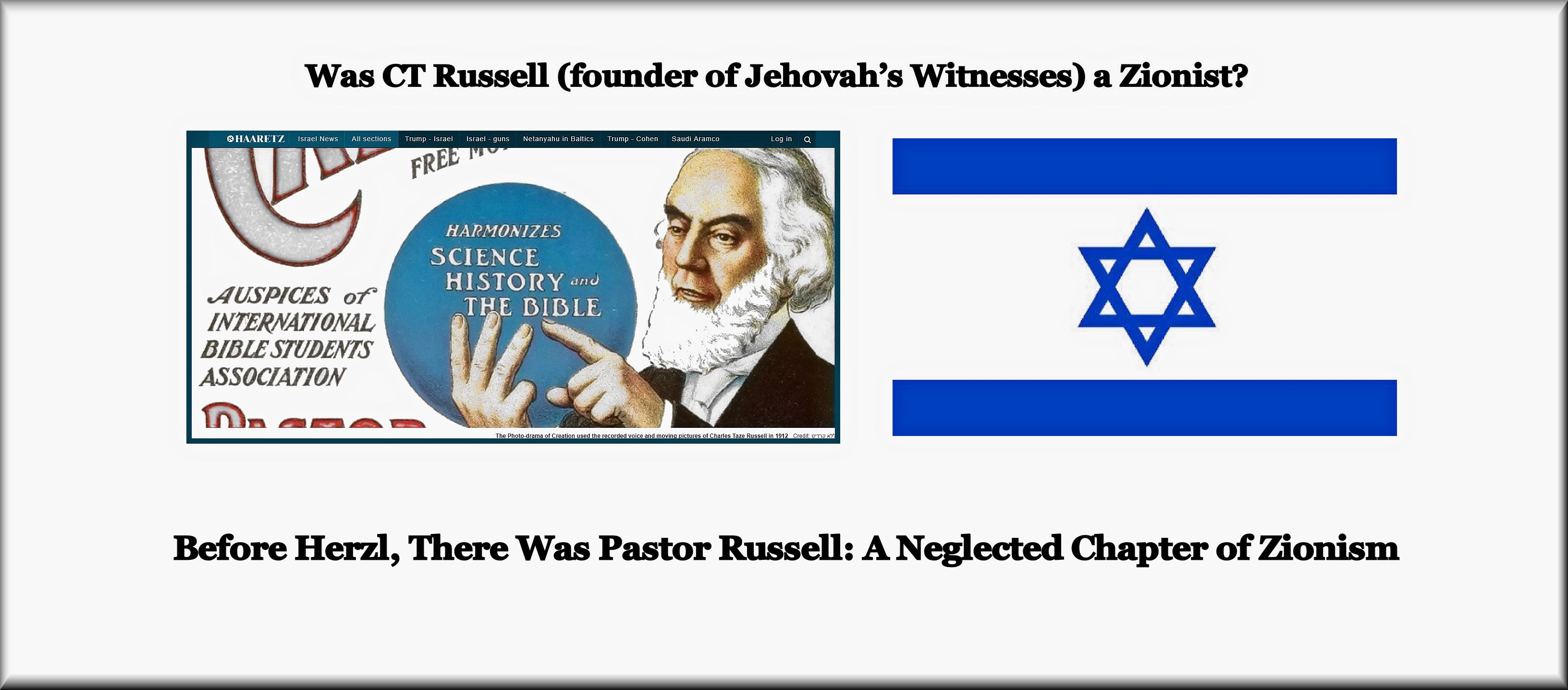


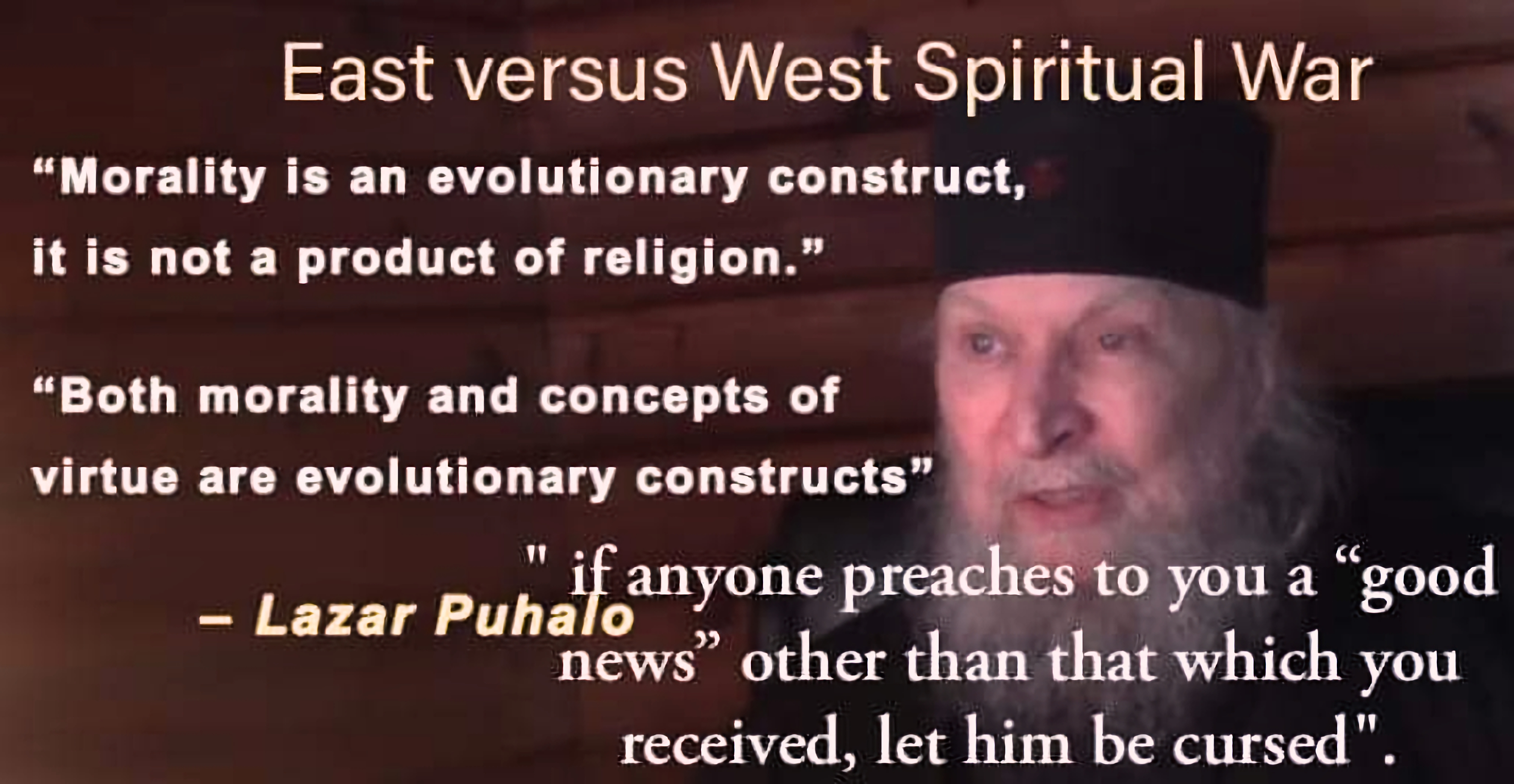


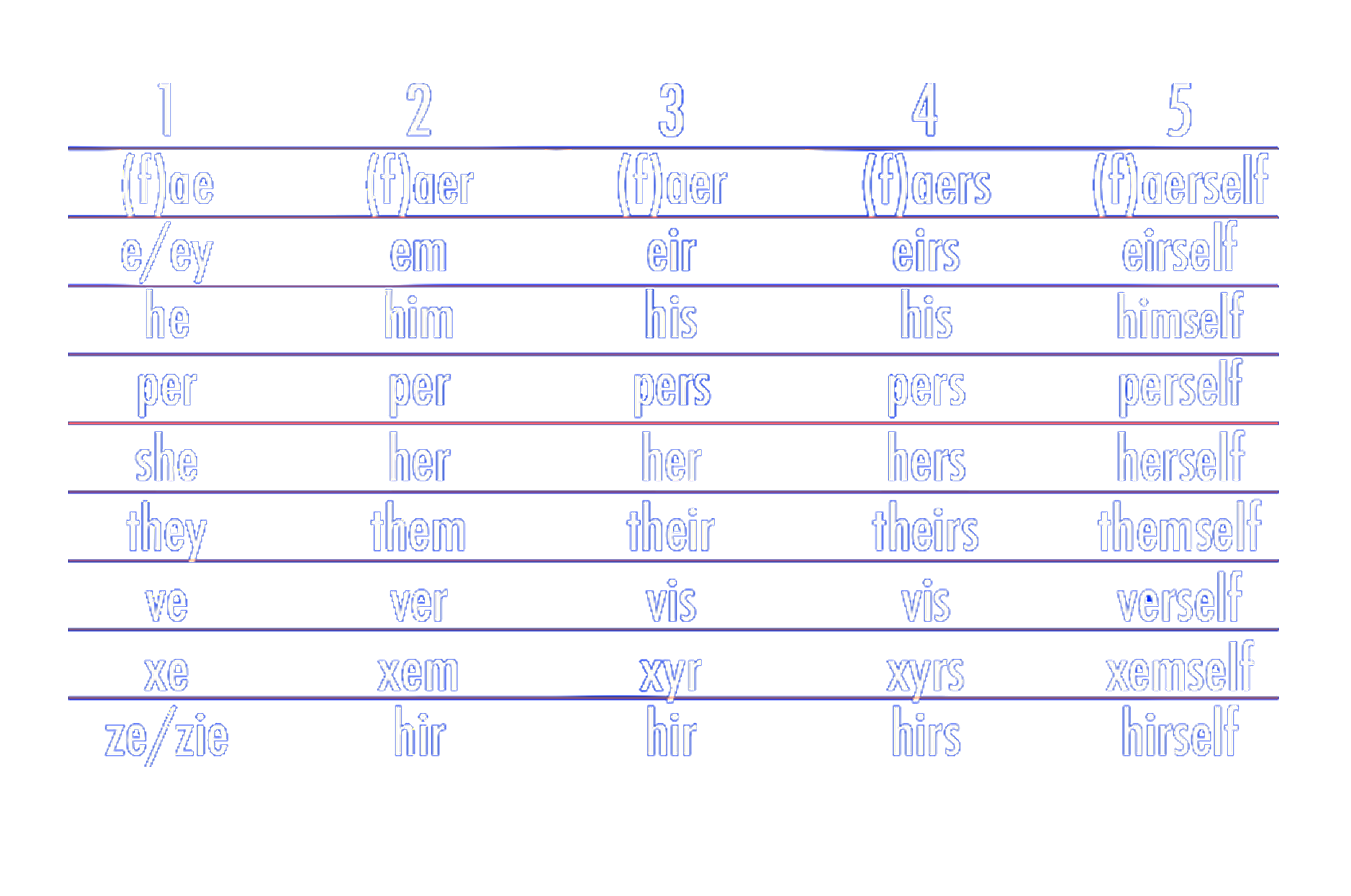













 brotherjohnsite.org