A Fact About Charles Taze Russell That Will Surprise “Jehovah’s Witnesses”
Would it surprise you to know that C.T. Russell, the founder of the Watchtower Bible & Tract Society rejected the idea of being known by any other title than ‘Christian’?
In Russell’s own words, he let it be known that he rejected the idea of of adopting a name for the Bible Students as the group was called at that time, viewing doing so as ”sectarian”.
He, according to his own written statements, only wanted to be simply known as a Christian.
That’s right. Charles Taze Russell , the first president of the Watch Tower Society, opposed the adoption of a distinctive name.
In the Watch Tower publication of April 1882 pages 7,8 Russell said:
“Since you would like to know by what name I would like to distinguish myself from others, I tell you that I would like to be and hope to be a Christian; and I choose, if God finds me worthy, to be called a Christian, a believer, or any other name approved by the Holy Spirit.
And regarding these factional titles (or sects) such as Anabaptist, Presbyterian, Independent or the like, I conclude that they did not come from Antioch or Jerusalem, but from Hell and Babylon, as they tend to cause divisions; you can know them by their fruits.”
In addition, he wrote this in the Watch Tower of March 1883 page 6:
“We always refuse to be called by a name other than that of our head—Christians—and we continually proclaim that there can be no division among those who are continually led by his Spirit and example made known through of His word.”
C.T. Russell would not have approved of the name “Jehovah’s Witnesses”!
Joseph F. Rutherford the second president of the Watch Tower thought differently. And, in a short time he adopted the name “Jehovah’s Witnesses”. Refer to the the Watchtower publication “Proclaimers of God’s Kingdom” chapter 7 pages 79-82 with the theme: “You are my witnesses”.
This idea was based on the scriptural text found at Isaiah 43:10:
“Ye are my witnesses, saith the LORD, and my servant whom I have chosen: that ye may know and believe me, and understand that I am he: before me there was no God formed, neither shall there be after me”.
He seemed to ignore the obvious fact that these words were directed to the NATURAL ISRAELITE nation in specific, and that this was at a time when God was expecting the nation to be “a kingdom of priest” who were to act in behalf of the rest of mankind.
Exodus 19:6
“And ye shall be unto me a kingdom of priests, and an holy nation. These are the words which thou shalt speak unto the children of Israel”.
The nation of Israel failed in that regard and a new arrangement took its place.
Who really is God’s Witness?
Revelation 3:14 gives us the answer:
14 “To the angel of the church in Laodicea write: “The Amen, the Faithful and True Witness, the Head of God’s creation, says these things:
High Priest Jesus Christ is God’s Witness. Notice that Jesus spoke in singular and not plural.
It is only the High Priest who can bear witness in behalf of God. It is only to the High Preist, God has granted access into the Holy of Holies to receive the word of God and then relate God’s word to all others.
On this, C.T. Russell had the correct viewpoint. He understood what a Christian is.
Well then, whose ‘witnesses’ are Christian disciples to be?
Consider the following Bible verses:
Lord Jesus said:
Acts 1:8
“But ye shall receive power, after that the Holy Ghost is come upon you: and ye shall be witnesses unto ME both in Jerusalem, and in all Judaea, and in Samaria, and unto the uttermost part of the earth”.
Whose witness did Peter identfy himself as?
Acts 5:30-32
30 The God of our fathers raised up Jesus, whom ye slew and hanged on a tree.
31 Him hath God exalted with his right hand to be a Prince and a Saviour, for to give repentance to Israel, and forgiveness of sins.
32 And we are HIS witnesses of these things; and so is also the Holy Ghost, whom God hath given to them that obey him.
What Charles T. Russell thought on the matter is in agreement with what the 1st century disciple of Jesus took as a name.
Acts 11:26
“And when he had found him, he brought him unto Antioch. And it came to pass, that a whole year they assembled themselves with the church, and taught much people. And the disciples were called CHRISTIANS first in Antioch”.
As Christians we are called to be witnesses of Jesus Christ, sharing the message of goods news that he received from the Father, his life, death, and his resurrection.
It was the high priest and he alone that was granted access into the Most Holy compartment of the Temple in order to receive instruction from God.
He served as God’s spokesman (witness) in that what he was told from God and then he imparted what he was told to all others. It was the high priest who bore witness in God’s behalf. He was the “Amen” in that arrangement.
Christ being the Eternal High Priest is the “Amen” of God and serves as God’s Witness. So, it is improper for anyone else to ascribe to themselves the title “Jehovah’s Witness”. (Revelation 3:14)
It appears that Russell’s guidance was rejected here.
For anyone to call themselves a direct witness of Jehovah God, is a blatant disrespect of Jesus Christ. And, an attempt to usurp his unique role in God’s arrangement.
It is something God will not approve.
Note:
I am not in any way endorsing C.T. Russell.
Much of what Russell taught was not based on Scripture but on things he believed based on spiritistic signs ie the Giza pyramids, masonic seeking, and from teaching he chose to believe from his contemporaries. Men who went on to form other religions like William Miller.
I have written many post on my website about the mixed and false teachings of Russell.
My comment about rejecting this particular belief was made because it seems odd when considering they have deified almost everything else he said, like they worship the man.
Neither Russell nor Rutherford were faithful to Christ. They both taught wormwood doctrines.
“Now then, as soon as you hear the sound of the trumpets, oboes, lyres, zithers, harps, and all the other instruments, bow down and worship the statue. If you do not, you will immediately be thrown into a blazing furnace. Do you think there is any god who can save you?” Daniel 3:15
The graphic above depicts the huge statue of King Nebuchadnezzar had erected on the Plain of Dura. He erected this very visible 90-foot-tall image of himself so that the residents of Babylon would worship him.
King Nebuchadnezzar was both egotistically proud and vain. He ordered that on the day of its dedication, everybody had to kneel down the statue and worship it. The penalty fo failing to do so was death in a firey furnace.
The account of these events is recorded in the Bible in the Book of Daniel Chapter 3:
Daniel 3:1-7
1 King Nebuchadnezzar made a gold statue, 90 feet high and nine feet wide. He set it up on the plain of Dura in the province of Babylon.
2 King Nebuchadnezzar sent word to assemble the satraps, prefects, governors, advisers, treasurers, judges, magistrates, and all the rulers of the provinces to attend the dedication of the statue King Nebuchadnezzar had set up.
3 So the satraps, prefects, governors, advisers, treasurers, judges, magistrates, and all the rulers of the provinces assembled for the dedication of the statue the king had set up. Then they stood before the statue Nebuchadnezzar had set up.
4 A herald loudly proclaimed, “People of every nation and language, you are commanded:
5 When you hear the sound of the horn, flute, zither, lyre, harp, drum, and every kind of music, you are to fall down and worship the gold statue that King Nebuchadnezzar has set up.
6 But whoever does not fall down and worship will immediately be thrown into a furnace of blazing fire.”
7 Therefore, when all the people heard the sound of the horn, flute, zither, lyre, harp, and every kind of music, people of every nation and language fell down and worshiped the gold statue that King Nebuchadnezzar had set up. (HCSB)
Nebuchadnezzar wasn’t simply attempting to be a role model for his people. It was his desire to be worshiped as a human god. One must be able to appreciate the difference between looking up to a role model and elevating a person, the nation they live in, or a group to the point of worship.
It is important for us to have good people to look up to, but our attitude towards them is also important. Do we treat them like fellow human beings with valuable wisdom to learn from, and who make mistakes? Or do we see them as faultless, hold them to incredibly high standards, and worship them?
Babylon was a land in which life was overshadowed by a vast idolatry. What about idolatry today in the 21st century?
People make role models out of their parents, teachers, sports figures, actors, politicians, religious leaders, and scientist, and even human ideologies. But when they are treated as faultless super-humans and when they are raised up and put on pedestals, we are idolizing them beyond being a simple role models.
This is not a good or healthy thing to do, since all human beings are imperfect having flaws and all sin. They are no god and to liken them to God is an act of blasphemy against the true God.
If a person continues to trust them and believe they never sin, they can be drawn into their sin and not even realize it because they trust they can do no wrong.
Let’s examine three main sources of idolatry today: Celebrities, Nationalism, and Religious Affiliation.
21st century idolatry focuses on worshiping human beings in a cult of personality and the worship of human institutions more than idols of wood, stone, and metal.
Celebrity Worship
A celebrity is simply a famous, well-known person. Celebrity worship—is it more than just being a casual fan.
To explore this question, a number of scales have been developed to assess celebrity adulation. The most prevalent scale of this type in the literature is the Celebrity Attitudes Scale. Using these types of scales, investigators have examined various college-student and community samples. Findings reveal that individuals with high scores on celebrity-worship scales tend to display a number of psychosocial characteristics.
For example, these individuals may harbor concerns about body image (particularly young adolescents), be more prone to cosmetic surgery, and have a personality style characterized by sensation-seeking, cognitive rigidity, identity diffusion, and poor interpersonal boundaries.
Likewise, celebrity worshippers may exhibit narcissistic features, dissociation, addictive tendencies, stalking behavior, and compulsive buying. Studies also indicate that individuals with high levels of celebrity worship are more likely to have poorer mental health as well as clinical symptoms of depression, anxiety, and social dysfunction.
Of note, no study to date has examined celebrity worshippers for bona fide Axis I and II psychiatric disorders. However, given that celebrity worship exists along a continuum, it appears that being on the high end of this continuum is likely to be associated with a number of potential psychological maladies.
It’s amazing how casually this term has infiltrated our culture—and even our hearts. Entertainment stars are now literally dubbed “idols”, and not many give a second thought to the usage of the term so light-heartedly. Do you ever wonder why producers chose the name “American Idol”?
A great deal of how we think and conduct ourselves is learned through observation. Not only do children learn from role models, but adults as well imitate behaviors of those they admire. Researchers suggest that as much as 95% of all human behaviors are learnt through looking up to others as role models. However, even if it were only partially true it is a very good reason to choose positive role models, for ourselves and our children and in doing so, resist the inclination to idolize that role model.
In today’s around-the-clock media saturated environment, many are likely to be choosing their role models from the field of sports, entertainment figures, politicians, or those successful in business without trying to differentiate between seeing them as a role model and seeing them as a super-hero. They find themselves putting these figures on a pedestal and worshiping their every behavior.
It is easy to take on their mannerisms and qualities without being aware of it. They never ask themselves: “Does this individual lead the kind of life that I really want to and should emulate?”
More importantly for the Christian disciple, only God is worthy of worship. When celebrities worship themselves or allow others to worship them, it results in arrogant pride and self-centeredness, which leads to disaster and tragedy for themselves as well as those who worship them.
The most powerful biblical example of that of Satan. His pride and hubris led him to forget that it was God who had endowed him with everything he possessed.
Note what God said concerning Satan through his prophet Ezekiel: (referring to Satan as the King of Tyrus or Tyre)
Ezekiel 28:2-5, 13-18
2 Son of man, say unto the prince of Tyrus, Thus saith the Lord God; Because thine heart is lifted up, and thou hast said, I am a God, I sit in the seat of God, in the midst of the seas; yet thou art a man, and not God, though thou set thine heart as the heart of God:
3 Behold, thou art wiser than Daniel; there is no secret that they can hide from thee:
4 With thy wisdom and with thine understanding thou hast gotten thee riches, and hast gotten gold and silver into thy treasures:
5 By thy great wisdom and by thy traffick hast thou increased thy riches, and thine heart is lifted up because of thy riches:
13 Thou hast been in Eden the garden of God; every precious stone was thy covering, the sardius, topaz, and the diamond, the beryl, the onyx, and the jasper, the sapphire, the emerald, and the carbuncle, and gold: the workmanship of thy tabrets and of thy pipes was prepared in thee in the day that thou wast created.
14 Thou art the anointed cherub that covereth; and I have set thee so: thou wast upon the holy mountain of God; thou hast walked up and down in the midst of the stones of fire.
15 Thou wast perfect in thy ways from the day that thou wast created, till iniquity was found in thee.
16 By the multitude of thy merchandise they have filled the midst of thee with violence, and thou hast sinned: therefore I will cast thee as profane out of the mountain of God: and I will destroy thee, O covering cherub, from the midst of the stones of fire.
17 Thine heart was lifted up because of thy beauty, thou hast corrupted thy wisdom by reason of thy brightness: I will cast thee to the ground, I will lay thee before kings, that they may behold thee.
18 Thou hast defiled thy sanctuaries by the multitude of thine iniquities, by the iniquity of thy traffick; therefore, will I bring forth a fire from the midst of thee, it shall devour thee, and I will bring thee to ashes upon the earth in the sight of all them that behold thee. (KJV)
Rather than honoring and worshiping the God who created him and gave him beauty, Satan became proud, essentially worshiping himself. Self-pride can have the same effect on a human and cause them to seek the worship of others.
There is no shortage of negative role models in today’s society. Western media has had a greatly impacted on people’s minds in a negative way around the globe. The media often calls people towards the doing of evil. This is not a new phenomenon. Nebuchadnezzar was doing just this when he erected the golden statue of himself on the Plain of Dura.
Worship of the State
The cult of State worship is a real thing. This is when a society worships the government over all else. The people are called statists, they have a love of State.
State worship is contrary to the will of God. Nothing in the teachings of either Christ or the apostles calls for love or loyalty to one nation above others. While Christian disciples are urged in Scripture to honor governing leaders and obey laws that are not contrary to God’s will, there is no command to love or have allegiance for any earthly realm or earthly leader.
Paul, in the Book of Romans, tells us what a disciple of Christ duties to the State are and why.
Romans 13:1-
1 Everyone must submit to the governing authorities, for there is no authority except from God, and those that exist are instituted by God.
2 So then, the one who resists the authority is opposing God’s command, and those who oppose it will bring judgment on themselves.
3 For rulers are not a terror to good conduct, but to bad. Do you want to be unafraid of the authority? Do what is good, and you will have its approval.
4 For government is God’s servant for your good. But if you do wrong, be afraid, because it does not carry the sword for no reason. For government is God’s servant, an avenger that brings wrath on the one who does wrong.
5 Therefore, you must submit, not only because of wrath, but also because of your conscience.
6 And for this reason you pay taxes, since the authorities are God’s public servants, continually attending to these tasks.
7 Pay your obligations to everyone: taxes to those you owe taxes, tolls to those you owe tolls, respect to those you owe respect, and honor to those you owe honor.
Since these human institutions act as God’s servants in maintaining civil order and because they exist according to God’s will, we should be obedient to the extent their will is not in conflict with the expressed will of God. But this is a far cry from deifying a government, state, or nation.
Worship of State has been described as “the most destructive, dangerous, bloody and virulent mind disease in history”. In the 20th century alone, 200 million people were sacrificed at its altar.
Even more shocking is the fact that in both World War I and World War II, the professed Christian churches of Christendom readily aligned its goals of nationalistic ideals. Their thoughts of ‘Christian brotherhood’ became non-existent. Catholics, Protestants, and members of other professed Christian denominations on one side of the war, saw it as their duty to fight and kill members of the same faith denomination on the other side of the war. Catholic priest blessed enemy combatants on both sides of the war!
Catholic priest offer blessings on both sides of war
For these nationalistic combatants, their allegiance was first to Country and lesser to God. During World War I, Christendom’s religious leaders married nationalism and their faith.
“One of the things which stands out prominently in the picture of the First World War is the uncritical identification of the cause of Christianity with the cause of the Allied Nations. “The flag and the Cross,” a trusted Christian leader declared in 1917, “are now both working for the same ends.”
This idea is totally out of harmony with the teachings of Jesus Christ. What did Jesus say concerning his kingdom when speaking to Pontius Pilate?
John 18:33-36
33 Then Pilate went back into the headquarters, summoned Jesus, and said to Him, “Are You the King of the Jews?”
34 Jesus answered, “Are you asking this on your own, or have others told you about Me?”
35 “I’m not a Jew, am I?” Pilate replied. “Your own nation and the chief priests handed You over to me. What have You done?”
36 “My kingdom is not of this world,” said Jesus. “If My kingdom were of this world, my servants would fight, so that I wouldn’t be handed over to the Jews. As it is, my kingdom does not have its origin here.”
Jesus himself resisted attempts of others to make him a political ruler.
John 6:14-15
14 When the people saw the sign He had done, they said, “This really is the Prophet who was to come into the world!”
15 Therefore, when Jesus knew that they were about to come and take Him by force to make Him king, He withdrew again to the mountain by Himself.
Jesus is the Master of the Kingdom of Heaven. Those who have allegiance to earthly nations, bow to other masters. Jesus said:
Matthew 6:24a
“No man can serve two masters: for either he will hate the one, and love the other; or else he will hold to the one, and despise the other”.
So, it is hard to imagine how these leaders of Christendom could earnestly believe that they were being obedient followers of Jesus Christ. More likely, they were opportunist who used the name of Christ to further their nationalist ambitions.
Their hypocrisy mirrors that of the Pharisees Jesus condemned harkening back to the words of the prophet Isaiah:
Matthew 15:7-9
7 Hypocrites! Isaiah prophesied correctly about you when he said:
8 These peoplehonor Me with their lips, but their heart is far from Me.
9 They worship Me in vain, teaching as doctrines the commands of men.”
They worshiped the State and that is idolatry. State worship still abounds in the 21st century,
Do you idolize your religious denomination?
Idolizing A Religious Group
A big mistake when it comes to spotting idolatry, is thinking that we cannot idolize something that intuitively seem that it has to be a ‘good’ thing by nature. The truth is that everything that man idolizes is something that he/she perceives to be a ‘good’ thing. A person can easily think that if it’s an attempt to worship God, it has to be good. But this is a wrong and dangerous assumption to make. Let’s examine this idea.
The religion a person practices often falls into a blind spot when it comes to being careful to avoid idolatry.
But the Bible is full of examples of people who either intentionally or unintentionally allowed themselves to fall into the practice of idolatry. We will examine two of these. The first notable example is what occurred at the base of Mount Sinai shortly after God had saved the Hebrew seed of Abraham from the cruel slavery of their Egyptian captors. It is the well-known story of the golden calf Aaron made. The second is when the Israelites fell into the worship of the copper/bronze serpent.
The Golden Calf
The story of the golden calf is widely regarded as one of the most disgraceful moments in Jewish history. In Exodus, chapters 31-32, just a mere 40 days after receiving the Torah, the Hebrew people created an idol.
The Bible tells us about how three months after leaving Egypt, and only 40 days after receiving the Commandments from God at Mount Sinai, the Hebrew people created an idol and began to worship it.
Having miscalculated the date of Moses’ promised return from the mountain, the people thought that Moses had died. They decided to replace him, and with the help of Aaron, formed a golden calf and worshiped it.
Jewish historian state that along with those Hebrews who exited Egypt there were a group of non-Hebrews outcast who accompanied them. So, it was a mixed group.
Because things weren’t happening as they presumed the way they were supposed to, they did not remain faithful to God’s commandments. In their desperation, they sought the aid of the gods they had worshiped previously, and this led to the creation of the golden calf image.
It is also notable that Aaron who acted as the nation’s priest, failed in his role to ensure pure worship of Jehovah and allowed himself to become part to the idolatry.
“We do not know what has happened to this man Moses, who led us out of Egypt; so make us a god to lead us.”
Similarly in modern times, when things did not happen within the time frame that Watchtower Society teachers had predicted they occur, the leaders and group in desperation deviated from the commandments of God. They rejected the Greater Moses, Jesus Christ, and appointed earthling men as their mediator with God. Their teachings have effectively removed Jesus Christ from his exclusive role as High Priest before God.
In place of Jesus, they have made the Watchtower Organization, Charles T. Russell, J.F. Rutherford, and its Governing Body the objects of their devotion.
We often think of idols as objects of wood or stone, silver or gold. But an idol is actually defined as an object of extreme devotion… a false god. In other words, an idol can be anything to which we are devoted to the point of enshrining it on the throne of our hearts, giving it the role of our supplier or provider.
The Watchtower Organization has become the ‘golden calf’ that they formed with their own hands and now worship. And in their desire to grow in numbers over the decades, many insincere and even godless people have entered among them just as what happened to the Israelites exiting Egypt.
The Copper Serpent
Numbers 21:4-9:
Then the Lord said to Moses, “Make a snake image and mount it on a pole. When anyone who is bitten looks at it, he will recover.” So Moses made a bronze snake and mounted it on a pole. Whenever someone was bitten, and he looked at the bronze snake, he recovered.
4 Then they set out from Mount Hor by way of the Red Sea to bypass the land of Edom, but the people became impatient because of the journey.
5 The people spoke against God and Moses: “Why have you led us up from Egypt to die in the wilderness? There is no bread or water, and we detest this wretched food!”
6 Then the Lord sent poisonous snakes among the people, and they bit them so that many Israelites died.
7 The people then came to Moses and said, “We have sinned by speaking against the Lord and against you. Intercede with the Lord so that he will take the snakes away from us.” And Moses interceded for the people.
8 Then the Lord said to Moses, “Make a snake image and mount it on a pole. When anyone who is bitten looks at it, he will recover.”
9 So Moses made a bronze snake and mounted it on a pole. Whenever someone was bitten, and he looked at the bronze snake, he recovered.
But, by the time of the reign of King Hezekiah, some of the Israelites had begun worshiping the copper serpent.
2 Kings 18:1-4
1 In the third year of the reign of Hoshea son of Elah as king of Israel, Hezekiah son of Ahaz became king of Judah
2 at the age of twenty-five, and he ruled in Jerusalem for twenty-nine years. His mother was Abijah, the daughter of Zechariah.
3 Following the example of his ancestor King David, he did what was pleasing to the Lord. 4 He destroyed the pagan places of worship, broke the stone pillars, and cut down the images of the goddess Asherah. He also broke in pieces the bronze snake that Moses had made, which was called Nehushtan. Up to that time the people of Israel had burned incense in its honor.
It was God by His power who sent the poisonous snakes amongst the disobedient people. And it was by God’s power they were healed. It was not by some inner power of the copper snake God had Moses make. It was faith and belief that led to their being healed from their from snake bites.
Jesus alluded to this fact when he spoke to the man Nicodemus:
John 3:14-15
As Moses lifted up the bronze snake on a pole in the desert, in the same way the Son of Man must be lifted up, 15 so that everyone who believes in him may have eternal life.
History proves that the Israelites did not put their trust in God but rather into ‘things’. It was the tendency of the Israelites to latch onto physical things as demonstrated in their claim to possessing the “Law,” the holy writings (of the prophets), and God’s temple. Putting emphasis on these things made them prideful. It also made them feel superior as opposed to non-Jews. And having these things gave them a false sense of security, thinking that God would always approve of and protect them, even when they were flagrantly disobedient. Time and again, they were sent into captivity for their disobedience, proving that their false reasoning meant nothing to God. Those feelings still are prevalent today among many Jewish people.
When most people think of idolatry, they imagine the images carved to look like animals out of gold, silver, and jewels, because this is how the Bible described how it happened a few thousand years ago. But what they fail to realize is that we can make literally anything an idol including a religious group. Worshiping something, anything, besides God, is idolatry.
This type of idolatry is common and it begins with the leaders of religious groups setting themselves up to be an idol for people, rather than reserving their worship for God.
When so-called Christian denominations create a culture and an environment in their group that demands it’s members be devoted and in service to them, idolatry is the result.
The denomination becomes a clique and a social club. A group with its own culture, membership standards, and activities, makes for easy idolatry to materialize within it. Membership requires that they be so consumed in group activities that it leads to a disconnect with having a relationship with God. Members out of reverence for their religious group soon find themselves spending all of their time serving group requirements that they lose sight of reverence for God and meeting His requirements.
Your religious denomination/group is not equal to or synonymous with God, no matter what your leaders tell you, and no matter how much you love the group. If you believe so, you are idolizing your religious group.
Celebrity worship, whether it is an entertainment figure, a politician, a commercial success, or a well known religious leader—is more than just being a casual fan. It is being a party to a cult of personality.
It is easy to take on their mannerisms and qualities without being aware of it. They never ask themselves: “Does this individual lead the kind of life that I really want to and should emulate?”
Do we treat them like fellow human beings with possibly valuable wisdom to learn from, and who make mistakes? Or do we see them as faultless, put them on a pedestal, and worship them?
If a person continues to trust them and believe they never sin, they can be drawn into their sin and not even realize it because they trust they can do no wrong.
State worship is real and State worship is contrary to the will of God. While Christian disciples are urged in Scripture to honor governing leaders and obey laws that are not contrary to God’s will, there is no command to love or have allegiance for any earthly realm or earthly leader. No man can serve two masters.
The religion a person practices often falls into a blind spot when it comes to being careful to avoid idolatry. When so-called Christian denominations create a culture and an environment in their group that demands it’s members be devoted and in service to them, idolatry is the result. Your religious denomination/group is not equal to or synonymous with God, no matter what your leaders tell you.
We often think of idols as objects of wood or stone, silver or gold. But an idol is actually defined as an object of extreme devotion… a false god. In other words, an idol can be anything to which we are devoted to the point of enshrining it on the throne of our hearts, giving it the role of our supplier or provider.
Worshiping something, anything, besides God, is idolatry.
“Neither is there salvation in any other: for there is none other name under heaven given among men, whereby we must be saved.”Acts4:12
Who Is Your Savior? On Whom Does Your Salvation Depend?
Do you look at your pastor as your savior? Do you look to your religious group or organization for salvation?
If you do, you are not following the instruction found in the Holy Bible and Jesus Christ is not your Savior.
Efforts to exalt fellow human beings instead of the Lord, Jesus Christ as Savior are not a new phenomenon. There were many who were doing this very thing in the first century at the formation of the Christian assembly.
So much was the case that the apostle Paul had to write a sternly worded letter about this subject to the Body members who resided in Corinth.
He had to remind them that they were not baptized in his nor any other man’s name that ministers as a servant to Christ.
He had to remind them whom it was that died in their behalf in order that the door to salvation would be opened to them.
The apostle pointed out to the Corinthians that what they were doing when they claimed to be followers of a specific minister of Christ, was actually attempting to divide Christ.
In 1 Corinthian 1:29, Paul tells them and us, that God purposed things in the way He did so that no human had cause to be boasting in themselves. But rather, that the glory be to God and Christ.
In Chapter 3 verse one, Paul said that their behavior was “self-directed” according to their “fleshly nature” and he said that their actions were based on jealousy.
Lastly, Paul makes clear that it is not the minister that spiritual growth is dependent upon, but that growth is dependent upon the Holy Spirit of God.
Please read the text of the first of letter Paul wrote to the congregation of Corinthian and then ask yourself “Am I looking to Jesus Christ as my Savior, or someone or something else”?
1 Corinthians 1
1 Paul, called as an apostle of Christ Jesus by God’s will, and Sosthenes our brother:
2 To God’s church at Corinth, to those who are sanctified in Christ Jesus and called as saints, with all those in every place who call on the name of Jesus Christ our Lord—both their Lord and ours.
3 Grace to you and peace from God our Father and the Lord Jesus Christ.
4 I always thank my God for you because of God’s grace given to you in Christ Jesus,
5 that by Him you were enriched in everything—in all speech and all knowledge.
6 In this way, the testimony about Christ was confirmed among you,
7 so that you do not lack any spiritual gift as you eagerly wait for the revelation of our Lord Jesus Christ.
8 He will also strengthen you to the end, so that you will be blameless in the day of our Lord Jesus Christ.
9 God is faithful; you were called by Him into fellowship with His Son, Jesus Christ our Lord.
10 Now I urge you, brothers, in the name of our Lord Jesus Christ, that all of you agree in what you say, that there be no divisions among you, and that you be united with the same understanding and the same conviction.
11 For it has been reported to me about you, my brothers, by members of Chloe’s household, that there is rivalry among you.
12 What I am saying is this: Each of you says, “I’m with Paul,” or “I’m with Apollos,” or “I’m with Cephas,” or “I’m with Christ.”
13 Is Christ divided? Was it Paul who was crucified for you? Or were you baptized in Paul’s name?
14 I thank God that I baptized none of you except Crispus and Gaius,
15 so that no one can say you were baptized in my name.
16 I did, in fact, baptize the household of Stephanas; beyond that, I don’t know if I baptized anyone else.
17 For Christ did not send me to baptize, but to evangelize—not with clever words, so that the cross of Christ will not be emptied of its effect.
18 For the message of the cross is foolishness to those who are perishing, but it is God’s power to us who are being saved.
19 For it is written: I will destroy the wisdom of the wise, and I will set aside the understanding of the experts.
20 Where is the philosopher? Where is the scholar? Where is the debater of this age? Hasn’t God made the world’s wisdom foolish?
21 For since, in God’s wisdom, the world did not know God through wisdom, God was pleased to save those who believe through the foolishness of the message preached.
22 For the Jews ask for signs and the Greeks seek wisdom,
23 but we preach Christ crucified, a stumbling block to the Jews and foolishness to the Gentiles.
24 Yet to those who are called, both Jews and Greeks, Christ is God’s power and God’s wisdom,
25 because God’s foolishness is wiser than human wisdom, and God’s weakness is stronger than human strength.
26 Brothers, consider your calling: Not many are wise from a human perspective, not many powerful, not many of noble birth.
27 Instead, God has chosen what is foolish in the world to shame the wise, and God has chosen what is weak in the world to shame the strong.
28 God has chosen what is insignificant and despised in the world—what is viewed as nothing—to bring to nothing what is viewed as something,
29 so that no one can boast in His presence.
30 But it is from Him that you are in Christ Jesus, who became God-given wisdom for us—our righteousness, sanctification, and redemption,
31 in order that, as it is written: The one who boasts must boast in the Lord.
1 Corinthians 3
1 My fellow believers, when I was with you previously, I was not able to teach you as I would teach people who are controlled by the Holy Spirit. Instead, I had to teach you as I would teach people whom their fleshly nature controls. I taught very simple concepts to you who had recently believed in Christ, as a parent would speak very simple words to a baby.
2 I did not teach you things that were difficult for you to understand, just like a woman does not give her baby solid food that the baby cannot chew and digest. And just like a woman gives her baby milk, I taught you simple spiritual concepts, because at that time you were not able to understand difficult things. And you are still not able to understand difficult concepts,
3 because you are still controlled by your self-directed, fleshly nature. Some of you are jealous and quarreling. Does not that prove your self-directed nature is controlling you? It shows that you are acting like unbelievers act.
4 By some of you saying, “I am loyal to Paul,” and others saying, “I am loyal to Apollos,” does not it show that you are acting like unbelievers?
5 So what you really ought to think about Apollos and me is that we are merely men who serve God. As a result of our telling you the message about Christ, you trusted in him. Both of us are merely doing the work that the Lord appointed us to do.
6 I was the first one who preached God’s message to you. I was like someone who plants seeds. Later, Apollos taught you more of God’s message. That was like someone who waters plants after they start to grow. But it is God who enables people to grow spiritually, just like he is the one who causes plants to grow.
7 So the person who first preaches God’s message to people is not important, and the person who later teaches people more of God’s message is not important, just like it is not the person who plants the seeds or the person who waters the plants who is important. Instead, it is God, who causes plants to grow and who causes people to grow spiritually, who is important.
8 The person who first preaches God’s message to people and the one who later teaches them more of God’s message both are trying to reach the same goal. And God will reward each of them according to how they served Him.
9 Remember that Apollos and I are both working together for God. You do not belong to us. Just like a field belongs to its owner, not to those who work in it, you belong to God, not to us who work for him.
Also, a house belongs to its owner. It does not belong to the man who built it. Similarly, God is the one to whom you belong.
10 Just like a skilled person puts a foundation in the ground before he builds a house, as a result of God kindly helping me, I was the first one who declared the message about Christ to you. And, just like others build a house on its foundation, there were others who later taught you more about Christ. But just like each person who builds a house must be careful about what materials he uses to build it, each person who teaches God’s truth must be careful about what he teaches.
11 Just like people can put in only one foundation for a house, there is only one message that we can give to people. That message is about Jesus Christ. (Translation for Translators)
There is no doubt that a true disciple of Jesus only looks at him as their Savior and only look at him as God’s means of salvation.
Preachers and religious organization that teach that you must be their follower to gain salvation, are lying to you and leading you away from the true Savior, Jesus Christ.
At 1 Corinthian 1:13, the apostle Paul mentions an all-important fact that many professed believers have either overlooked or have chose to disregard.
1 Corinthian 1:13
“Is Christ divided? Was it Paul who was crucified for you? Or were you baptized in Paul’s name?”
A Christian disciple is to make their vow to God at their baptism according to the instructions that Jesus himself left to follow.
Matthew 28:19, 20
19 Go, then, to all peoples everywhere and make them my disciples: baptize them in the name of the Father, the Son, and the Holy Spirit,
20 and teach them to obey everything I have commanded you. And I will be with you always, to the end of the age.”
Did your baptismal vow include more than the “name of the Father, the Son, and the Holy Spirit”? Did it also include the name of a religious denomination? Then was it really a valid baptism in God’s eyes?
Please consider these questions by reviewing the post entitled “Is a Denominational Baptism Scriptural? Is it Valid? Is it a Sin?
“Nevertheless, when the Son of Man comes, will he find faith on the earth?
Luke 18:7-8
7 Won’t God avenge his chosen ones, who are crying out to him day and night, and yet he exercises patience with them?
8 I tell you that he will avenge them quickly. Nevertheless, when the Son of Man comes, will he find faith on the earth?”
These are the words of Jesus Christ. The Lord’s question should cause a professed disciple of his to wonder why he would ask such a question.
Jesus’ statement does not imply that he himself felt that true faith would be abundant among humankind when he returned. In fact, he questioned whether there would be any at all.
Yet, according to the Pew Research Center, in 2015, there were 2.3 billion Christians of all ages living in the world. The Center for the Study of Global Christianity (CSGC) at Gordon-Conwell Theological Seminary, reported that the number of Christians in the world edged past 2.5 billion in 2019. This represents almost one third of the Earth’s population.
Given Jesus’ question, something doesn’t add up does it?
Note also what he is quoted as saying found in the gospel of Matthew:
Matthew 7:13-14
13 “Enter in by the narrow gate; for wide is the gate and broad is the way that leads to destruction, and many are those who enter in by it.
14 How narrow is the gate, and difficult is the way that leads to life. Few are those who find it.
Here he says that “few” are those who truly find and who truly travel the pathway of righteousness.
Paul spoke prophetically about this phenomenon in his first letter to Timothy:
1 Timothy 4:1-2
1 But the Spirit says expressly that in later times some will fall away from the faith, paying attention to seducing spirits and doctrines of demons,
2 through the hypocrisy of liars, branded in their own conscience as with a hot iron;
He is saying that many in the last days would succumb to teachings that do not equate with true Christian discipleship and that their conduct would not demonstrate true faith.
In his second letter to Timothy, Paul specifically described one of two contributing factors that would result in a scarcity of true faith.
2 Timothy 4:3-4
3 For the time will come when people will not tolerate healthy doctrine, but with itching ears will surround themselves with teachers who cater to their people’s own desires.
4 They will refuse to listen to the truth and will turn to myths.
The second main contributor is the infiltration of false teachers into the church brotherhood.
The apostle Peter warned about them:
2 Peter 2:1-2, 12, 17-19
1 Now there were false prophets among the people, just as there also will be false teachers among you, who will secretly introduce destructive heresies and even deny the Master who bought them, bringing swift destruction on themselves.
2 Many people will follow their immoral ways, and because of them the way of truth will be maligned.
12 These people, like irrational animals, are mere creatures of instinct that are born to be caught and killed. They insult what they don’t understand, and like animals they, too, will be destroyed,
17 These men are dried-up springs, mere clouds driven by a storm. Gloomy darkness is reserved for them.
18 By talking high-sounding nonsense and using sinful cravings of the flesh, they entice people who have just escaped from those who live in error.
19 Promising them freedom, they themselves are slaves to depravity, for a person is a slave to whatever conquers him.
These false teachers have a confusing and a divisive effect that stumbles many seeking true faith.
1Timothy 6:3-5
3 If anyone teaches false doctrine and refuses to agree with the sound words of our Lord Jesus, the Messiah, and godly teaching,
4 he is a conceited person and does not understand anything. He has an unhealthy craving for arguments and debates. This produces jealousy, rivalry, slander, evil suspicions,
5 and incessant conflict between people who are depraved in mind and deprived of truth. They think that godliness is a way to make a profit.
Even though many profess to be Christ’ disciples, the reality is that few truly are. They have not heeded the apostle Peter’s warning found in 2 Peter 2:1.
The apostle Peter pointed out that it is the one who earnestly seeks God that is manifesting true faith.
Hebrews 11:6:
6 But without faith it is impossible to please him: for he that cometh to God must believe that he is, and that he is a rewarder of them that diligently seek him.
Jesus’ question regarding the presence of true faith when he returns, emphasized how scarce it would be and how hard it would be to maintain it.
Will you fight to be one of the few?
What Is Godly Fear?
Godly fear
What does it mean to fear God?
Does the Bible contradict itself on this matter?
Ecclesiastes 12:13 exhorts:
Let us hear the conclusion of the whole matter: Fear God, and keep his commandments: for this is the whole duty of man. KJVlite
Over and over in the Bible we are exhorted to fear God, to have the fear of the Lord, to live in godly fear.
Deuteronomy 6:24
So the Lord commanded us to observe all these statutes, to fear the Lord our God for our good always and for our survival, as it is today.
Deuteronomy 10:12
And now, Israel, what doth the LORD thy God require of thee, but to fear the LORD thy God, to walk in all his ways, and to love him, and to serve the LORD thy God with all thy heart and with all thy soul
Psalm 31:19
How great is Your goodness,
Which You have stored up for those who fear You,
Which You have wrought for those who take refuge in You,
Before the sons of men!
Psalm 147:11
The Lord favors those who fear Him,
Those who wait for His lovingkindness.
Proverbs 19:23
The fear of the LORD leads to life, then contentment; he rests and will not be touched by trouble.
But why should we fear God? Isn’t God love?
1 John 4:18 clearly tells us that: “There is no fear in love; but perfect love casts out fear, because fear involves torment. But he who fears has not been made perfect in love.”
Is this a contradiction?
Godly fear isn’t the same as fear of a tyrant, or a dictator. We don’t need to fear His anger, unless we fear punishment due to a bad conscience and an unrepentant heart because of sin. (Romans 2:5-9)
To fear God is absolute reverence and awe for Almighty God, the Creator of all things, including we ourselves individually.
This causes us to fear to sin against Him, because we want nothing else in this world than to be pleasing to Him, and to bring honor to His name. We fear to cause Him sorrow or grief, knowing how incredibly wicked willful sin is, how much God hates it, and how much it hurts Him when we sin.
Please re-read the passage above from Deuteronomy 10:12.
Proverbs 8:13 states very succinctly what the fear of God means:
The fear of the LORD is to hate evil. I hate pride, arrogance, the evil way, and the perverse mouth.
Some attempt to pit Ecclesiastes 10:12 and 1 John 4:18 against each other and claim the Bible contradicts itself. There is no contradiction.
1 John 4:18 is stated to a specific group who obediently accept Jesus as Messiah. Refer to verse two of the same chapter:
1 John 4:2
By this you know the Spirit of God: every spirit who confesses that Jesus Christ has come in the flesh is of God,
These words are specifically spoken to those truly in union with Christ by accepting him. It is not a general statement to all humankind.
These words are directed toward those who love God and keep His commandment out of love for Him. They have no reason to fear.
That cannot be said of all people. There are those who should properly be in fear because they do not obey him out of love.
For them, Paul's words found in Romans 2:5-9 apply:
5 But according to your hardness and unrepentant heart you are storing up for yourself wrath in the day of wrath and revelation of the righteous judgment of God;
6 who “will pay back to everyone according to their works:”
7 to those who by perseverance in good works seek glory and honor and immortality -- everlasting life.
8 But to those who are self-seeking, and do not obey the truth, but obey wickedness -- wrath and anger,
9 affliction and distress, on every human being who does evil, to the Jew first, and also to the Greek.
The Bible does not contradict itself on this matter nor any other matter.
Watch Your Footsteps Carefully
Watch Your Footsteps Carefully…Watch How You Walk
The word ‘Christian’ does not mean an admirer of Christ, nor recipient of Christ’s blessings, nor even one who simply believes in Christ. It means much more than that.
‘Christian’ means to be a follower of Jesus Christ. A Christian is a disciple of Christ.
According to the Cambridge Dictionary, this is the definition of what a disciple is:
“a person who believes the ideas and principles of someone famous and tries to live the way that person does or did”.
Jesus came as a man and left us an example to follow in our conduct of how we are to think and behave.
1 Peter 2:21
For even hereunto were ye called: because Christ also suffered for us, leaving us an example, that ye should follow his steps:
Sin has a grip on all people, and we have all fallen short of God’s will in our lives at some time.
Even those of us who attempt to lead a godly life must be honest with ourselves and admit that we are imperfect sinners and must therefore pay constant attention to our behavior.
Consider our thoughts. Are they always so pure and noble, loving and forgiving as we make ourselves out to be? Or do we harbor hatred in our heart?
Consider our words. Are all our words a blessing? Do we offer blessings and yet curse with the same tongue?
Consider our conduct. Are all our deeds unselfish? Do we do things for God’s glory or our own? Are we really following in Jesus’ footsteps?
Because of the perversion of real Christianity you may never have heard of this kind of Christianity, but God’s Word speaks of no other kind. Pick up your Bible today, and rather than reading what Jesus did in your place, read how you can follow in Jesus’ footsteps to become like Him!
Ask yourself, “Am I really a Christian, according to the Bible?” If this is the life you want, don’t hesitate. Pray that God will give you His Spirit, and then start following in Jesus’ footsteps in the way you behave.
We have this Scriptural admonition as a reminder and as a warning:
Hebrews 3:12-14
12 Beware, brothers, lest perhaps there be in any one of you an evil heart of unbelief, in falling away from the living God;
13 but exhort one another day by day, so long as it is called “today;” lest any one of you be hardened by the deceitfulness of sin.
14 For we have become partakers of Christ, if we hold fast the beginning of our confidence firm to the end:
The Holy Scriptures long ago counseled worshipers of the living and only true God to watch their steps in order to maintain pure worship and good standing before Him:
Ecclesiastes 5:1
Walk prudently when you go to the house of God; and draw near to hear rather than to give the sacrifice of fools, for they do not know that they do evil.
Proverbs 4:26
26 Ponder the path of thy feet, and let all thy ways be established.
Proverbs 4:12-17
12 When you walk, your steps will be sure. And when you run, you will not fall.
13 Always remember what you have learnt. Do not forget it. The things that you have learnt will give you life. So keep them well.
14 Do not go where bad people go. Do not follow the ways of bad people.
15 Do not do it! Keep away from every bad thing! Refuse it and go on your way.
16 Bad people cannot sleep unless they have done something wrong. They lie awake unless they have caused someone to fall.
17 To do bad things is like food and drink to bad men.
The apostle Paul also offered similar counsel to the 1st century Christian congregation:
Ephesians 5:15-18
15 So, you must be very careful how you live. Live like people who understand what is right and good. Do not live like people who do not understand anything.
16 These are bad times, so use every moment well.
17 Do not be fools. But instead, understand what the Lord wants.
18 Do not drink too much wine, because that will cause bad things. It will stop you ruling yourself properly. But instead, let God’s Spirit fill you.
Everyone is a follower of someone or something. Some people follow in the footsteps of their family and tradition. Others follow their own instincts, drawing from a variety of philosophies, religion, friends, and family. They do whatever they feel is right in their gut. That is doing according to one’s own will.
However, true Christians do not follow any of these paths, but rather the path of Christ as his footstep followers. A true Christian listens to the complete teachings of Jesus and obey all of his commandments. They do not cherry-pick through his teachings and commandments selecting to believe and obey only the ones that appeal to their personal will and desires.
A well known entertainment figure who promoted many different so-called ‘spiritual’ belief systems, would often speak of Jesus Christ in personal perception terms. She would say, “My Jesus is like…”.
Jesus was a real historical person and not some mythological character. There is no my Jesus, your Jesus, or his/her Jesus. There is but the one Jesus and we either choose to accept him or not. We can’t make him into something according to our personal preferences.
We can tell if we’re Jesus’ followers if we live out His truth and walk in the light as He is in the light.
We cannot think and behave like those alienated from God and please Him. There is no fellowship between “light” and “darkness”. There is no fellowship between Christ and the devil.
“And whatsoever ye do, do it heartily, as to the Lord, and not unto men;”
Colossians 3:23
Whose Approval Should We Be Seeking?
Whose Approval Are You Seeking?
“And whatsoever ye do, do it heartily, as to the Lord, and not unto men”
Colossians 3
1 If ye then be risen with Christ, seek those things which are above, where Christ sitteth on the right hand of God.
2 Set your affection on things above, not on things on the earth.
3 For ye are dead, and your life is hid with Christ in God.
4 When Christ, who is our life, shall appear, then shall ye also appear with him in glory.
5 Mortify therefore your members which are upon the earth; fornication, uncleanness, inordinate affection, evil concupiscence, and covetousness, which is idolatry:
6 For which things’ sake the wrath of God cometh on the children of disobedience:
7 In the which ye also walked some time, when ye lived in them.
8 But now ye also put off all these; anger, wrath, malice, blasphemy, filthy communication out of your mouth.
9 Lie not one to another, seeing that ye have put off the old man with his deeds;
10 And have put on the new man, which is renewed in knowledge after the image of him that created him:
11 Where there is neither Greek nor Jew, circumcision nor uncircumcision, Barbarian, Scythian, bond nor free: but Christ is all, and in all.
12 Put on therefore, as the elect of God, holy and beloved, bowels of mercies, kindness, humbleness of mind, meekness, longsuffering;
13 Forbearing one another, and forgiving one another, if any man have a quarrel against any: even as Christ forgave you, so also do ye.
14 And above all these things put on charity, which is the bond of perfectness.
15 And let the peace of God rule in your hearts, to the which also ye are called in one body; and be ye thankful.
16 Let the word of Christ dwell in you richly in all wisdom; teaching and admonishing one another in psalms and hymns and spiritual songs, singing with grace in your hearts to the Lord.
17 And whatsoever ye do in word or deed, do all in the name of the Lord Jesus, giving thanks to God and the Father by him.
18 Wives, submit yourselves unto your own husbands, as it is fit in the Lord.
19 Husbands, love your wives, and be not bitter against them.
20 Children, obey your parents in all things: for this is well pleasing unto the Lord.
21 Fathers, provoke not your children to anger, lest they be discouraged.
22 Servants, obey in all things your masters according to the flesh; not with eye-service, as men pleasers; but in singleness of heart, fearing God:
23 And whatsoever ye do, do it heartily, as to the Lord, and not unto men;
24 Knowing that of the Lord ye shall receive the reward of the inheritance: for ye serve the Lord Christ.
25 But he that doeth wrong shall receive for the wrong which he hath done: and there is no respect of persons.
Often, humans have a propensity to seek praise of their fellow human beings. They judge their good standing based on how much praise they garner from other people. But quite often, they find themselves seeking the approval of men above the approval of God.
Lord Jesus warned against coveting the praise of other people. He said this:
Luke 6:26
“How terrible when all people speak well of you; their ancestors said the very same things about the false prophets”.
But why would people heap praise on a false prophet? The reason can be found in the Books of Isaiah and Jeremiah:
Isaiah 30:10
They tell the seers, “Stop seeing visions!” They tell the prophets, “Don’t tell us what is right. Tell us nice things. Tell us lies. (NLT)
Jeremiah 5:31
The prophets give false prophecies, and the priests rule with an iron hand. Worse yet, my people like it that way! But what will you do when the end comes? (NLT)
Much of the time, what gets the approval of other human beings isn’t a matter of right and wrong but, is a matter of doing what pleases them. So there have been many who corrupted themselves and their teachings in order to appease ungodly people.
The gospel writer John made this comment primarily concerning the chief rulers of the Jews, many of whom believed that Jesus was the hoped-for Messiah, but were afraid to confess him for fear that they would incur ostracism and shame from the Pharisees.
John 12:43
“They loved human approval rather than the approval of God”.
This was not only true of those leaders, but it was also true of many of the common people. In essence, they were more concerned with being approved by other human beings rather than whether or not they had God’s approval. Their concern was driven by fear.
While it is true that often we are taught through a system that uses praise as an incentive for good behavior but uses criticism and often disapproval as a disincentive of bad behavior, getting praise is not the end objective. The end objective is the production of good behavior. To seek praise for praise’s sake alone is wrong.
Whose Approval Should We Be Seeking?
The answer to that question is a simple one. On whom does our existence and life depend upon? God.
The apostle Paul who was the writer of the Letter to the Colossian church, also wrote these words to the brothers in Rome:
Romans 12:1
I appeal to you therefore, brothers, by the mercies of God, to present your bodies as a living sacrifice, holy and acceptable to God, which is your spiritual worship.
And Paul wrote this in his second letter to Timothy:
2 Timothy 2:15
Do your best to present yourself to God as one approved, a worker who has no need to be ashamed, rightly handling the word of truth.
Of the fact that it is pleasing to God that we obediently follow His son Jesus, there can be no doubt. God himself spoke from Heaven and said so.
Recall the transfiguration experience that Peter, James, and John were witnesses of?
Matthew 17:1-5
1 Six days later Jesus took with him Peter and the brothers James and John and led them up a high mountain where they were alone.
2 As they looked on, a change came over Jesus: his face was shining like the sun, and his clothes were dazzling white.
3 Then the three disciples saw Moses and Elijah talking with Jesus.
4 So Peter spoke up and said to Jesus, “Lord, how good it is that we are here! If you wish, I will make three tents here, one for you, one for Moses, and one for Elijah.”
5 While he was talking, a shining cloud came over them, and a voice from the cloud said, “This is my own dear Son, with whom I am pleased—listen to him!”
God said both that He was pleased with (approved of) His son Jesus and that we should “listen to him”.
It is God’s approval as disciples of Christ we should always seek and many times that will mean the disapproval of other humans.
We cannot become more concerned with the approval of men than we are with living a godly life and seeking the approval of God.
"Your gold and silver are worthless, as though they were corroded". "Remember that when farmers plant a field, they wait for their valuable crops to grow".
Retribution and Reward
James 5:1-8
1 Now I have something to say to the rich people who do not believe in Christ and who oppress and cause others to suffer. Listen to me, you rich people! You should weep and wail loudly because you will experience terrible troubles!
2 Your wealth of various kinds is worthless, as though it were rotted. Your fine clothes are worthless, as though termites had ruined them.
3 Your gold and silver are worthless, as though they were corroded. When God judges you, this worthless wealth of yours will be evidence that you are guilty of being greedy, and as rust and fire destroy things, God will severely punish you. You have in vain stored up and accumulated wealth at a time when God is about to judge you.
4 Think about what you have done! You have not paid wages to the workmen who have harvested your fields for you, with the result that those reapers are crying out to God for him to help them. And God, the all-powerful Lord, has heard their loud cries.
5 You have lived luxuriously, just to have pleasure here on earth. Just like cattle fatten themselves, not realizing that they will be slaughtered, you have lived just for pleasure, not realizing that God will severely punish you.
6 You have arranged for judges to condemn innocent people. You have arranged for others to kill people. And even though those people had not done anything wrong, they were not able to defend themselves against you. My fellow believers, that is what I say to the rich people who oppress you and cause you to suffer.
7 So, my fellow believers, although rich people cause you to suffer, be patient until the Lord Jesus Christ comes back. Remember that when farmers plant a field, they wait for their valuable crops to grow. They must wait patiently for the rain that comes at the planting season and for more rain that comes just before the harvest season. They wait for the crops to grow and mature before they can harvest them.
8 Similarly, you also should wait patiently and trust the Lord Jesus firmly, because he is coming back soon and will judge all people fairly.
“And cried with a loud voice, and said, What have I to do with thee, Jesus, thou Son of the most high God? I adjure thee by God, that thou torment me not”.
What Does Mark 5:7 Prove?
Mark 5:7
“And cried with a loud voice, and said, What have I to do with thee, Jesus, thou Son of the most high God? I adjure thee by God, that thou torment me not”.
These are the words of a group of demons called “Legion”. These demons uttered these words just before Jesus called them out of the man they possessed.
While the demons were pleading with Jesus not to send them to their final destination, these wicked spirits acknowledged what many stubbornly deny. The fallen angels clearly called Jesus “Son of the Most High God”.
These demons knew Jesus was not God on Earth in flesh.
This is further proven in the next words by the one speaking in their behalf:
” I adjure (beseech) thee by God, that thou torment me not.”
He did not ask Jesus to withhold from tormenting him in Jesus’ own name, but rather by or in the name of “God”.
Clearly as all the fallen angels know, Legion knew that Jesus isn’t God Almighty, but rather the Son of God.
While lying preachers teach the false doctrine a Trinity Godhead and that Jesus was God on Earth in the flesh, the demons confess knowledge of the real truth that these professed ministers of Christ refuse to accept.
SEARCH
Hot, Cold, and Lukewarm
“I know what you have done; I know that you are neither cold nor hot. How I wish you were either one or the other!" “But because you are lukewarm, neither hot nor cold, I am going to spit you out of my mouth!"
Fully Understanding What Jesus Meant
In Revelation 3:15-17, Jesus is talking to the church in Laodicea. Laodicea was a city in Asia Minor, which is now the location of modern-day Turkey. (See map)
In these verses, the Lord uses the terms “hot,” “cold,” and
“lukewarm" (tepid).
He says this:
“I know what you have done; I know that you are neither cold nor hot. How I wish you were either one or the other!"
“But because you are lukewarm, neither hot nor cold, I am going to spit you out of my mouth!"
"Because thou sayest, I am rich, and increased with goods, and have need of nothing; and knowest not that thou art wretched, and miserable, and poor, and blind, and naked:" (GNT)
To fully understand what Jesus meant when making these statements, it is necessary to examine this text in its original, historic context. Whether or not you get the full understanding of biblical text depends largely on how you read the Bible. There are two ways to read the Bible to develop an interpretation of what you are reading.
One is called ‘exegesis’ interpretation. The other is called ‘eisegesis’ interpretation.
Basically, exegesis relies on the original context of a biblical passage to determine what that passage means, while eisegesis relies on things other than the original context of a biblical passage to determine that passage’s meaning.
Using an exegesis approach to understanding Revelation 3:15 and 16 brings a more in-depth and accurate understanding of what Jesus was referring to and meant. Let’s examine these verses in their historical context. But first let’s examine the conclusions that have been drawn by those not examining the historical context.
In many religious circles, it might be said that someone is “on fire” for the Lord. So, someone might understand “hot” to mean “on fire,” religiously zealous, or completely committed to God.
In many religious circles, it may also be said that someone is spiritually “cold” when they are not religious, or not committed to God at all. So, someone might understand “cold” in Revelation 3:15-16 to mean a non-believer, or someone who is not committed to God.
Lastly, since lukewarm is neither hot nor cold, we might understand “lukewarm” to mean someone who is religious but who is not fully committed to God, or who does not display the outward signs of religious zeal that we associate with someone who is on fire or “hot” for the Lord.
All of this makes sense, in English. It takes contemporary connotations of modern, English expressions for “hot,” “cold,” and “lukewarm,” and brings those connotations to Revelation 3:15-16. It brings meaning to the text, without asking whether this meaning is coming from the original, historical context or not. This is an example of eisegesis. An eisegetical method would use a modern understanding of those terms in a religious context to understand what that passage means.
Exegetical methodology, on the other hand, looks to the original context of these verses. This approach will examine the original Greek words for “hot”, “cold”, and “lukewarm” and then explores how these words would have been understood by the original author (Jesus) and audience of this passage of Scripture.
In this case, references to “hot”, “cold”, and “lukewarm” are probably referring to water temperature, using the water situation at Laodicea as a metaphor for the people’s behavior in the church at Laodicea.
Laodicea was a rich city with many industries thriving in it. For all of its wealth and prestige, however, it also had hard, unpleasant water (Strabo, Geog,). Two neighboring cities, Hierapolis and Colossae, had much better water.
These three cities, Laodicea, Hierapolis, and Colossae, were so close to one another that they are mentioned together by Paul when he wrote the congregation in Colossae:
Colossians 4:12, 13
12 Greetings from Epaphras, another member of your group and a servant of Christ Jesus. He always prays fervently for you, asking God to make you stand firm, as mature and fully convinced Christians, in complete obedience to God's will.
13 I can personally testify to his hard work for you and for the people in Laodicea and Hierapolis.
Archaeological studies of the ancient world tell us that Hierapolis was known for its hot springs. The hot water (zestos) of Hierapolis was used by the Romans as a health spa, similar to the way natural hot springs are used today. The warm water was invigorating.
Archeological studies on the other hand, reveals that Colossae had cold (psuchros), refreshing water. In the intense heat of the summertime, one can appreciate the value of cold water.
Laodicea, unfortunately, did not have enough water for its population. It had to pipe water into the city, and when the water got there it was neither hot nor cold but was lukewarm. It wasn’t useful, hot water for healing, and it wasn’t useful, cold water for refreshing. So, for all their wealth and prestige in the ancient world (v 17), Laodicea had an embarrassing situation with their water. And Jesus as recorded in Revelation 3:15-17, uses that embarrassing situation to make a point about the Christians in Laodicea.
Revelation 3:17
"Because thou sayest, I am rich, and increased with goods, and have need of nothing; and knowest not that thou art wretched, and miserable, and poor, and blind, and naked:"
When it says, “I wish you were either one or the other,” Jesus is saying that he wishes they were useful, that they were either healing or refreshing to people. Apparently, based on the rest of this section in Revelation, this rich city of Laodicea was content to be blessed, but they were not doing anything with it. They weren’t being good witnesses on behalf of the Lord. They were not helping other people. They weren’t even looking to Jesus for their provision, but instead boasted in their own capabilities. In other words, they were lukewarm Christians who talked big, but were not producing Christian fruit.
This examination of Revelation 3:15-16 is an example of exegesis. We looked into the original historical context of the passage, and how this passage would have been understood in its original context.
Beware!
The Letter of Jude
The Letter of Jude
1 I am Jude. I serve Jesus Christ like a voluntary slave. I am a younger brother of James, the leader of all the congregations. I am writing to you whom God has chosen to belong to him. You are loved by God our Father and protected by Jesus Christ.
2 I pray that you will continue to experience very much God acting mercifully toward you, causing you to have inner peace, and loving you.
3 You whom I love, I was very eager and very much wanted to write to you about that which we all share and have in common, which is how God through Jesus Christ has saved us. But now I realize that it is necessary for me to write to you in order to exhort you to defend the truth about Christ that we believe. Jesus and his apostles gave that truth once and for all to us who belong to God, and we must not let it be changed by anyone nor revise or change by anyone.
4 Some people falsely teach that because God kindly does for us what we do not deserve, it does not matter and is all right if we continue to sin. Those people show by the way that they conduct their lives that they do not want to admit and accept that Jesus Christ is our only Master and Lord. It was written long ago that God would condemn such ungodly people and people whose lives are displeasing to him. But some of those people have entered like crawling snakes into your congregations and oppose the truth about Christ, so you must resist and oppose them.
5 Although you previously knew all these things, there are certain things about which I desire to remind you. Do not forget that although the Lord rescued His people from Egypt, He later destroyed most of those same people, ones who did not believe in Him.
6 And there were many angels to whom God assigned positions of authority in Heaven. But many did not continue to rule with authority in those positions. Instead, they abandoned the place that God gave them to live in Heaven. So, God has put those angels in chains forever in the darkness. They will stay there until the great day when God will judge and punish them.
7 Similarly, the people who lived in Sodom and Gomorrah and the nearby cities committed sexual immorality. They sought all kinds of sexual relations that differ from what God permits. So, God destroyed their cities. What happened to those people and those angels shows that God will punish people, such as the ones who teach false doctrine, in the eternal fire of Hell.
8 Similarly, these ungodly people in your midst also defile their own bodies by living immorally, because they claim and say that God revealed in visions that they should act that way. They refuse to allow anyone to have authority over them, and they speak evil about God's glorious, wonderful angels.
9 When the devil (Satan) argued with the chief angel Michael about who would take away the body of the prophet Moses to bury it, Michael did not do as these teachers of false doctrine do. Even though Michael has much more authority than they do, he did not disrespectfully, revile, or say evil things to Satan nor accuse or condemn him. Instead, he only said, “I desire that the Lord God will rebuke you!”
10 But the ones in your midst who teach false doctrine revile and speak evil against the spiritual beings that they do not understand. They also do the evil things that they desire. Things that they know about naturally and without needing to think. Things that they just do without considering the consequences like animals. So, they destroy themselves. But they will also be punished by God.
11 God will do terrible things to those who teach false doctrine! They conduct their lives wickedly like Cain, who murdered his brother because he was jealous and angry because God accepted his brother's sacrifice and did not accept his. These false teachers devote themselves to doing wrong things like Balaam, who tried to induce God's people to sin in order to get the money that was offered to him. They will perish like Korah, who rebelled against the authority that God gave to Moses.
12 Those teachers of false doctrine are as dangerous to you as hidden rocks on a reef, like rocks underneath the surface of the ocean are to a boat. When you gather together to eat the meals that help you believers to love each other more and have a closer relationship with each other, they join you and carouse shamelessly, caring only for themselves and not for others. Because they do not do anything to help others, they are as useless as clouds that are blown along by the wind but that do not produce any rain. They are as disappointing as trees that do not produce fruit in the autumn as we expect them to. They are not only spiritually dead themselves, but they are not able to cause others to be alive spiritually, just like trees that have been uprooted and as a result are unable to produce any fruit.
13 They are restless, like the pounding waves of the ocean. Just like waves produce foul-smelling foam on the shore, those teachers of false doctrine do shameful deeds. We cannot depend or rely on them to show us how to conduct our lives, just like we cannot depend or rely on falling stars to show us the way when we travel. God has reserved intense darkness for them forever in Hell.
14 Enoch, the sixth person in the line of people who descended from Adam, prophesied this about those teachers of false doctrine: “Listen carefully to this: The Lord will certainly come with a countless number of his holy angels in order
15 to judge everyone, and to punish all wicked and ungodly people, those whose lives are displeasing to God for all the ungodly things that displease God that they did in an ungodly way, and for all the harsh things that ungodly sinful people have spoken against him.”
16 Those teachers of false doctrine grumble about the things that God does. They complain about what happens to them. They do the sinful things that their bodies desire. They talk boastfully. They flatter and say nice things to people, only in order to get those people to give them the things that they want.
17 But you people whom I love need to remember the things that were predicted by the apostles of our Lord Jesus Christ, the things that the apostles of our Lord Jesus Christ said would happen.
18 They told you, “In the final period of time in which we are now living there will be people who will laugh at the truths that God has revealed. They will do the ungodly things that are displeasing to God that their bodies desire.”
19 That describes the teachers of false doctrine well, because they are the ones who cause divisions among believers. They do what their own minds tell them to do. The Spirit of God does not live within them.
20 But you people whom I love, hold and continue to trust firmly the very sacred truths that you believe. Pray letting the Holy Spirit enable and empower you.
21 Keep conducting your lives in a way that is appropriate for those whom God loves. Keep constantly expecting that our Lord Jesus Christ will act mercifully toward you. Keep expecting that until the time when we begin living eternally with him.
22 Mercifully help those who are not certain what teaching they should believe.
23 Rescue others from the influence of those who teach what is false, as you would rescue things by snatching them from a fire. Pity those whom the teachers of false doctrine have completely convinced but beware that they do not influence you. Detest doing or even thinking about the sins that those people commit, just like you would detest touching not only filthy things but the clothes that were stained by those things.
24 God is able to keep you from ceasing to trust in him and from sinning, and he is able to bring you into his glorious presence. As you stand before Him, there will be nothing for which you will be condemned, and you will be rejoicing greatly.
25 He is the only true God. He has saved us as a result of what Jesus Christ our Lord did for us. God was glorious and great and mighty, and He ruled with great authority before time began. He is still like that, and he will remain like that forever! Amen! That is true!
Jude wrote this letter to warn its readers against false teachers. These were teachers who claimed to be Christians but were not as evidenced by their ungodliness. They posed a great danger to the faith of anyone who listened to them.
Jude said they were “as dangerous to you as hidden rocks on a reef, like rocks underneath the surface of the ocean are to a boat”. These false Christian teachers want to shipwreck you and your faith.
He also likened them to uprooted trees saying, “just like trees that have been uprooted and as a result are unable to produce any fruit”. In verse 19 he states, “The Spirit of God does not live within them”.
In this same verse, Jude describes the division they cause because they teach things contrary to the Word of God. “They do what their own minds tell them to do”.
How can one keep from being misled by false teachers?
Verses 20 and 21
20 But you people whom I love, hold and continue to trust firmly the very sacred truths that you believe. Pray letting the Holy Spirit enable and empower you.
21 Keep conducting your lives in a way that is appropriate for those whom God loves. Keep constantly expecting that our Lord Jesus Christ will act mercifully toward you. Keep expecting that until the time when we begin living eternally with him.
Humble Leadership
Following the Example Set By The Apostle Paul
“And these things, brethren, I have in a figure transferred to myself and to Apollos for your sakes; that ye might learn in us not to think of men above that which is written, that no one of you be puffed up for one against another”.
1 Corinthians 4
1 Let a man so account of us, as of the ministers of Christ, and stewards of the mysteries of God.
2 Moreover it is required in stewards, that a man be found faithful.
3 But with me it is a very small thing that I should be judged of you, or of man’s judgment: yea, I judge not mine own self.
4 For I know nothing by myself; yet am I not hereby justified: but he that judgeth me is the Lord.
5 Therefore judge nothing before the time, until the Lord come, who both will bring to light the hidden things of darkness, and will make manifest the counsels of the hearts: and then shall every man have praise of God.
6 And these things, brethren, I have in a figure transferred to myself and to Apollos for your sakes; that ye might learn in us not to think of men above that which is written, that no one of you be puffed up for one against another.
7 For who maketh thee to differ from another? and what hast thou that thou didst not receive? now if thou didst receive it, why dost thou glory, as if thou hadst not received it?
8 Now ye are full, now ye are rich, ye have reigned as kings without us: and I would to God ye did reign, that we also might reign with you.
9 For I think that God hath set forth us the apostles last, as it were appointed to death: for we are made a spectacle unto the world, and to angels, and to men.
10 We are fools for Christ’s sake, but ye are wise in Christ; we are weak, but ye are strong; ye are honourable, but we are despised.
11 Even unto this present hour we both hunger, and thirst, and are naked, and are buffeted, and have no certain dwellingplace;
12 And labour, working with our own hands: being reviled, we bless; being persecuted, we suffer it:
13 Being defamed, we intreat: we are made as the filth of the world, and are the offscouring of all things unto this day.
14 I write not these things to shame you, but as my beloved sons I warn you.
15 For though ye have ten thousand instructors in Christ, yet have ye not many fathers: for in Christ Jesus I have begotten you through the gospel.
16 Wherefore I beseech you, be ye followers of me.
17 For this cause have I sent unto you Timotheus, who is my beloved son, and faithful in the Lord, who shall bring you into remembrance of my ways which be in Christ, as I teach every where in every church.
18 Now some are puffed up, as though I would not come to you.
19 But I will come to you shortly, if the Lord will, and will know, not the speech of them which are puffed up, but the power.
20 For the kingdom of God is not in word, but in power.
21 What will ye? shall I come unto you with a rod, or in love, and in the spirit of meekness?
Resist those who want you to follow them instead of helping you become a better follower of Christ.
Is Belief Alone Enough?
“What must I do to be saved?”
Is belief alone enough?
We find these words in the Book of Acts Chapter 16:
30 and brought them out and said, “Sirs, what must I do to be saved?”
31 They said, “Believe in the Lord Jesus, and you will be saved, you and your household.” (NHEB)
Some point to the above verses and believe and preach to others that belief is all that is required.
However that idea is not born out in a thorough examination of the Holy Scriptures.
Two men are mentioned in the Book of Acts Chapter 8. Both came to believe in Christ.
Acts 8:9-24
9 But there was a certain man, Simon by name, who used to practice sorcery in the city, and amazed the people of Samaria, making himself out to be some great one,
10 to whom they all listened, from the least to the greatest, saying, “This man is that power of God which is called Great.”
11 They listened to him, because for a long time he had amazed them with his sorceries.
12 But when they believed Philip as he preached good news concerning the kingdom of God and the name of Jesus Christ, they were baptized, both men and women.
13 Simon himself also believed. Being baptized, he continued with Philip. Seeing signs and great miracles occurring, he was amazed.
14 Now when the apostles who were at Jerusalem heard that Samaria had received the word of God, they sent Peter and John to them,
15 who, when they had come down, prayed for them, that they might receive the Holy Spirit;
16 for he had not yet fallen upon any of them. They had only been baptized in the name of the Lord Jesus.
17 Then they laid their hands on them, and they received the Holy Spirit.
18 Now when Simon saw that the Spirit was given through the laying on of the apostles’ hands, he offered them money,
19 saying, “Give me also this power, that whomever I lay my hands on may receive the Holy Spirit.”
20 But Peter said to him, “May your silver perish with you, because you thought you could obtain the gift of God with money.
21 You have neither part nor lot in this matter, for your heart is not right before God.
22 Repent therefore of this, your wickedness, and ask the Lord if perhaps the thought of your heart may be forgiven you.
23 For I see that you are in the gall of bitterness and in the bondage of iniquity.”
24 Simon answered, “Pray for me to the Lord, that none of the things which you have spoken happen to me”. (NHEB)
The account does not recount what reply, if any, Peter gave to Simon. However, after this Phillip had an encounter with an Ethiopian man who came to understand that Jesus was the Messiah and then desired to be baptized.
Acts 8:36, 37
36 And as they went on their way, they came unto a certain water: and the eunuch said, See, here is water; what doth hinder me to be baptized?
37 And Philip said, If thou believest with all thine heart, thou mayest. And he answered and said, I believe that Jesus Christ is the Son of God. (KJV)
Both of these men believed; and yet they displayed contrasting behavior in how their belief effected them.
Simon believed yet his heart and his motives were not pure. He thought he could purchase the Holy Spirit.
Concerning belief in God, the Book of Hebrews has this to say:
Hebrews 11:6
6 Now without faith it is impossible to be well pleasing to him, for he who comes to God must believe that he exists, and that he is a rewarder of those who seek him.
And since God has established his resurrected only-begotten son Jesus as High Preist, he is the only means of approach and reconciliation with Him. We must first believe this to be so.
But is belief sufficient?
The Bible tells us that the fallen angels “believe”.
James 2:19
19 You believe that God is one. You do well. The demons also believe, and shudder. (NHEB)
Clearly their belief is not a saving belief because it does not cause them to obey the Lord.
And in speaking of the “rulers” among the Jews, John 12:42 says:
“Nevertheless even among the rulers many believed in Him, but because of the Pharisees they did not confess Him”.
More than belief was necessary. Confession is required to be saved and yet confession is something in addition to belief.
Belief in itself is not an end. Rather it is the beginning. It is prerequisite.
The Bible writer James tells us that there must be deeds or “works” consistent with our faith.
We can do things—or can refuse to do things—that disqualify us from receiving the free gift of salvation from God.
We can offer others a ‘free’ gift for example a meal, clothing, or shelter. But even though it is offered without charge, isn’t it true that the recipient has to avail themselves appropriately to take advantage of the opportunity? Consider Matthew 22:1-14.
The fact is, that the Bible shows us that God sets certain conditions for determining whether or not we receive the free gift of salvation. Some conditions enable us to receive that gift, and other conditions disqualify us from receiving it.
Jesus made this clear:
Matthew 7:31:
“Not everyone who says to Me, ‘Lord, Lord,’ shall enter the kingdom of heaven, but he who does the will of My Father in heaven.”
Jesus has already told us that merely acknowledging Him as Lord and Master—saying “Lord, Lord”—is not sufficient.
The Bible in the Book of Acts, tells us about a group of people the Apostles had witnessed to concerning Christ and who believed. Note what question they asked the Apostles and what reply was given to them:
Acts 2:37, 38
37 Now when they heard this, they were cut to the heart, and said to Peter and the rest of the apostles, “Brothers, what should we do?”
38 Peter said to them, “Repent, and be baptized, every one of you, in the name of Jesus Christ for the forgiveness of your sins, and you will receive the gift of the Holy Spirit.
We must live a life reflective of our faith. We must live a life of obedience to God’s commandments and submission to His anointed High Preist.
We must repent from our former way of life and become obedient “doers of the word” as the Bible writer James admonished us to be.
James 1:22-25
22 But be doers of the word, and not only hearers, deluding your own selves.
23 For if anyone is a hearer of the word and not a doer, he is like someone looking at his natural face in a mirror;
24 for he sees himself, and goes away, and immediately forgets what kind of person he was.
25 But he who looks into the perfect Law of freedom, and continues, not being a hearer who forgets, but a doer of the work, this person will be blessed in what he does.
If we believe that belief in Jesus alone is sufficient, we deceive ourselves and those who listen to us.
The wicked powers that rule of this world are very active mixing (also known as pairing) everything they can into a confusing mess hoping to befuddle people, so they won't be able to think clearly or know the truth.
Their hope is to have a similar effect of what God achieved when he confused the language of the Babylonians in Nimrod's lifetime. Because He did so, they were not able to complete their project. It turned out to be a failure.
In a copycat reversal in these last days, Satan is causing general confusion by tainting the knowledge and information bases with misleading information. Also, by mixing things that have nothing in common. For one example, oxymoronic expressions like "wicked good". Wicked and good are opposite to one another. What goes on in the mind when you pair them together? It causes mental angst/frustration.
Also, sources of disinformation rule the media sources. While decrying the dissemination of misleading disinformation and propaganda on the part of their adversaries, news sources then hypocritically proceed to do the same thing based on their own social and political agendas. In the course of doing so, they cause more and more confusion. What’s right and what is wrong?
If you observe, virtually every knowledge base has been corrupted from unbiased knowledge to the biased, skewed information one finds on television, radio, and in print today. There is no such thing as “the truth, the whole truth, and nothing but the truth”. It is extremely difficult to get any kind of untainted information.
If you do happen to find what seems a reliable news source, it won’t stay that way for long. They all use ‘bait and switch’ tactics to gain your trust. Once you are confident in their coverage, they will turn at some point to steering your thoughts in a specific direction.
Tainting the sources of knowledge is what is described in the Book of Revelation as poisoning the streams and rivers with "wormwood". Many died from drinking from those polluted springs.
Revelation 8:10, 11
10 The third angel sounded, and a great star fell from the sky, burning like a torch, and it fell on one third of the rivers, and on the springs of the waters.
11 The name of the star is called “Wormwood.” One third of the waters became wormwood. Many people died from the waters, because they were made bitter.
Wormwood is highly toxic. High doses of wormwood may result in digestive upset, kidney failure, nausea, vomiting, seizures, and can ultimately be fatal.
Lies and disinformation are toxic too and can also be fatal. This is what the devil is counting on.
The devil believes that if he mixes everything together, no one will be able to separate real from false, truth from lie, fact from fiction, or right from wrong.
Satan is the father of the lie. That is what Jesus said. And his intent from the Garden of Eden until this day is to murder as many humans as he possibly can.
John 8:44
44 You are of your father the devil, and your will is to do your father's desires. He was a murderer from the beginning, and does not stand in the truth, because there is no truth in him. When he lies, he speaks out of his own character, for he is a liar and the father of lies.
Satan, the devil, is the mastermind behind the present campaign of the dissemination of false narratives and outright lies. Don’t allow yourself to be deceived. Satan is being successful among the apathetic and those who see it as too much hard work to search for the truth.
It’s high time to start thinking outside the mind controlling box the wicked powers that have created for you. Fact-find to verify what you read and hear.
“Rejoice In Our Afflictions”?
Hebrews 5:3-5 3 And not only that, but we also rejoice in our afflictions, because we know that affliction produces endurance, 4 endurance produces proven character, and proven character produces hope.
No one normal finds happiness in pain, suffering, and persecution. And the Holy Scriptures do not imply that a disciple of Christ feels pleasure from experiencing pain.
What then is meant by the expression "We rejoice in our afflictions?
The Apostle Paul explains:
We also rejoice in our afflictions, because we know that affliction produces endurance, endurance products proven character, and proven character produces hope. This hope will not disappoint us, because God’s love has been poured out in our hearts through the Holy Spirit who was given to us.
Romans 5:3-5
Rejoicing in the midst of suffering focuses our attention on the knowledge of what the Spirit produces in us through that suffering. The result is threefold: suffering produces endurance, endurance produces character, and character produces hope.
A mother birthing a child often suffers agonizing pain. But the remembrance and joy in what is about to be produced, keeps her from being overcome by the birth pangs she experiences.
So too as disciples of Christ, we understand why we suffer, the cause of our sufferings, and know what will be produced if we endure these various trials and sufferings faithfully.
What are the distinguishing differences between a “sheep-like” disciple and the “goat-like” disciple?
Matthew 25:31-33: “the Son of Man … will separate the people one from another as a shepherd separates the sheep from the goats. He will put the sheep on his right and the goats on his left,”
In several prophecies written in the Old Testament, the coming Messiah is referred to as a ‘Shepherd’:
Genesis 49:24
Yet his bow remained steady, and his strong arms were made agile by the hands of the Mighty One of Jacob, by the name of the Shepherd, the Rock of Israel,
Isaiah 40:11
He protects His flock like a shepherd; He gathers the lambs in His arms and carries them in the fold of His garment. He gently leads those that are nursing.
Ezekiel 34:23
I will appoint over them a single shepherd, My servant David, and he will shepherd them. He will tend them himself and will be their shepherd.
Ezekiel 37:24
My servant David will be king over them, and there will be one shepherd for all of them. They will follow My ordinances and keep My statutes and obey them.
Jesus identified himself as the foretold of “shepherd” that would guide God’s obedient children to salvation.
John 10:11,14:
11 I am the good shepherd. The good shepherd lays down his life for the sheep.
14 I am the good shepherd. I know my own, and my own know Me,
A drove of sheep is led by its shepherd, whereas a goatherd is led by a lead goat.
A flock doesn’t lead each other. A flock of sheep look towards the guidance of its shepherd to not only lead them, but also to protect them from dangers such as predators or dangerous environments. Quite opposite, goats lead a goatherd wherever THEY wish to go, while destroying the environment around them along the way.
The male goat represents strong-mindedness, singleness of purpose, and leadership rather than following. Goats follow their own will. The Scripture contrast these two distinct character traits found in sheep and goats in order to show the proper disposition of a true disciple of Jesus.
Perhaps this is so because people who exercise these characteristics are frequently offensive to their fellow brothers and sisters by tending to go off in their own direction in their drive to achieve their own will and goals. Unfortunately, often a great deal of self-pride accompanies the desire to lead others.
The goat-like disciple’s thinking and behavior is very different from that of the obedient disciple.
They have little sympathy for God’s way and remain indifferent to their brothers and sisters. Jesus spoke about this sort of indifference when he chastised the church in Laodicea:
Revelation 3:
15 I know your works, that you are neither cold nor hot. I wish that you were cold or hot.
16 So, because you are lukewarm, and neither hot nor cold, I am going to vomit you out of My mouth.
If you continue reading the following verses, the Laodiceans were doing just fine according to their own judgment, but not according to the judgment of the Shepard, Christ.
Revelation 3:17-18
17 Because you say, ‘I’m rich; I have become wealthy and need nothing,’ and you don’t know that you are wretched, pitiful, poor, blind, and naked,
18 I advise you to buy from Me gold refined in the fire so that you may be rich, white clothes so that you may be dressed, and your shameful nakedness not be exposed, and ointment to spread on your eyes so that you may see
In reading the context of Jesus’ statements found at Matthew chapter 25, you will see that the goat-like disciples are condemned because of their sins of omission. They are condemned for what they didn’t do.
Matthew 25:41-46:
41 “Then he will say to those on his left, ‘Away from me, you that are under God’s curse! Away to the eternal fire which has been prepared for the Devil and his angels!
42 I was hungry, but you would not feed me, thirsty but you would not give me a drink;
43 I was a stranger, but you would not welcome me in your homes, naked but you would not clothe me; I was sick and in prison, but you would not take care of me.’
44 Then they will answer him, ‘When, Lord, did we ever see you hungry or thirsty or a stranger or naked or sick or in prison, and we would not help you?’
45 The King will reply, ‘I tell you, whenever you refused to help one of these least important ones, you refused to help me.’
46 These, then, will be sent off to eternal punishment, but the righteous will go to eternal life.”
There are sins of commission which are things we do: and there are sins of omission….sins of failing to act and do what is right in God’s eyes.
Why did Jesus label such people as goats? What characteristics possessed by a goat caused Jesus to use them in such a negative light?
Goats are ‘capricious’. Here are some synonyms for that term:
Goats are impulsive and unpredictable, devious and contrary. When they are not poking their heads through fences, they may be standing on their hind legs, stretching for those tender leaves just out of reach. Goats are never content with what they have.
They are clever in opening gates and squirming through small gaps because they hate to be limited and confined. While a fence will usually handle sheep, cattle, and horses; it will not hold goats. They will work tirelessly to spring themselves from any situation they deem inhibiting.
Consequently, goats are not very good followers. Sheep are ‘gregarious’ in their behavior. This word describes the nature of a flock or herd and is an instinct which is found strongly in sheep, cattle, and horses. Again, this quality is rather weak in goats; they prefer leading or going off on their own.
Goats may have some admirable qualities such as intelligence, sensitivity, playfulness, they are quick to respond to individual attention and affection. While all of that sounds good, they also so have many negative bad traits that will not allow them to be good followers.
Goats possess a stubborn streak. If you attempt to move a goat in a certain direction, say by grabbing its horns or by pushing and tugging, a goat will resist you. While Christ doesn’t force anyone, a goat-like disciple is rarely moved even if force is applied.
Goats are not very good followers; nor are many ‘professed’ Christian disciples of Christ. That is why Jesus compared his disobedient, self-willed followers to goats. Goats seem to want to forge their own way almost as if they are saying, “I don’t need the shepherd! I will do it all by myself”.
What would we call a Christian who is unpredictable? A goat! Or one who thinks he is above it all? A goat! Or one who independently does his own thing? A goat! What would we call a Christian who wants to take over, has trouble functioning in a group, and does not want to be led? A goat!
In contrast, sheep tend to be more cooperative and inclined to stay with the herd while goats tend to be more independent. Sheep tend to be dependent on the shepherd and more inclined to stay with him and near him.
Christ is separating the “sheep” from the “goats” now.


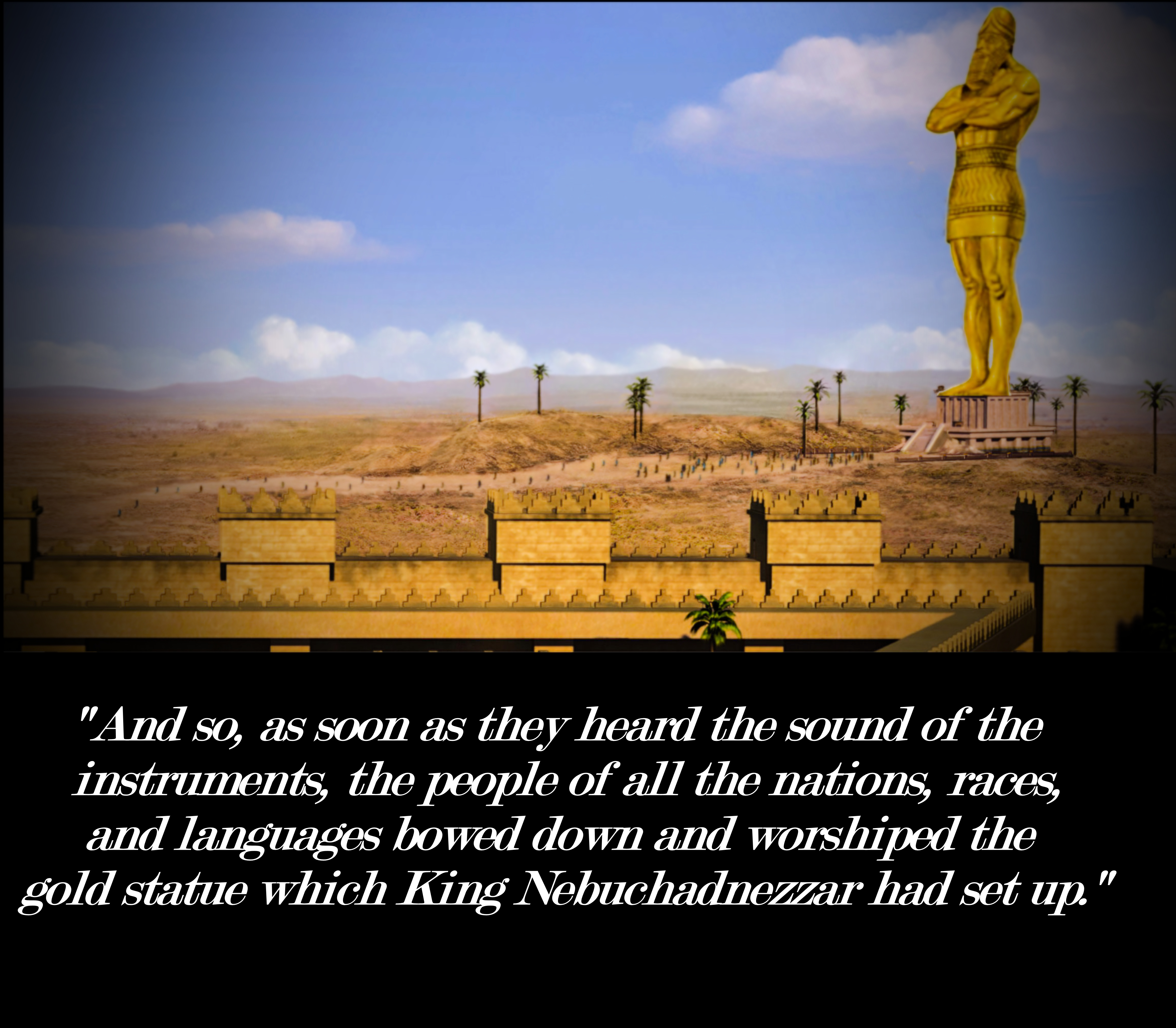


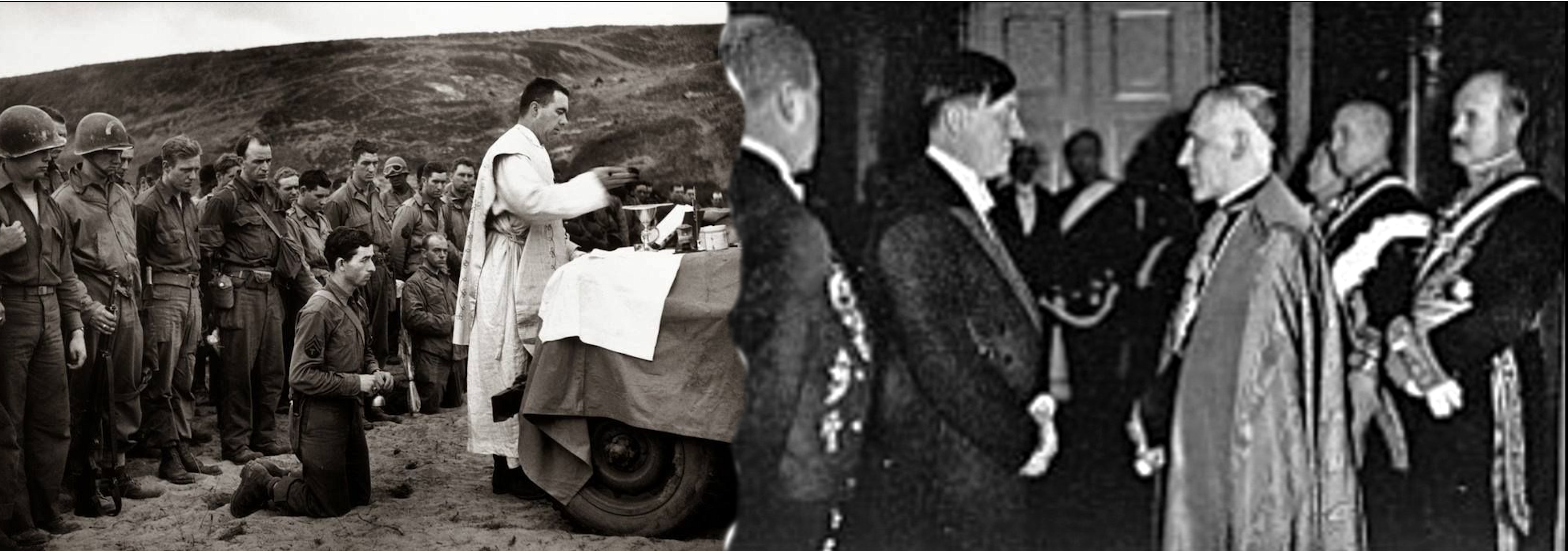









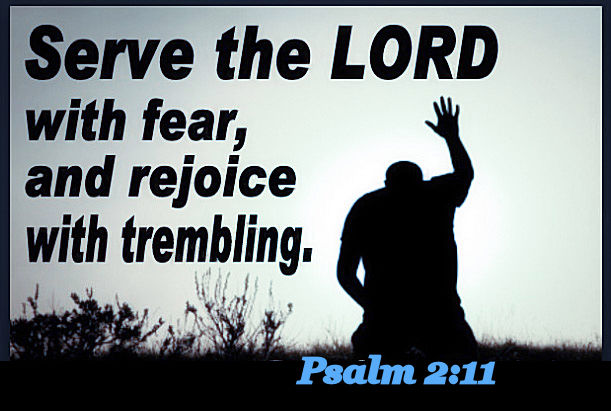


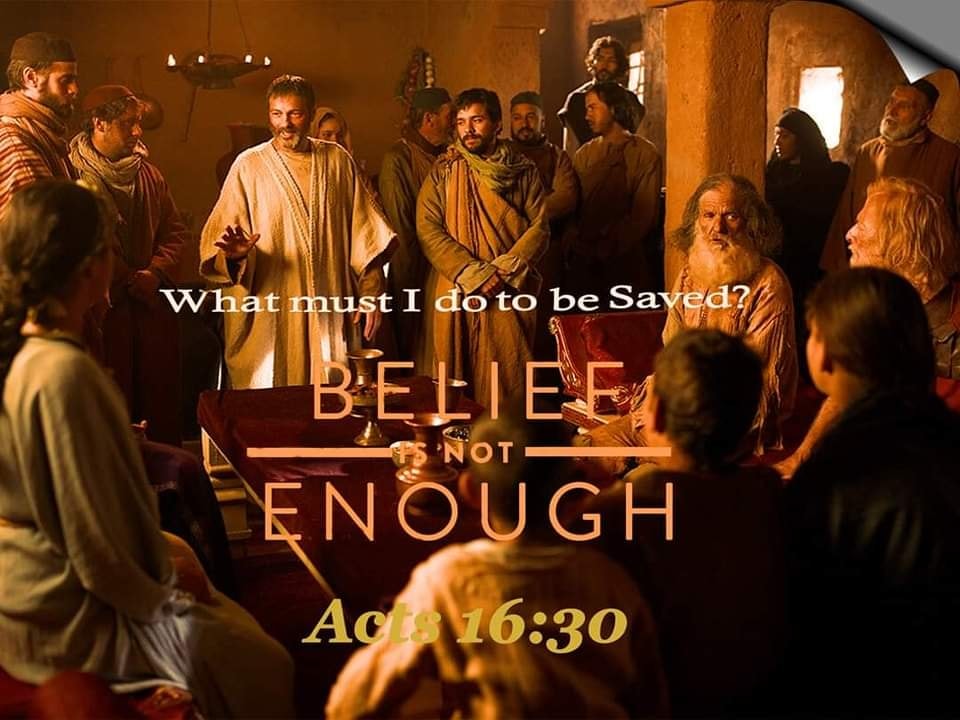



 brotherjohnsite.org